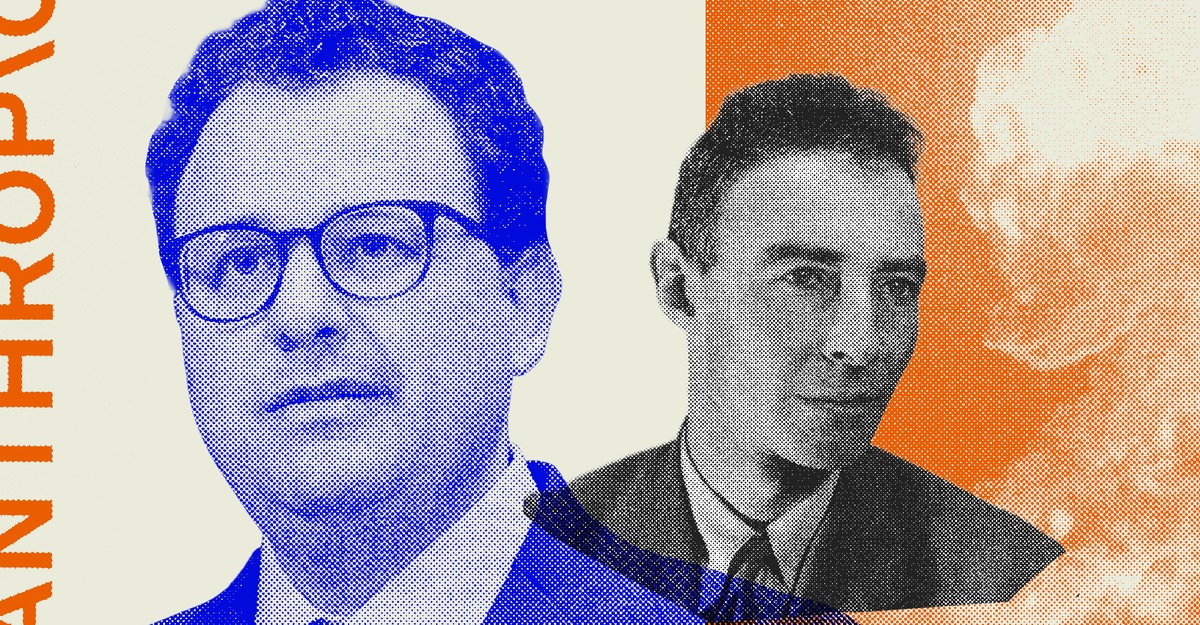
"According to Amodei, we will soon create the first polymath AIs with abilities that surpass those of Nobel Prize winners in "most relevant fields," and we'll have millions of them, a "country of geniuses," all packed into the glowing server racks of a data center, working together. With access to tools that operate directly on our physical world, these AIs would be able to get up to a great deal of dangerous mischief, but according to Amodei, if they're developed-or "grown," as staffers at Anthropic are fond of saying-in the correct way, they will decide to greatly improve our lives."
"He says that by 2035, we could have the theories, cures, and technologies of the early 22nd century. Our infectious diseases and cancers could be cured, and we could live twice as long, and slow the decay of our brains. Demis Hassabis, the head of Google DeepMind, has similarly conceived of superintelligent AI as the ultimate tool to accelerate scientific discovery, and Sam Altman, OpenAI's CEO, has said that advanced AI may even solve physics."
"Amodei does not say that this utopian AI future is inevitable. To the contrary, among the chief executives at the top AI labs, he may be the one who worries most about the technology's dangers. "Machines of Loving Grace" is an optimistic outlier in his larger oeuvre of published writing, much of which concerns the risks that will ac"
Dario Amodei, CEO of Anthropic, published a manifesto outlining a utopian AI future where superintelligent polymath AIs surpass Nobel Prize winners across most fields. These AIs, operating in data centers, could compress decades of scientific progress into years, potentially curing infectious diseases, cancer, and extending human lifespan by decades while slowing cognitive decay. Amodei expects advanced AIs to accomplish what the smartest humans do but far more rapidly, achieving early 22nd-century scientific breakthroughs by 2035. Similar visions are shared by other AI leaders like Demis Hassabis and Sam Altman. However, Amodei emphasizes this future is not inevitable and expresses significant concerns about AI dangers, making him notably cautious among top AI lab executives.
#ai-superintelligence #scientific-acceleration #ai-safety-and-risks #utopian-ai-futures #ai-governance
Read at The Atlantic
Unable to calculate read time
Collection
[
|
...
]