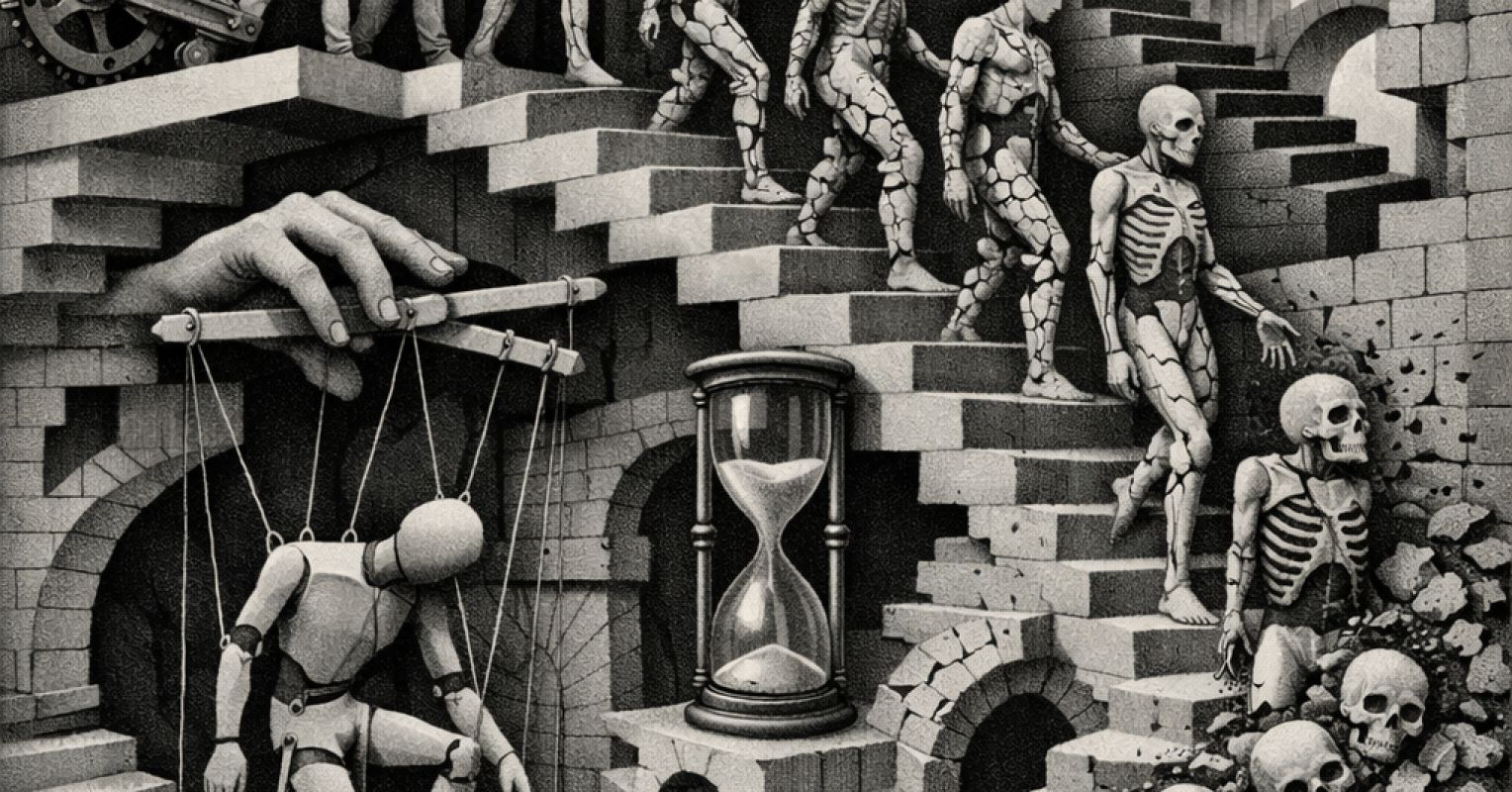
"Artificial intelligence (AI) does not take away human agency. And agency does not vanish in one dramatic moment. More often, it dissolves-gradually, politely, and with measurable gains along the way. That's what makes the newest wave of AI risk harder to govern: Many harms arrive asymptomatically. Performance metrics go up. Output accelerates. Errors may drop. Yet the worker's capacity to think, judge, and recover from stress quietly thins out."
"Researchers tracked 42 specialists across interviews, workshops, and "think-aloud" sessions and observed a paradox: AI improved efficiency while eroding underlying expertise and agency-moving from subtle " intuition rust" to chronic skill degradation and, eventually, fear of being "hollowed out." These findings transcend the disciplinary field of medicine. It is the pattern: AI can raise the floor of performance while lowering the ceiling of mastery-especially when systems become seamless enough to remove the very friction that used to keep humans engaged or mentally "in the loop.""
A seamless AI workflow can increase throughput and reduce observable errors while steadily degrading human expertise, judgment, and agency. A year-long field study in radiation oncology tracked 42 specialists and found AI boosted efficiency but led to intuition rust, chronic skill loss, and fear of being hollowed out. Asymptomatic harms appear as behavioral drift: more auto-approvals, shorter reasoning chains, shrinking practical skills, reduced error detection, and slower recovery from failures. False mastery naturally emerges when assistance is too smooth. Organizational responses must reinvest time saved into active capability maintenance to preserve expertise and resilience.
Read at Psychology Today
Unable to calculate read time
Collection
[
|
...
]