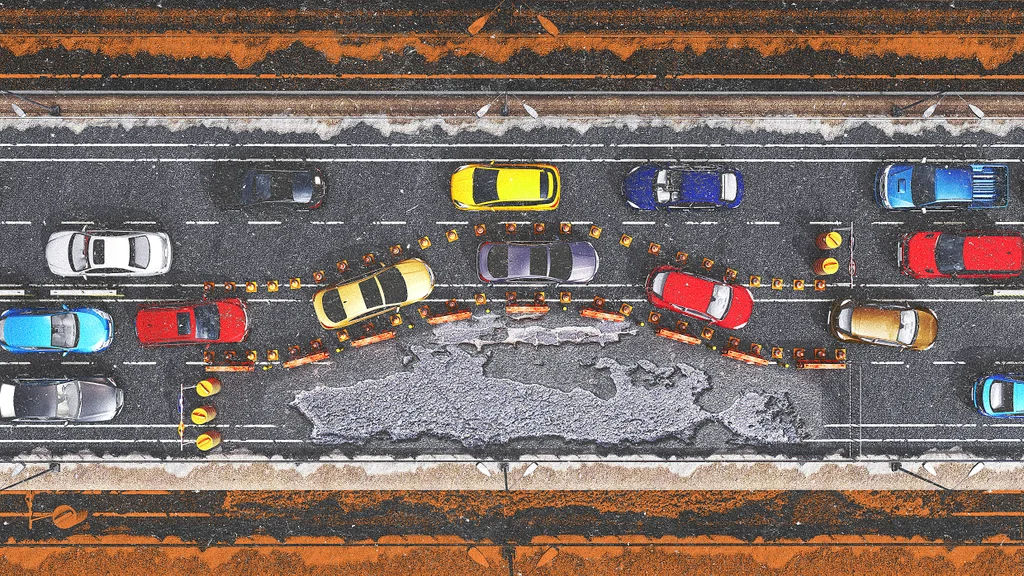
The main funding method for highways, bridges, and major roads has relied on dedicated user fees, especially the federal gas tax, along with state gas taxes, vehicle registration fees, and tolls. The system was designed so that driving and fuel use determine payments, with revenue supporting road building and maintenance through the Highway Trust Fund and state road funds. The federal gas tax has not been raised since 1993, while vehicles have become more fuel efficient and electric vehicles have increased. As a result, the Highway Trust Fund has run deficits for more than 25 years, including a $30.6 billion gap in fiscal year 2025. Congress has transferred about $275 billion from general Treasury funds to cover shortfalls, and projections indicate the fund could run dry around 2028 with growing annual gaps.
"The federal gas tax-18.4 cents per gallon-hasn't been raised since 1993. Meanwhile, vehicles have gotten dramatically more fuel efficient, hybrids are commonplace, and electric vehicles (EVs) are surging. As a result, the Highway Trust Fund, which was supposed to be self-sustaining, has run a deficit every single year for more than a quarter century. In fiscal year 2025 alone, the gap between what drivers paid in and what roads cost hit $30.6 billion."
"For decades, the main way we paid for highways, bridges, and major roads was through dedicated user fees. The biggest one is the federal gas tax. States have their own gas taxes too, plus vehicle registration fees and tolls in some places. The idea was simple: The more you drive and the more gas you burn, the more you pay. That money went into the Highway Trust Fund and state road funds."
"Over the past 15-plus years, Congress has transferred roughly $275 billion from the general Treasury into the Highway Trust Fund. That's income taxes, sales taxes, borrowed money added to the national debt. The Congressional Budget Office projects the fund could run dry around 2028, with annual shortfalls potentially exceeding $40 billion soon after. Over the next decade, the cumulative gap could reach hundreds of billions of dollars."
"For decades, the deal seemed straightforward: Drivers pay for roads through gas taxes, and the system runs itself. User fees fund the infrastructure. Everyone else stays out of it. Taxpayers who don't or can't drive are increasingly subsidizing those who do, and it's not sustainable."
Read at Fast Company
Unable to calculate read time
Collection
[
|
...
]