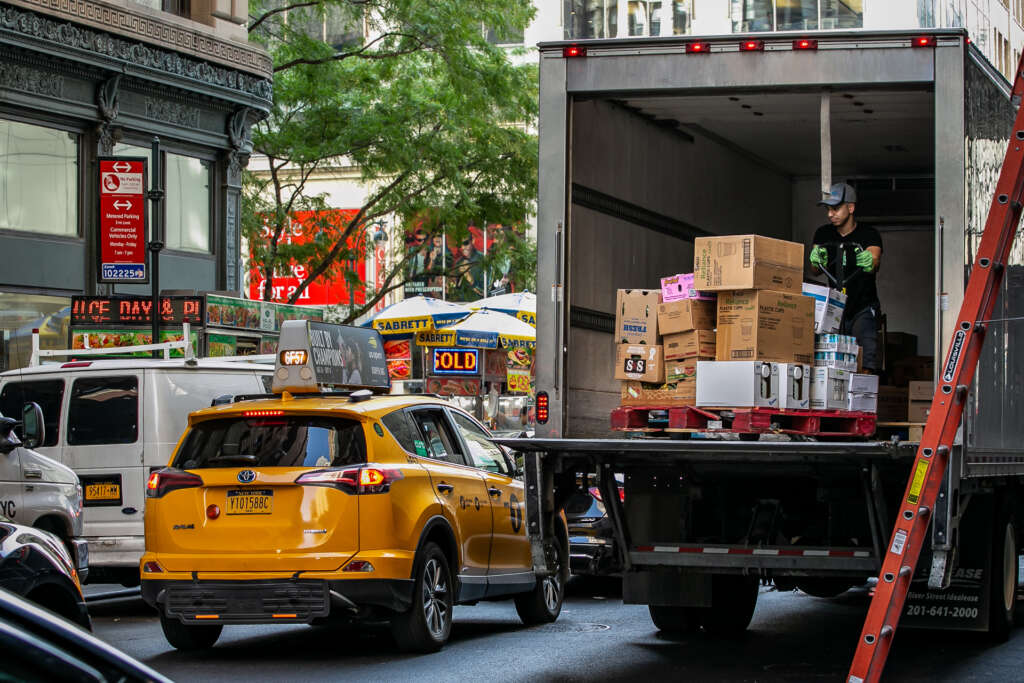
New York City aims to cut transportation emissions and reduce street congestion, particularly in freight logistics. A quieter transition is occurring with more walkers, e-bikes, and waterfront freight. Last-mile delivery can be achieved without increasing truck traffic, utilizing foot couriers and e-bikes instead. The Urban Freight Lab collaborates with businesses and government to study urban logistics, demonstrating real programs that reduce carbon footprints. Initiatives like Blue Highways leverage waterfront routes to minimize truck miles and congestion, promoting a sustainable approach to urban freight.
"The goal shouldn't be to freeze this industry in place. It should be to accelerate the transition already underway-more walkers, more e-bikes, more waterfront freight, more operators building career ladders from the ground up."
"Last-mile delivery, the final step that gets packages, groceries, and essentials to people's doors, doesn't have to mean more trucks on neighborhood streets. It can mean something very different."
"Our operation in Upper Manhattan runs roughly 100 workers daily, covering the corridor from 125th Street through Washington Heights and up to 220th Street. Large trucks bring freight from New Jersey into the city, but once goods arrive, the final mile is completed almost entirely by foot couriers, e-quads, and e-bikes."
"Through Blue Highways initiatives, we've worked on using New York's waterfront to move goods, reducing truck miles and congestion by leveraging water routes."
Read at City Limits
Unable to calculate read time
Collection
[
|
...
]