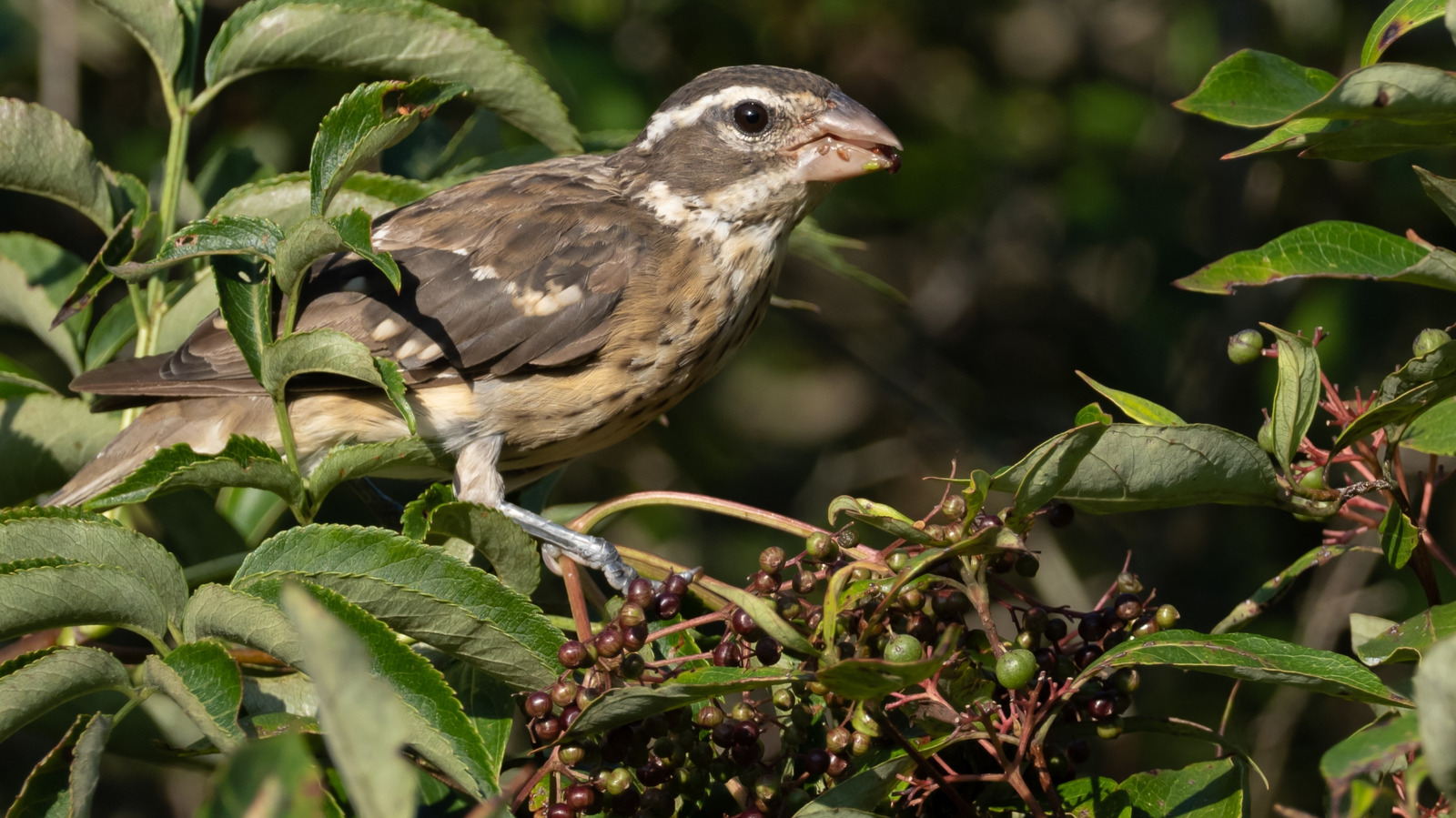
Elderberries contain antioxidants that may help relieve cold and flu symptoms and potentially shorten illness duration. These nutrients benefit humans and birds, with more than 120 bird species eating elderberries, including robins, bluebirds, orioles, and rose-breasted grosbeaks that rely on the fruit during migration. Elderberry shrubs can reach about 12 feet, offering shelter and nesting sites for smaller birds. They also attract bees, butterflies, and other pollinators that improve garden productivity. Recommended varieties for bird gardens include American, European, and Blue elderberry. Plant in spring after the final frost, space plants at least 5 feet apart, remove first-year flowers, and grow more than one plant of the same species for fruiting. Grow in sun or partial shade in medium-to-wet soil without fertilizer, prune damaged stems, and avoid eating raw berries by cooking them into foods like jam or pie.
"Elderberries contain what many consider to be immune-boosting antioxidants that can help relieve the symptoms, and potentially shorten the duration, of colds and flus. These nutrients are not only good for humans, but birds too. More than 120 different species, including robins, bluebirds, and orioles, snack on the fruit and some, like rose-breasted grosbeaks, actually depend on it during the migration season."
"Elderberry plants, which can grow into large 12-foot shrubs, also provide smaller birds with shelter and a place to nest, and they attract a variety of insects like bees, butterflies, and other pollinators that will enrich the productivity of a garden. Three main varieties of elderberries are recommended for bird gardens: American elderberry (Sambucus canadensis), European elderberry (Sambucus nigra), and Blue elderberry (Sambucus cerulea)."
"American elderberries are native to North America and produce large clusters of purple berries. European elderberries the ones most often used in supplements are larger and juicier. Elderberry plants should be planted in the spring, after the final frost, and at least 5 feet apart to accommodate their shallow root systems. It's best to pick any flowers that bloom during the first year to better direct the plant's energy, and growing more than one of the same species is necessary for fruit production."
"Apart from that, the plants are pretty easy to care for. They'll grow in the sun or partial shade in nearly any medium-to-wet soil, no fertilizer required, and you only need to prune damaged stems. One thing to keep in mind, though, is not to eat raw elderberries. For safe consumption, cook them into a delicious jam, juice, pie, or crisp."
Read at www.tastingtable.com
Unable to calculate read time
Collection
[
|
...
]