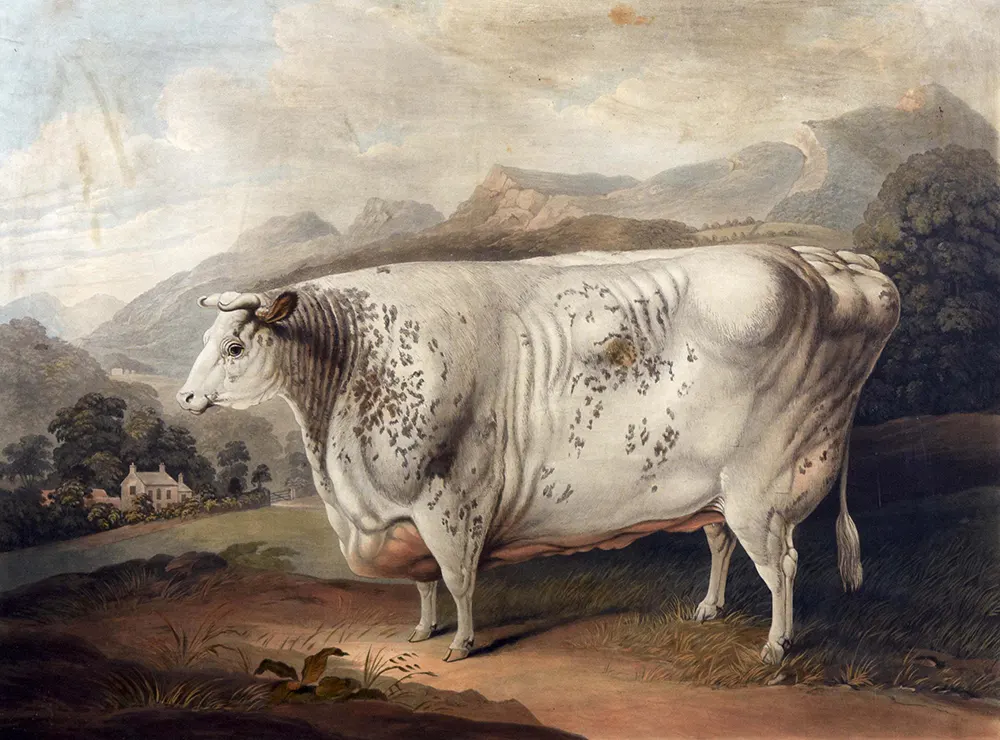
"Farmers commissioned artists to depict their prize-winning animals not only as documentation but as promotional tools. To catch the eye and elevate status, they often asked for a little 'artistic enhancement.'"
"Without photography, paintings were one of the only ways to advertise a farm's best animals. A massive, well-muscled bull on canvas promised strength and profitability, whether or not the real animal was quite that imposing."
"One of the most noticeable elements of these paintings is the exaggerated proportions. Cattle with barrel-sized bellies, sheep with impossibly fluffy coats, and pigs the size of bathtubs were not uncommon."
"Painters like Thomas Sidney Cooper and Edwin Henry Landseer gained reputations for their detailed, idealized portrayals of livestock. Their works often made the animal look like the ultimate specimen."
In the 19th century, farmers commissioned exaggerated paintings of livestock to promote their best animals at agricultural fairs. These artworks served as visual marketing tools, showcasing prize-winning animals with enhanced features to attract attention and elevate status. Artists like Thomas Sidney Cooper and Edwin Henry Landseer specialized in idealized portrayals, using techniques to exaggerate proportions and convey abundance. This trend reflected the competitive nature of rural communities and the importance of livestock in the agricultural economy.
Read at Animals Around The Globe
Unable to calculate read time
Collection
[
|
...
]