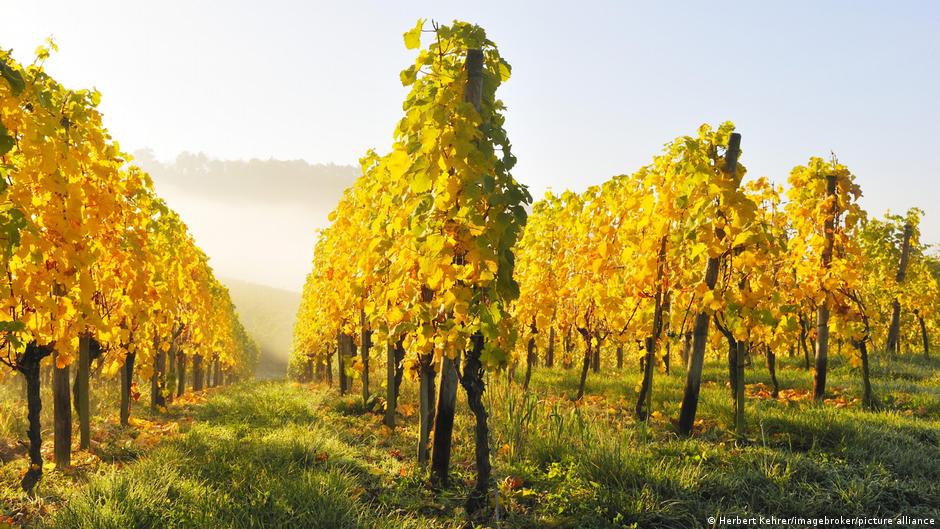
""VitiVoltaic" projects aim to make viticulture fit for climate change. The term is a portmanteau of the Latin genus name for the grapevine, vitis vinifera, and the word for solar power generation, photovoltaics. This new technology makes it possible to harvest two very different things on two levels: Electricity above and wine grapes below. Pilot projects are underway to test which technology works where and at what price."
"In Germany's southwestern Rheingau region, known for its picturesque vineyards, the Hochschule Geisenheim University (HGU) specializes in all aspects of the wine industry. Here, researchers have created a test facility to determine how the region's beloved white Riesling might sustainably thrive with the help of photovoltaic (PV) modules despite changes to the climate. The modules are mounted high up to allow space for the vines and agricultural machinery below."
"The structure provides the delicate vines with support and protection from hail, heavy rain and strong sun. When the sun shines, the semi-transparent solar modules create a checkerboard pattern on the ground. A tracking system automatically aligns the modules so that they capture every ray of light. Riesling at risk "In viticulture, we have not yet seen protected cultivation," said Manfred Stoll, who leads the university's Department of General and Organic Viticulture."
VitiVoltaic integrates elevated, semi-transparent photovoltaic modules above vine rows to enable dual land use: electricity generation overhead and grape production below. High-mounted modules allow machinery access, provide passive protection from hail, heavy rain and intense sun, and create patterned light conditions managed by tracking systems. A test facility in Germany's Rheingau evaluates effects on Riesling phenology, microclimate, fruit sugar-acidity balance and mechanical operations. The approach targets climate-related threats such as earlier shoots and late frost susceptibility while assessing impacts on yield, grape quality and the economic viability of agrivoltaic viticulture.
Read at www.dw.com
Unable to calculate read time
Collection
[
|
...
]