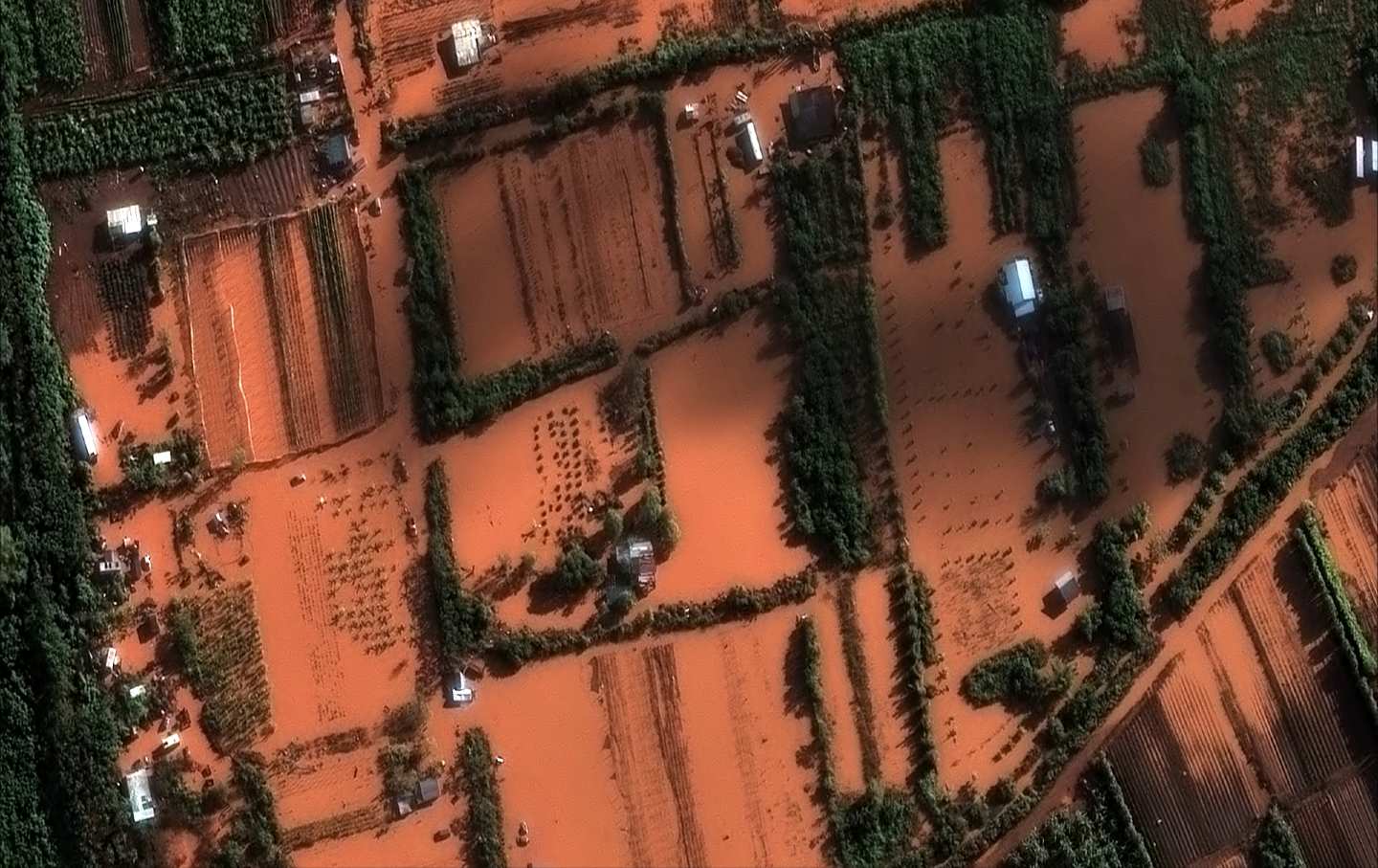
"The destruction of the storm was also accompanied by the hot air of mainstream weather-and-disaster coverage. Press reports in the mainland US dwelled on the extreme, record-breaking volume of the storm without paying attention to the most salient forces that shape the human fallout from putatively natural disasters: socioeconomic inequality and the fraying infrastructure of emergency relief."
"In Hawaii, which suffers chronic bouts of extreme weather thanks to its geography, the human force-multiplier for storms like this latest one is easy to identify: plantation capitalism. Across the islands, hundreds of the plantation-era waterworks are falling into disrepair, posing a grave danger to human life and worsening climate disasters in the state."
"One key pressure point in this past week's storm was the Wahiawā Dam and reservoir on the North Shore of Oahu, the largest such facility in the state. On Friday at 5:35 am, Honolulu officials sounded the alarm that the 120-year-old earthen dam in Central Oahu was at 'risk of imminent failure,' prompting the evacuation of 5."
Hawai'i experienced severe flooding due to a Kona Low storm, causing over a billion dollars in damage and displacing thousands. State officials sought federal aid as many homes remained submerged and power outages affected 130,000 residents. Mainstream media focused on the storm's intensity while neglecting the underlying issues of socioeconomic inequality and deteriorating infrastructure. The aging plantation-era waterworks, particularly the Wahiawā Dam, pose significant risks during extreme weather events, illustrating the human impact of historical neglect in emergency preparedness and response.
Read at The Nation
Unable to calculate read time
Collection
[
|
...
]