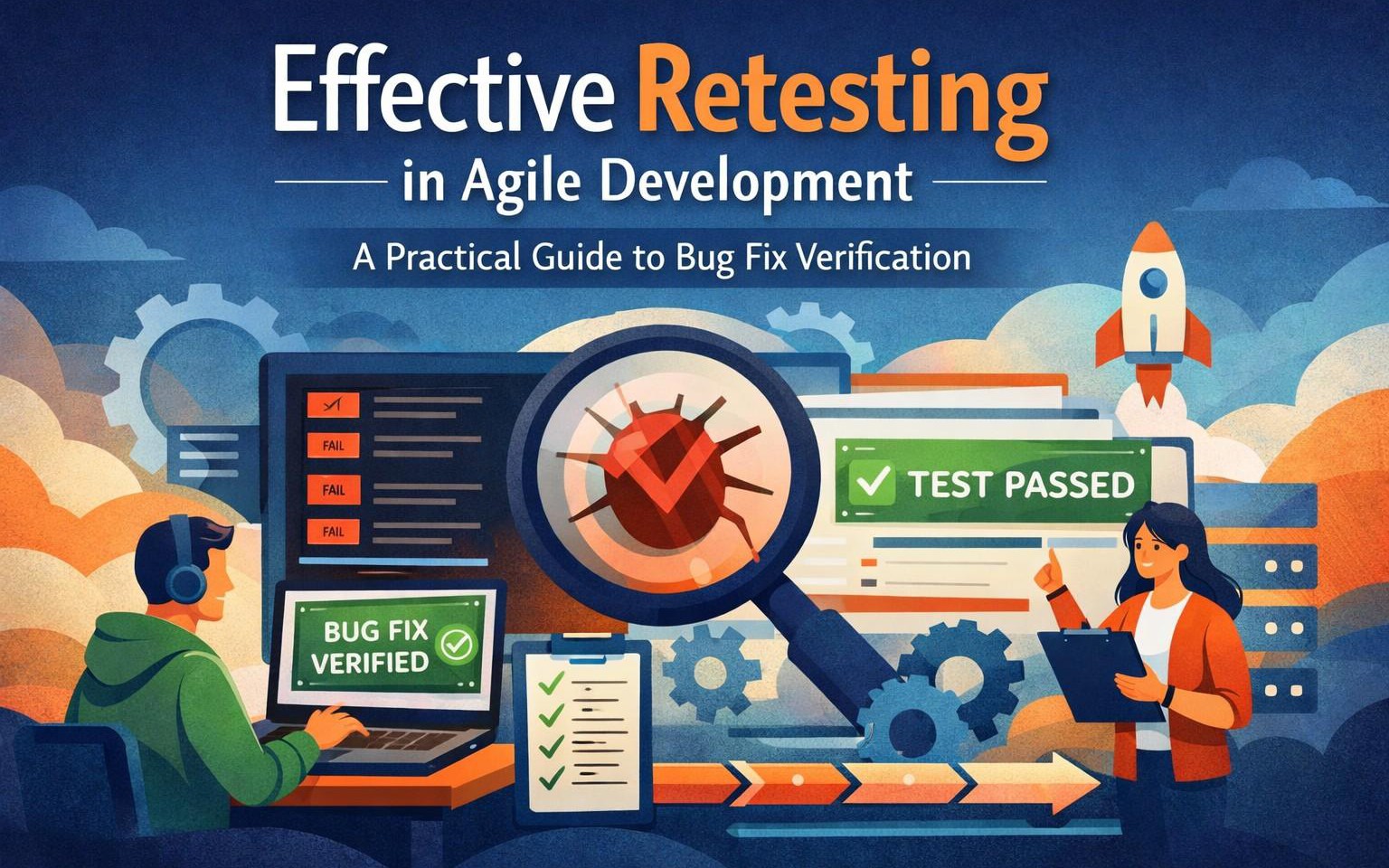
"Agile teams ship fast. Two-week sprints, daily standups, and continuous deployment pipelines have made speed the default. But speed without verification is just organized chaos. When a developer marks a bug as "fixed" and the ticket moves to QA, what happens next determines whether that fix actually reaches production - or quietly breaks something else."
"Retesting is the act of re-executing a specific test that previously failed, after a bug fix has been applied, to confirm the fix works. Regression testing is the broader process of running the existing test suite to ensure that new changes haven't broken previously working functionality. You need both. But retesting is the more surgical, targeted activity - and it's where a lot of agile teams cut corners under sprint pressure."
"The cost of that shortcut surfaces quickly: the same bug reopens in production, trust between devs and QA erodes, and hotfixes eat into the next sprint's capacity. According to IBM's Systems Sciences Institute, the cost of fixing a bug in production is up to 30x higher than fixing it during development. Retesting is the last cheap checkpoint."
"Before a QA engineer can verify a fix, they need to be able to reproduce the original bug reliably. This sounds obvious, but in practice, many teams move to testing the fix without confirming that the defect is consistently"
Agile teams often move quickly using sprints, standups, and continuous deployment, but speed without verification can cause failures to reach production. Retesting is a targeted practice that re-executes a specific previously failing test after a fix to confirm the defect is resolved. Regression testing is broader, running the existing test suite to ensure new changes do not break working functionality. Both are needed, but retesting is frequently skipped under sprint pressure, leading to reopened production bugs, reduced trust between development and QA, and costly hotfixes. The production cost of fixing bugs can be far higher than fixing them during development, making retesting a low-cost checkpoint. A key step is reproducing the original failure reliably before verifying the fix.
Read at dzone.com
Unable to calculate read time
Collection
[
|
...
]