#talking-flower-toy
#talking-flower-toy
[ follow ]
#ai #child-development #humanoid-robots #anthropic #amazon #fauna-robotics #humanoid-robot #robotics #ai-tools


Psychology
fromSilicon Canals
1 week agoI'm 37 and my daughter asked me why I apologize to furniture when I bump into it, and I realized I've been rehearsing deference to inanimate objects because somewhere in childhood I learned that taking up space required an apology. - Silicon Canals
Compulsive apologizing often stems from childhood experiences where one's presence was seen as a source of tension or conflict.
Marketing tech
fromeLearning Industry
3 weeks agoD-ID Launches V4 Expressive Visual Agents For Real-Time AI Interaction
D-ID launches V4 Expressive Visual Agents, ultra-high-fidelity AI avatars enabling real-time LLM conversations and enterprise video content with sub-0.5-second latency and 4K resolution.
Parenting
fromwww.bbc.com
3 weeks agoAI toys for young children need tighter rules, researchers warn
Researchers call for stricter regulation of AI-powered toys for toddlers after finding they frequently misunderstand children, respond inappropriately to emotions, and may confuse early social development.


Parenting
fromwww.theguardian.com
3 weeks agoAI toys for young children must be more tightly regulated, say researchers
AI-powered toys for young children struggle with social play, misunderstand emotions, and respond inappropriately, prompting calls for stricter regulation and safety standards to protect psychological development.
fromFuturism
1 month agoStartup Generates Caring Letters to Your Friends Using AI, Handwrites Them Using Robot Pen
In an age where we are all drowning in electronic communication, handwritten notes really stand out. The company's website brags that its robo-scrawl is virtually indistinguishable from human writing, produced with unmatched speed, quality, and realism through a large language model that generates content and a proprietary robot that inks it onto stationary.
Writing


Artificial intelligence
fromTNW | Artificial-Intelligence
3 weeks agoThe next wave of AI may focus on human connection
AI's next evolution must prioritize emotional well-being and human connection rather than just efficiency, addressing the growing loneliness crisis affecting seniors, veterans, and younger adults.



Artificial intelligence
fromYanko Design - Modern Industrial Design News
1 month agoThe Kids' AI Tool That Ends With Crayons, Not Screens - Yanko Design
Morrama's Create device uses AI to generate line drawings from children's spoken prompts, then prints them for analog coloring, positioning AI as a conversation starter rather than a task completer.
Artificial intelligence
fromYanko Design - Modern Industrial Design News
1 month agoSamsung's Mini PetBot Gives AI a Face So It Feels Less Cold - Yanko Design
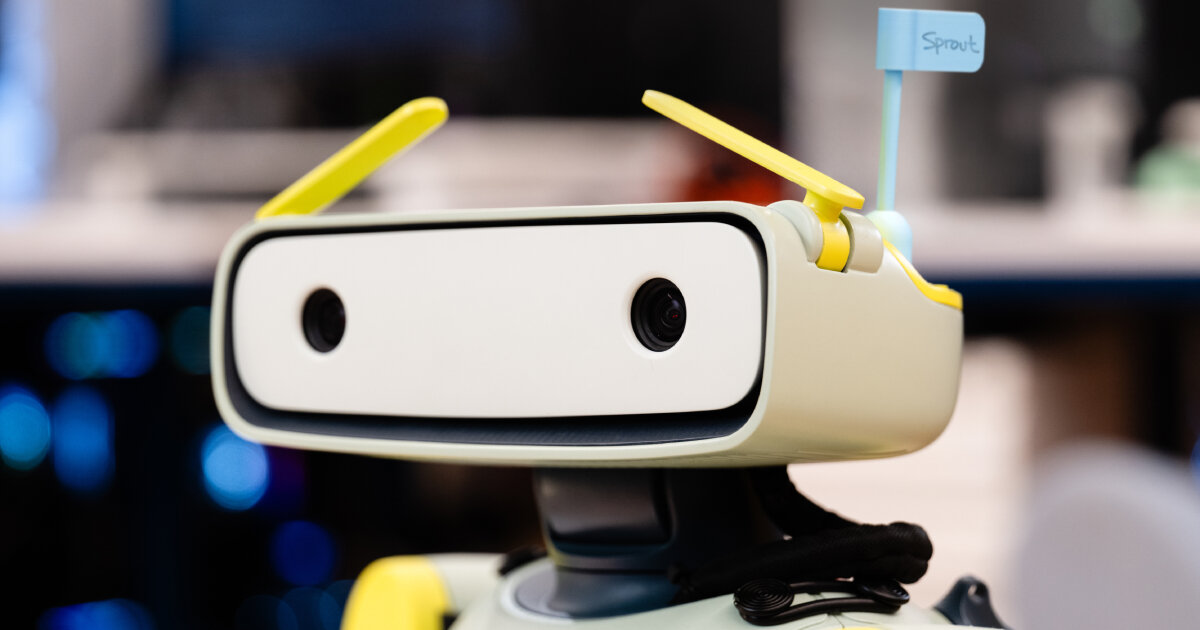
Small desktop robots with expressive OLED faces are emerging to make AI interactions feel more natural and emotionally engaging by providing visible, responsive feedback.
Education
fromFuturism
2 months agoNew Study Finds AI in Schools Is Undermining Kids' Social and Intellectual Development
Generative AI in schools currently poses greater risks than benefits, undermining children's cognitive development, learning engagement, memory retention, and social skill formation.
fromABC7 San Francisco
2 months agoAre AI toys safe? Companion products debut at CES 2026 amid speculation on child impact
"There have been toys like that on the market for years, but they've been very not very interesting from a sophistication standpoint- they didn't evolve with the person and the AI capability lets you mature, lets the pet mature with you," Vena said.
Gadgets
#ai-chatbot-migration
Artificial intelligence
fromEngadget
1 month agoAnthropic's Claude can now absorb your past conversations with other AI chatbots
Anthropic launched a memory import tool enabling users to transfer conversation history from competing AI chatbots like ChatGPT into Claude, capitalizing on recent user migration driven by OpenAI's Department of Defense contract.
Gadgets
fromdesignboom | architecture & design magazine
2 months agocyber pet for homes with stretchable neck shows playful emotions using interactive display
OlloNi is a home-focused cyber pet robot that expresses emotions via digital eyes, records memories in a visible heart core, and uses touchable sensors and cameras for intuitive companionship.
fromBuzzFeed
2 months agoJust 40 Toys That'll Have Your Kids Completely Entranced (And, Hopefully, Out Of Your Hair)
As a parent myself, I know what I'm mostly looking for when buying another toy is that it'll ACTUALLY keep my kids engaged long enough to bring a sliver of peace to my home (a tough task, to say the least!). From Magna-Tiles and the new Toniebox 2 to colorful sensory tubes and a LeapFrog Touch and Learn eReader, my kids have tried out enough of these items to lead you in the right shopping direction!
Parenting
fromThe Verge
2 months agoHow Lego's Smart Brick works
The most interesting story at this year's CES was just a little tiny bundle of technology. One way to look at Lego's new Smart Brick is as something like a Raspberry Pi, an endlessly remixable gizmo with infinite hacking potential - it can be anything, in the best possible way. Another way to look at it is as a crushing blow to creativity, a new way for things to break or be paywalled, and an affront to everything we love about Lego. Maybe it's both.
Gadgets
fromYanko Design - Modern Industrial Design News
2 months agoSomeone Built a Tamagotchi-like Desk Toy That Gets Sad When You Ignore It - Yanko Design
Paul Lagier's DIY Desk Companion sits next to your laptop as a little creature that lives completely offline. It is not connected to Wi‑Fi, has no app, and never sends notifications. Instead, it runs its own tiny world on a circular screen, reacting to touch, light, and time with shifting eyes and moods. The whole thing exists as a playful break, closer to a desk toy than a productivity gadget.
Gadgets
fromThe Verge
2 months agoThis semi-secret Lego Smart Brick feature gives it even more potential
Lego Group design manager Maarten Simons whipped out a "Lego ruler" made of standard Lego bricks divided into segments that were each 10 Lego studs, or roughly 8cm (3.15 inches) long. He attached a Smart Brick to one end of the ruler, and dragged a second Smart Brick along its length. The Smart Bricks changed color every time another 10 ten studs was passed, exactly at the dividing lines of each segment.
Gadgets
fromEngadget
2 months agoLego is trying to make tech invisible with Smart Play
Probably my favorite thing about the Lego Smart Play system unveiled this week at CES is that it was designed for kids, first and foremost. In the past 10 years or so, Lego has increasingly courted an older audience with more expensive and elaborate sets. But when it was time to bring more advanced technology to Lego, the idea right from the beginning was more social and interactive play.
Gadgets
fromFuturism
2 months agoChinese Adults Taking Strange AI Devices to Bed With Them
Among them is the country's embrace of human-like AI systems, which are increasingly being embedded in cuddly, commercial, transactable toys - for adults, strikingly, in addition to children - at the same time that state regulators are considering a broader crackdown on that exact type of tech. New reporting by China Daily reveals the rise of AI companion toys among adults in China, a trend emerging as more of the country's citizens live alone than ever before.
Artificial intelligence
Gadgets
fromYanko Design - Modern Industrial Design News
2 months agoThis LEGO Furby 30th Anniversary Build Comes With Working Eyes and a Secret Agent Hidden in Its Head - Yanko Design
A 1,700-piece LEGO Furby recreates the toy's expressive features, nostalgic paranoia, and designer Easter eggs with practical mechanisms and collector-sized scale.
fromNature
2 months agoAI can spark creativity - if we ask it how, not what, to think
When a scientist feeds a data set into a bot and says "give me hypotheses to test", they are asking the bot to be the creator, not a creative partner. Humans tend to defer to ideas produced by bots, assuming that the bot's knowledge exceeds their own. And, when they do, they end up exploring fewer avenues for possible solutions to their problem.
Artificial intelligence
[ Load more ]