#google
#google
[ follow ]
#antitrust #openai #adtech #digital-advertising #artificial-intelligence #privacy #generative-ai #ad-tech
fromBusiness Insider
6 days agoGoogle tells staff it will ramp up green card applications again in 2026. Here's who won't be eligible.
The company told staff in a December newsletter that employees eligible for PERM would hear from its outside lawyers in Q1, according to a copy of the memo seen by Business Insider. PERM allows employees to move from working on a visa to securing a green card. Tech companies commonly use it to transition staff from H-1 B status to a green card, which allows them to live and work permanently in the US.
Tech industry


Artificial intelligence
fromFortune
1 week agoOpenAI vs. Apple? Sam Altman is setting his sights on winning what could be an even higher-stakes AI battle | Fortune
The LLM race favors Google for data and talent, while OpenAI aims to compete by building an integrated mass-market AI device targeting Apple.




fromZDNET
2 weeks agoGoogle's search chief rejects this strategy for licensing news content amid AI scramble
Google has no plans to build a standardized API or universal licensing system for news content, the company's search chief said last week, pushing back on proposals from media advocates who see such arrangements as the industry's best path to AI-era revenue. "The short answer is no," Nick Fox, Google's SVP of knowledge and information, told me on the AI Inside podcast when asked whether Google would pursue a standardized licensing model.
Artificial intelligence




fromBusiness Insider
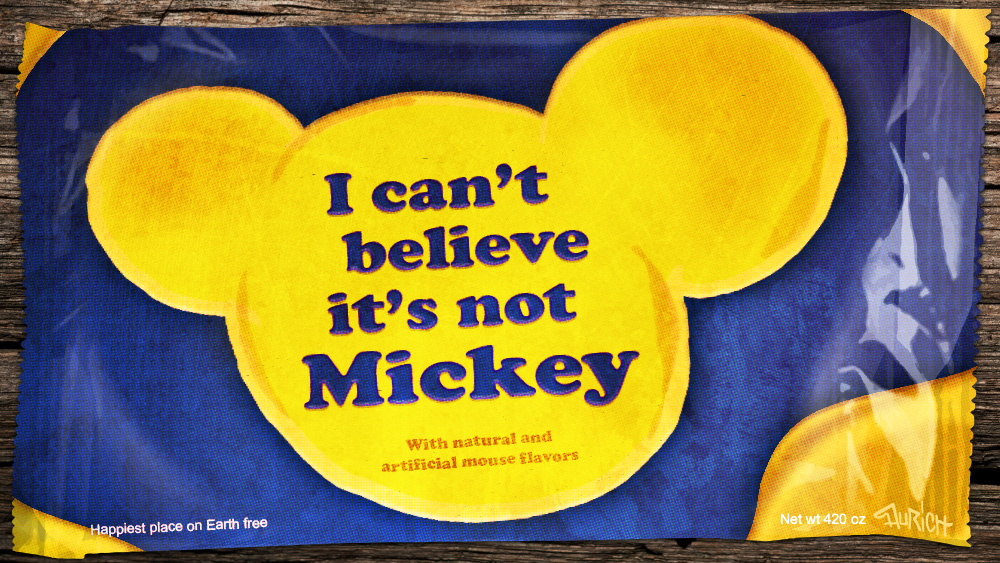
2 weeks agoFrom Garlic to Avocado: The goofy AI model codenames you should know
It may sound like a trip through the produce aisle, but leading AI companies have something much more important on their lists. Meta, OpenAI, and Google have all relied on food-related names for their sometimes secretive plans for future AI models. Thinking with your stomach is nothing new for Silicon Valley, just look at the assortment of desserts Android assembled over the years before Google had its fill.
Artificial intelligence
fromBusiness Insider
2 weeks agoHow a SpaceX IPO could deliver Google one of the most lucrative startup wins ever
Alphabet, parent company of Google, has been one of the best-performing stocks of the year, up nearly 70%, and now has a market capitalization of $3.8 trillion. The company also happened to make what could turn out to be one of the most lucrative startup investments of all time, which could finally bear fruit next year. In 2015, Google invested around $900 million in SpaceX for a stake of around 7% in Elon Musk's space company, which was then valued at $12 billion.
Venture
fromThe Verge
2 weeks agoThe AI industry's biggest week: Google's rise, RL mania, and a party boat
Reinforcement learning (RL) is the next frontier, Google is surging, and the party scene has gotten completely out of hand. Those were the through lines from this year's NeurIPS in San Diego. NeurIPS, or the "Conference on Neural Information Processing Systems," started in 1987 as a purely academic affair. It has since ballooned alongside the hype around AI into a massive industry event where labs come to recruit and investors come to find the next wave of AI startups.
Artificial intelligence
fromwww.bbc.com
2 weeks agoGoogle unveils plans to try again with smart glasses in 2026
Google plans to launch smart glasses powered by artificial intelligence (AI) in 2026, after its previous high-profile attempt to enter the market ended in failure. The tech giant set expectations high in 2013 when it unveiled Google Glass, billed by some as the future of technology despite its odd appearance with a bulky screen positioned above the right eye. Google pulled the product in 2015 less than seven months after its UK release, but is now planning
Gadgets


fromwww.theguardian.com
2 weeks agoEU opens investigation into Google's use of online content for AI models
The investigation will notably examine whether Google is distorting competition by imposing unfair terms and conditions on publishers and content creators, or by granting itself privileged access to such content, thereby placing developers of rival AI models at a disadvantage, the commission said. It said it was concerned that Google may have used content from web publishers to generate AI-powered services on its search results pages without appropriate compensation to publishers and without offering them the possibility to refuse such use of their content.
Europe politics

fromSearch Engine Roundtable
3 weeks agoGoogle Adds LLMs.txt To Search Developer Docs
Google has been saying that no one uses the LLMs.txt file, that Google won't use it, that it can be useless, and you probably should noindex it if you do use it. Well, Google itself uploaded an LLMs.txt file for the Google Search Central portal. The file is over here: developers.google.com/search/docs/llms.txt. This was spotted by Lidia Infante who posted it on Bluesky and asked John Mueller of Google, "Is this an endorsement of llms.txt or are you trolling us, John?"
Web development


fromBusiness Insider
1 month agoI left Google after 18 years and have no regrets. Here are my 3 tips to quit your job successfully.
I started there in November 2006, when there were only around 10,000 employees, and became an executive - the director of American media relations - in 2022. Google's amazing; I bleed Google colors. I loved the impact I was having, the future of opportunities I saw for myself, and the feedback I was getting as a leader. I'm also the breadwinner for my family.
Startup companies
fromWIRED
1 month agoHands On With Google's Nano Banana Pro Image Generator
Corporate AI slop feels inescapable in 2025. From website banner ads to outdoor billboards, images generated by businesses using AI tools surround me. Hell, even the bar down the street posts happy hour flyers with that distinctly hazy, amber glow of some AI graphics. On Thursday, Google launched Nano Banana Pro, the company's latest image generating model. Many of the updates in this release are targeted at corporate adoption,
Artificial intelligence
fromTalkMarkets
1 month agoAlphabet Inc. Stock: Gains As Google Unveils Nano Banana Pro To Boost AI Image Reasoning
Nano Banana Pro is an updated version of the Nano Banana image generator, originally launched in August and already one of the fastest image-creation tools available. Built on Gemini 3 Pro, the new version promises better reasoning, more consistent image results and clearer text generation inside AI-created images. Google said the upgrade addresses a long-standing challenge in AI imaging: generating legible text. With Gemini 3's enhanced reasoning engine, Nano Banana Pro produces more accurate typography and better contextual understanding inside visual outputs.
Artificial intelligence
fromThe Verge
1 month agoGoogle is fighting the defamation battle Meta caved on
Starbuck's claims against Google came after he filed a similar lawsuit against Meta, whose AI he claimed falsely asserted that he'd participated in the January 6th riot at the US Capitol. But Meta settled that lawsuit in August and even hired Starbuck as an advisor to help address "ideological and political bias" in its AI chatbot, The Wall Street Journal reported. The outlet noted last month that so far, no US court had awarded damages for defamation by an AI chatbot.
Artificial intelligence
fromwww.mercurynews.com
1 month agoGoogle ordered to pay 573 million in German shopping suits
Alphabet Inc.'s Google was ordered to pay 573 million ($666 million) in two antitrust-damages cases brought by German price-comparison websites following on from a European Union case against the search-engine giant. In a suit brought by Axel Springer SE-owned Idealo, which sought 3.3 billion, the Berlin Regional Court awarded 374 million plus 91 million in interest. In a second case brought by Producto GmbH, another price-comparison service that sought 290 million, the judges granted 89.7 million plus 17.7 million in interest.
Miscellaneous



fromThe Verge
1 month agoGoogle pulls AI model after senator says it fabricated assault allegation
Google says it has pulled AI model Gemma from its AI Studio platform after a Republican senator complained the model, designed for developers, "fabricated serious criminal allegations" about her.
Artificial intelligence
fromThe Verge
1 month agoAnother shuttered nuclear power plant is getting new life, thanks to Big Tech
It's the latest move by Google and other tech companies to revitalize nuclear energy in the US, which has struggled to compete with falling costs for gas, solar, and wind power over the years. As power grids scramble to keep up with growing electricity demand from AI, nuclear energy has become a more attractive option for generating carbon-free energy around-the-clock for data centers.
US news
[ Load more ]