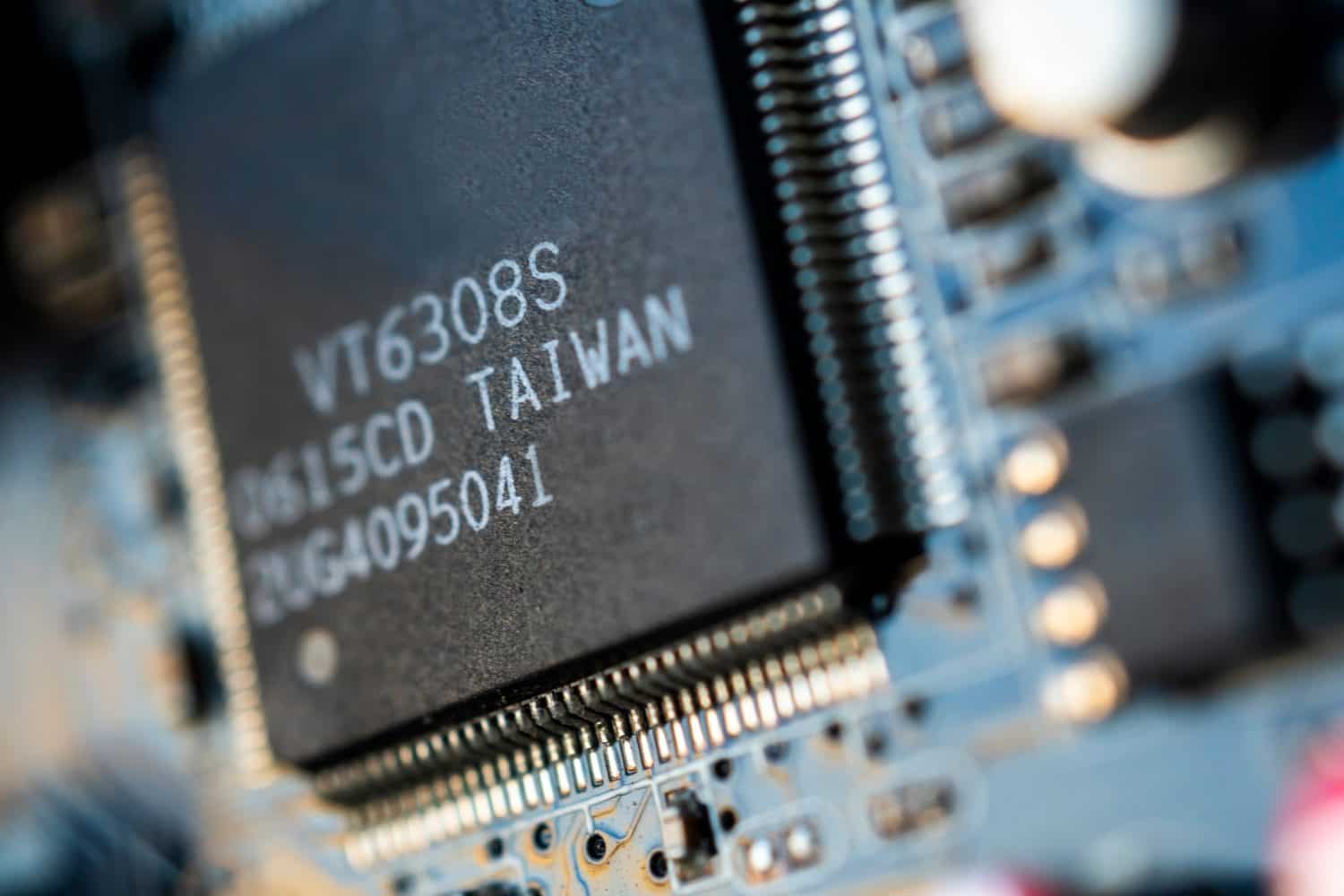
TSMC operates the world’s most advanced chip fabs and is positioned as a critical bottleneck for AI compute. Hyperscalers can invest in data centers, but accelerators depend on leading-edge wafer production. In the first quarter, high-performance computing represented 61% of wafer revenue, advanced nodes at 7-nanometer and below accounted for 74% of wafer revenue, and demand supported pricing power. April monthly revenue rose 17.5% year over year, with January-through-April revenue up 29.9% year over year. Management guided Q2 revenue to USD 39.0 to 40.2 billion and projected full-year 2026 growth above 30% in dollar terms. TSMC holds about 72.3% of the foundry market, with challengers facing long timelines to build and ramp new fabs. CapEx is planned at USD 52 to 56 billion in 2026, with higher spending over the next three years than the prior three years combined.
"Hyperscalers can pour capital into data centers all day, but every accelerator inside those racks runs through one set of leading-edge fabs. In the first quarter, HPC was 61% of TSMC's wafer revenue, up 20% quarter over quarter, and advanced nodes at 7-nanometer and below made up 74% of wafer revenue. Capacity is tight and demand keeps climbing, thus pricing power is something you get by default."
"First, the growth. April monthly revenue came in at roughly NT$410.73 billion, up 17.5% year over year, with cumulative January-through-April revenue of NT$1.54 trillion, up 29.9% year over year. Management guided Q2 revenue to USD 39.0 to 40.2 billion, a 32% year-over-year jump at the midpoint, and full-year 2026 growth above 30% in dollar terms. Q1 already printed USD 35.9 billion in revenue with a 66.2% gross margin and 58.1% operating margin."
"Second, the moat. TSMC controls roughly 72.3% of the foundry market, and Wei is blunt about why challengers cannot just appear. "There are no shortcuts. The fundamental rules of the foundry game never change... it takes 2 to 3 years to build a new fab, no shortcuts. And it takes another 1 to 2 years to ramp it up." Meanwhile TSMC plans CapEx toward the high end of USD 52 to 56 billion in 2026 alone, with the next three years significantly higher than the past three combined."
"The difference between chipmaker and hyperscaler CapEx is that hyperscalers are buying chips that degrade and die. On the other hand, TSM's CapEx goes to manufacturing, something that will churn out more and more cash over time. Trailing P/E sits at about 36 and forw"
Read at 24/7 Wall St.
Unable to calculate read time
Collection
[
|
...
]