From Alpine chalets shedding snow to Mediterranean roof tiles mitigating summer heat, the slope responded to climate and construction challenges long before it became an aesthetic code. Although modern architecture has favored horizontal planes and orthogonal plans, the pitched roof requires a project to be conceived in section.
The reference point is specific, not from a general impression of the ocean, but from the particular way jellyfish tentacles move: slow, layered, and almost meditative in repetition. That quality informs the lamp's layered construction and the dense organic lattice etched across its translucent shade. The pattern reads quietly in a lit room. Switch the lamp on and the whole surface activates, casting warm amber light through the texture in a way that feels atmospheric rather than task-driven.
As you dim the lamp, it does not just reduce brightness. It simultaneously shifts the color temperature from a crisp, clear white toward a warm amber tone. During the day, the light is sharp and cool, the kind that supports focus and keeps you alert. As evening arrives and you begin dimming down, it moves into amber territory, which is the spectrum that does not interfere with melatonin production.
Most of the screens that you encounter everyday is always fighting for your attention, always buzzing, glowing, pulsing with red notification badges designed to hijack your focus. The TRMNL X, a 10.3-inch e-ink smart display priced at $219, takes the opposite approach entirely. It just sits there, calm and papery, waiting for you to glance over when you're ready.
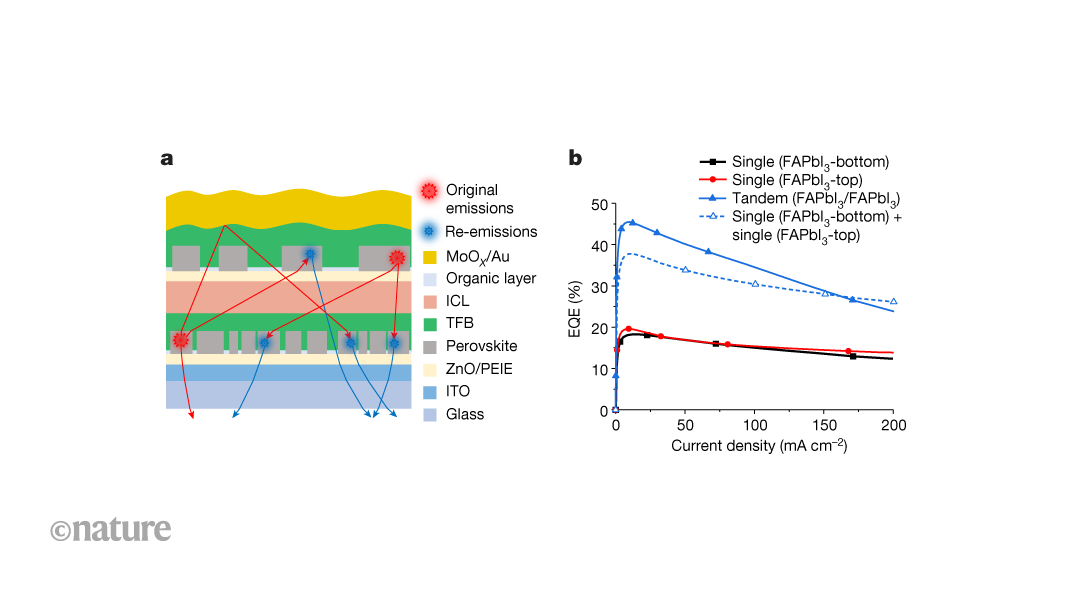
Here we addressed this challenge by incorporating an intrinsically stretchable exciplex-assisted phosphorescent (ExciPh) layer. The elastomer-tolerant triplet-recycling mechanism mitigates exciton energy transfer limitations arising from the insulating elastomer matrix, yielding a light-emitting layer with more than 200% stretchability and an external quantum efficiency (EQE) of 21.7%. To translate this performance to fully stretchable devices, we integrated MXene-contact stretchable electrodes (MCSEs), which feature high mechanical robustness and tunable work function (W
From the large industrial roofs and galleries of the 19th century to the contemporary atriums of museums and public buildings, glass has been a recurring material in shaping large and monumental interior spaces. More than a technological or engineering solution, these horizontal glazed planes introduce a distinct luminous quality: light that comes from above. Unlike lateral daylight entering through façades, zenithal light is more evenly distributed, reduces harsh shadows, and lends spaces a sense of continuity and openness that is difficult to achieve otherwise.
All of the appliances and systems are brand-new: the HVAC, the lighting, the entertainment. Touch screens of various shapes and sizes control this, that, and the other. Rows of programmable buttons sit where traditional light switches would normally be. The kitchen even has outlets designed to rise up from the countertop when you need them, and slide away when you don't.
Having a remote for smart home devices may seem redundant. I always get asked, "Why not just use a regular light switch?" And I respond by saying that smart remotes can do more than just flipping the light switch. A single button on a smart remote can control multiple devices with different settings, like running a bedtime routine or switching on all devices in a room.
They do nothing to save you power Scam "power saving" devices are rampant online. These devices plug into an outlet and promise to "improve the use of energy," "extend the life of electrical equipment," and even "avoid illegal electrical waste." Sounds great, right? Also: This USB power meter I tested is shockingly accurate - especially for how cheap it is Well, despite the bold claims and the sticker on the front of the unit, they are too good to be true.