#ssa
#ssa
[ follow ]
#sudan #humanitarian-crisis #africa #climate-change #conflict #public-health #us-foreign-policy #uk-aid-cuts



fromwww.theguardian.com
6 days agoCan you stop malaria crossing borders? One nation's bid to wipe out the disease
The freezer is filled with blue-lidded tubes of cows' blood, ready to be defrosted and used to feed the colony of mosquitoes. Nombuso Princess Bhembe tends the mosquitoes at Eswatini's national insectary, part of the southern African country's push to eliminate malaria.
Coronavirus
fromwww.aljazeera.com
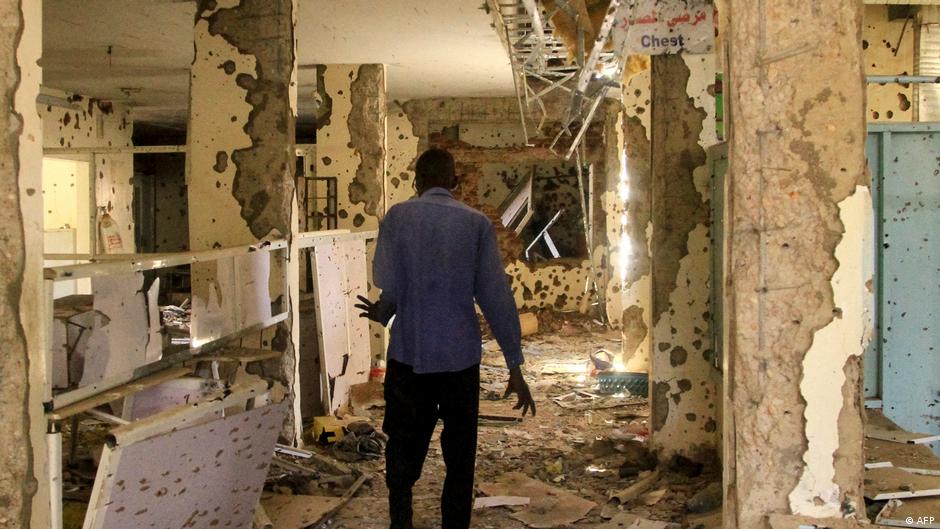
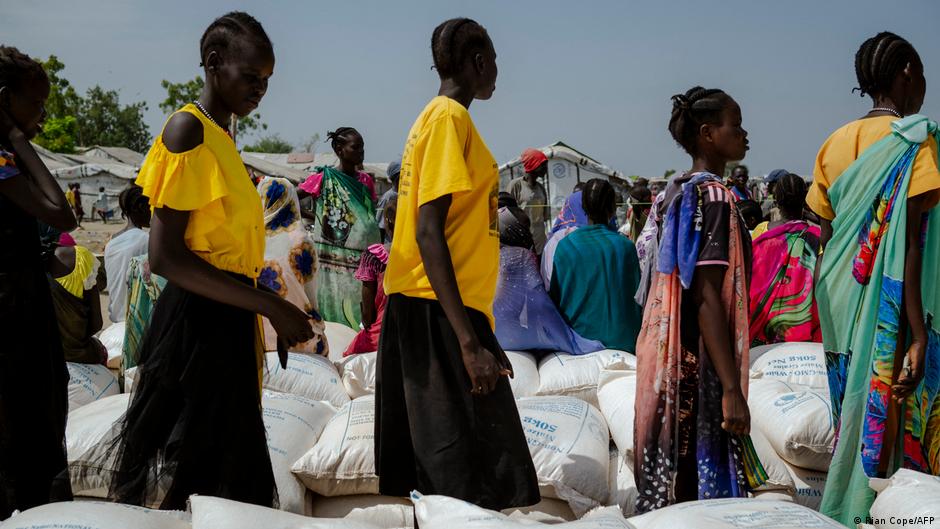
4 days agoUN warns South Sudan at risk of full-scale famine' as fighting intensifies
Tom Fletcher, the UN humanitarian chief, stated that hunger is tightening its grip in South Sudan, with emergency levels of food insecurity expected across all 10 states during the lean season.
World news
fromThe Atlantic
5 days agoA Pillar of the Economics Establishment Admits That It Was Wrong
The World Bank's recent report argues that government intervention, when done right, can actually be an essential ingredient of economic success, reversing decades of opposition to industrial policy.
World politics
fromwww.aljazeera.com
2 weeks agoMinerals for aid: Are new US health deals exploiting' African countries?
In late 2025, the United States shocked the world by suspending global health aid, leading experts to predict 700,000 additional deaths annually, primarily among children. This prompted the US to propose unusual bilateral health agreements with developing countries, which have drawn criticism for being exploitative.
Public health
fromwww.theguardian.com
3 weeks agoIt helped me feed my six children': how Africa's first water fund supports farmers to protect Kenya's biggest river
The avocado seedlings enabled him to grow his farm income to close to 2m Kenyan shillings, with each mature avocado tree yielding 70kg annually. Improving farming methods and conserving the watershed has helped me to feed and educate my six children.
Agriculture
Environment
fromState of the Planet
1 month agoClimate Finance Has Failed Africa Twice Over. Here's How To Fix It.
Africa faces immediate climate crisis requiring both massive adaptation investment and urgent global emissions cuts, yet receives inadequate financing while adaptation focus overshadows critical decarbonization efforts.
fromwww.dw.com
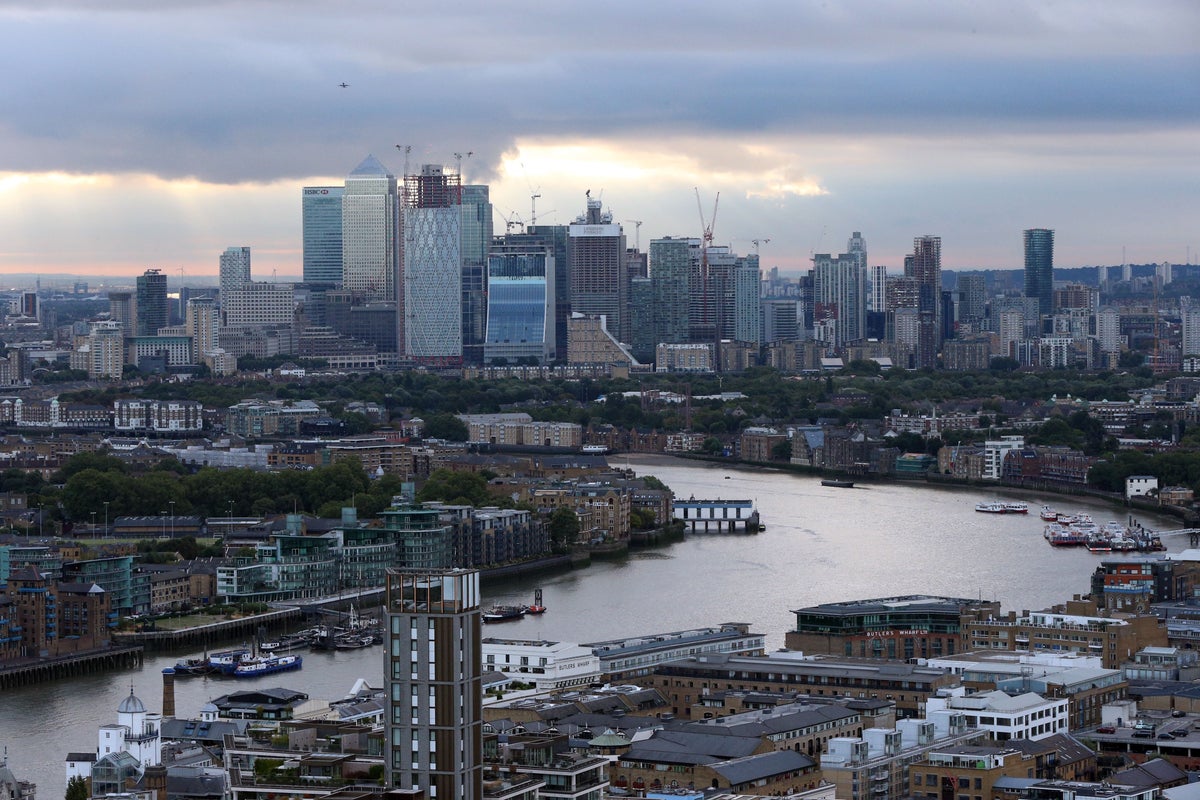
1 week agoBurkina Faso: Moving forward without democracy
People must forget about democracy. If an African wants to tell you about democracy, you should run away. Democracy kills. This statement by Traore reflects a stark rejection of democratic principles in favor of military governance.
World news
fromwww.theguardian.com
1 month agoWomen and girls bearing brunt of water shortages globally, UN warns
Women are responsible for collecting water in more than 70% of rural households that do not have access to mains water across the developing world. Women and girls collectively spend 250m hours a day collecting water globally. The climate crisis is exacerbating the problem, according to a new report from the UN.
Women
fromwww.dw.com
1 month ago'Value of African football' to drop after AFCON final u-turn
We will contact our lawyers and file an appeal. We will stop at nothing. The law is on our side. This decision is a disgrace for Africa. The timing is really bad. CAF should have taken a decision earlier, quicker. The situation has only rotted more and more.
Soccer (FIFA)
fromHarvard Business Review
1 month agoHow To Deliver on ESG Initiatives in Emerging Market
Multinational firms are under rising pressure-from investors, regulators, and employees-to demonstrate positive societal impact in the places where they do business. With ESG-focused institutional investments projected to reach nearly $34 trillion this year and roughly 90% of large U.S. companies now disclosing ESG reports, these pressures are now a central part of corporate strategy.
Business
World news
fromSilicon Canals
2 weeks agoThe Middle East's real vulnerability isn't oil - it's the desalination plants that supply 90% of its drinking water - Silicon Canals
The Middle East's reliance on desalinated water exposes significant vulnerabilities, particularly due to concentrated infrastructure and ongoing military conflicts.
fromwww.aljazeera.com
1 month agoPoor in an oil-rich country: Republic of Congo's youth hope for change
We are told that the country is rich in oil. But I don't see that wealth in my daily life. Look at Pointe-Noire, formerly nicknamed as Ponton la Belle [Beautiful Pointe-Noire]. Today, the city is unrecognisable. Around the Grand Marche, the main roads are potholed, and when it rains, the streets get flooded, making it almost impossible to drive.
France politics
fromwww.aljazeera.com
1 month agoHow do I survive?' Drought plagues Kenya's Turkana amid surplus elsewhere
In Turkana, the land is rugged, roads disappear into dust, and villages are scattered across vast distances in a county of just more than a million people. Despite it being the rainy season, weather experts warn that Turkana and other arid regions may receive little relief. Authorities say drought is once again taking place, with 23 of Kenya's 47 counties affected.
Agriculture
Agriculture
fromwww.theguardian.com
1 month agoAfrica particularly vulnerable as Iran conflict disrupts supply chains, say experts
Middle East conflict disrupts fertiliser supplies to Africa through the Strait of Hormuz, threatening food security and increasing costs for vulnerable populations dependent on imports.

fromwww.dw.com
4 weeks agoShifting alliances shape Horn of Africa tensions
Moses Chrispus Okello, a senior researcher at the Institute for Security Studies, states that there is a high risk of escalation in Somaliland, where Israel and the UAE have interests. He emphasizes that tensions could also rise in neighboring Djibouti, where the US and other powers are active.
World politics
Agriculture
fromRealagriculture
1 month agoAg Policy Exchange: Finding common ag policy ground among countries in a divided world
Global agriculture faces interconnected geopolitical, economic, and environmental challenges requiring sustainable, resilient, and affordable food systems through coordinated international policy approaches.
fromLondon Business News | Londonlovesbusiness.com
2 months agoMulti-currency strategy for African expansion - London Business News | Londonlovesbusiness.com
Expanding your startup into Africa is one of the most ambitious and potentially rewarding moves you can make as a founder. With a rapidly digitalising economy and a booming young population, the continent offers a growth trajectory that is hard to find elsewhere. However, as you begin to scale, you will quickly realise that the financial landscape is not a monolith. Navigating 54 different countries means managing dozens of volatile currencies and banking systems.
Venture
US politics
fromwww.theguardian.com
1 month agoRising anger over lop-sided' and immoral' US health funding pacts with African countries
African countries are rejecting US bilateral health agreements as exploitative, with demands for biological resources, data sharing, and mineral access violating national sovereignty.
fromNature
1 month agoClimate shocks, not just warming, threaten malaria control efforts in Africa
Temperature and rainfall influence where malaria-carrying mosquitoes such as Anopheles species can survive and how well malaria parasites, such as Plasmodium falciparum, develop in them. Past predictions have been inconsistent and have often focused on where malaria might spread, rather than on how severely it could intensify where it already exists.
Coronavirus
Environment
fromwww.aljazeera.com
2 months agoAre African water wars' on the horizon as AU puts the issue on its agenda?
Water scarcity and climate-driven shocks are fueling conflicts, health crises, and civic unrest across Africa, while corporatisation and upstream-downstream disputes intensify competition for water.
fromNature
2 months agoAfrican countries must take control of health policy
There is little doubt that this is what African countries need if they are serious about universal health coverage - ensuring that every member of their populations has access to this fundamental human right. But such an approach has never been implemented in Africa. Some of the reasons for this are outlined in a report on health financing by the Africa Centres for Disease Control and Prevention (Africa CDC), the continent's public-health agency based in Addis Ababa, published last week (see go.nature.com/3o9wxfc).
Public health
Environment
fromFortune
2 months agoClimate change mans Southern Africa got a year's worth of rain in just 10 days, killing over 100 people | Fortune
Human-caused climate change intensified recent torrential rains in southern Africa, worsening floods that caused deaths, mass displacement, and extensive damage to housing and infrastructure.
US politics
fromwww.theguardian.com
1 month agoUS accused of shameless exploitation' over proposed Zambian health aid deal
The US health financing agreement with Zambia contains exploitative terms including 10-year data access and mineral industry concessions, worse than deals with 16 other African countries.
World politics
fromNature
1 month agoNational statistics are in crisis around the world - and the impacts will be severe
Official statistics face a credibility crisis due to falling survey response rates and political undermining, threatening the data infrastructure that governments, businesses, and organizations rely on for decision-making.
fromwww.theguardian.com
1 month agoBotswana's diamond-funded health system has failed: it needs to be reformed and rebuilt | Duma Gideon Boko
Shortages of medicine in Botswana forced me to declare a public health emergency last year. Patients went without treatment not because health workers failed them, but because the system did. For a nation committed to universal healthcare, free at the point of use, it was a moment of hard truth. Even outwardly strong public health systems can be fragile. As donor assistance bites across the continent, governments cannot afford to delay building resilience.
Public health
World news
fromFortune
1 month agoThe Iran oil shock is really bad for countries in a region where cars and roads transport almost all food: Africa | Fortune
Rising oil prices from Middle East tensions threaten African economies through higher fuel costs, inflation, and currency weakness, as most African nations import petroleum products.
fromwww.dw.com
2 months agoWhy is Egypt bolstering ties with Somalia now?
Bilateral ties between Egypt and Somalia continue to deepen. Egyptian President Abdel Fattah el-Sissi assured his Somali counterpart, Hassan Sheikh Mohamud on Sunday in Cairothat Egypt stands firmly behind "Somalia's unity and territorial integrity." On Wednesday, Cairo then followed up on an agreement from January 2025 and deployed 1,091 troops to Somalia's capital Mogadishu. The deployment of Egyptian forces to Somalia the first such deployment in their decades-old bilateral history marks a significant shift.
World politics
fromwww.dw.com
2 months agoAU to assess its peacemaking prowess at upcoming summit
The 39th African Union (AU) summit is set to be dominated by pressing security concerns across Africa, as the continent continues to face escalating conflicts. However, there are mounting questions on whether the pan-African body can actually deliver on peace and security strategies: A study conducted by the Institute for Security Studies (ISS) in 2023 revealed that a staggering 90% of the decisions made by the AU's Peace and Security Council (PSC) have not been implemented since the inception of the PSC in 2004.
World news
fromwww.theguardian.com
2 months agoSeven in 10 Africans are under 30 invest in them and they will change the world | Monica Geingos
For the first time in our history, more than 70% of Africans are under the age of 30. This, along with entrenched inequalities, poverty, unemployment and socioeconomic fault lines, is reshaping how our societies interact with one another and the world. This is Africa's most consequential decade. Leaders who take office over the next 10 years will have to deliver on difficult mandates within a political, economic and social landscape that has been fundamentally altered.
World news
fromwww.dw.com
2 months agoUS works to counter Russia in Mali, Niger and Burkina Faso
Abdoulaye Diop, the foreign minister of Mali, hosted a senior US official on Monday to chart a "new course" in relations between the United States and the junta-led nation. Nick Checker, who heads the US State Department's Bureau of African Affairs, reaffirmed Washington's respect for Mali's sovereignty. Ahead of Checker's visit, the bureau posted on X that the United States also looked forward to "consulting with other governments in the region, including Burkina Faso and Niger, on shared security and economic interests."
World news
fromArchDaily
2 months agoMoving Capitals Across Global Contexts: From Strategic Planning to Environmental Necessity
Across history, the relocation of capital cities has often been associated with moments of political rupture, regime change, or symbolic nation-building. From Brasília to Islamabad, new capitals were frequently conceived as instruments of centralized power, territorial control, or ideological projection. In recent decades, however, a different set of drivers has begun to shape these decisions. Rather than security or representation alone, contemporary capital relocations are increasingly tied to structural pressures such as demographic concentration, infrastructural saturation, environmental risk, and long-term resource management.
World news
fromwww.dw.com
2 months agoFlooding hammers Mozambique, SADC countries
Flooding across southern Africa has severed critical transport routes, displaced hundreds of thousands of people and left governments and aid agencies struggling to respond. Southern Mozambique has suffered the heaviest toll so far. Authorities say more than 645,000 people have been affected nationwide, with at least 112 deaths recorded so far. Over 91,000 people are sheltering in 68 temporary accommodation centers, while 99 others have been injured. Thousands of homes, classrooms and health facilities have been damaged or destroyed,
World news
[ Load more ]