"This is a really important study because it sets the stage for researchers to go in and understand, almost in real time, a significant change not only in the behavior of this species but also the negative impacts of human activity."
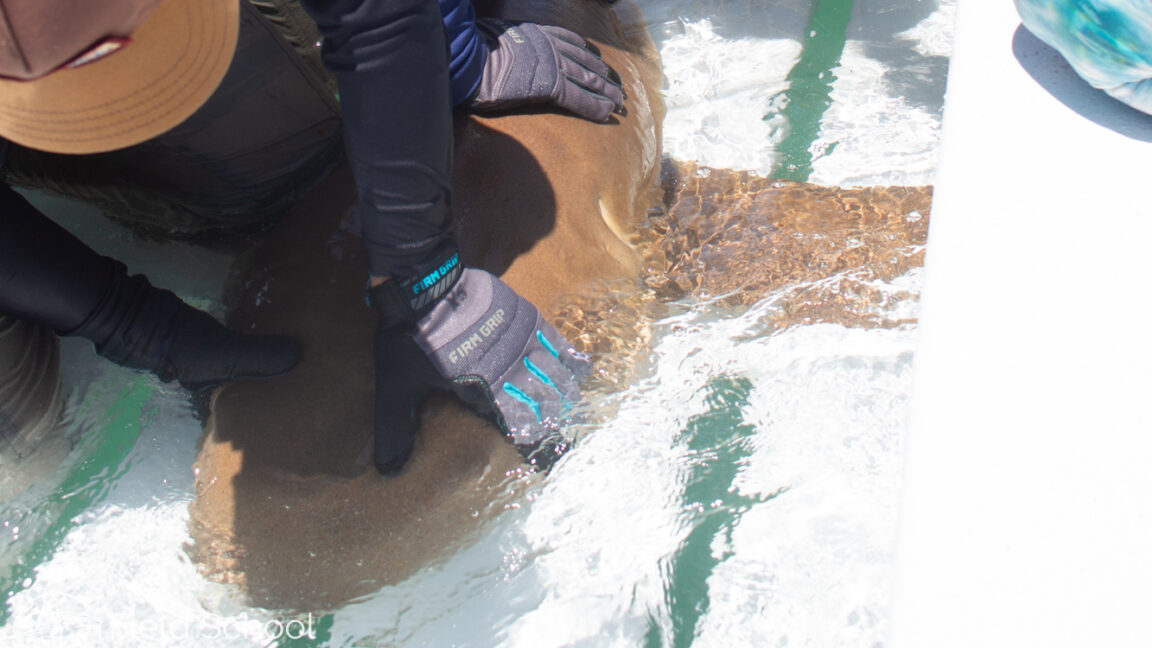
"When a whale washes up on the beach like that, we work with different organizations to decide what the best course of action is," said Atlantic Marine Conservation Society (AMSEAS) Chief Scientist Robert DiGiovanni, who was tasked with processing the whale. "Every stranding has a unique set of circumstances."
The drama has captivated the country, making politicians cry and drawing shamans from distant parts. Experts brought in first to help save the whale, and then to ease the animal's demise, have faced death threats.
The crowd atop the Hermosa Beach Pier watched with bated breath as a local fisherman, stripped down to his underwear and armed with only a pair of scissors, waded into the water in an attempt to free a juvenile great white shark.
During major floods, thousands of tiny fish convene at Luvilombo Falls in the upper Congo River Basin to undertake a peculiar vertical migration, described for the first time today in Scientific Reports.
"There are not very many conservation issues that I'm aware of where industry and conservationists and consumers and the fishermen and the resource users all want the same thing. Every stakeholder wants less bycatch."
In February 2023, an article in the Mexican press announced the capture of a vessel some 195 nautical miles from the port of Lazaro Cardenas in the state of Michoacan. It had been carrying nearly 700 pounds of cocaine packaged in plastic-wrapped bricks, in addition to 1,650 liters of hydrocarbons in 33 plastic containers. Two Ecuadorian fishermen were among the five detainees, and their immigration records showed unusual activity.
It looked like the silvery blade of a knife. Peering through his goggles, diver Ted Judah had laid eyes on a deep-sea creature rarely encountered by humans. He and wife Linda were diving off McAbee Beach in Monterey County in late December when, near the surface, he spotted the undulating thing. It was some kind of ribbon fish, he wrote in a post on the Facebook group Monterey County Dive Reports. Kevin Lewand solved the mystery.
The record-breaking arctic blast that hit Florida earlier this month may have sent humans scurrying for winter coats, but it sent wildlife scurrying, swimming and slithering for their lives. Some of those animals were native, some were invasive. Some survived. Thousands of others did not. The benchmark for cold snaps in Florida is the 2010 freeze, which killed manatees, crocodiles, iguanas, thousands of snook and goliath grouper, and caused 50% to 90% of invasive pythons to die in some areas.