#seti
#seti
[ follow ]



#fermi-paradox
Science
fromFuturism
2 months agoSomething May Be Scrambling Alien Messages, NASA-Funded Research Finds
Space weather phenomena near alien planets could broaden and scatter extraterrestrial signals across multiple frequencies, making them undetectable by current SETI searches focused on narrow frequency bands.

fromwww.theguardian.com
2 months agoStormy space weather may be garbling messages from aliens, new research suggests
Stellar activity such as solar storms and plasma turbulence from a star near a transmitting planet can broaden otherwise ultra-narrow signals. That spreads the power of any such transmission across more frequencies, the institute's scientists say, which makes it more difficult to detect using traditional narrowband searches.
Science
fromBig Think
2 months agoThe biggest overlooked problem in the hunt for alien Earths
In all the known Universe, at least as of 2026, the only world known to support life is planet Earth. Despite all we've learned about the Universe, including: the vast abundance of exoplanets, including rocky exoplanets with Earth-like temperatures, the ubiquity of heavy elements, the commonness of organic molecules that are known precursors to life, and the long cosmic timescales over which stars with such planets form, there are no known examples of worlds, other than our own, where life processes or definitive biosignatures have been detected.
Science
fromThe Walrus
3 months agoCanada Is Building a Surveillance Network in Space | The Walrus
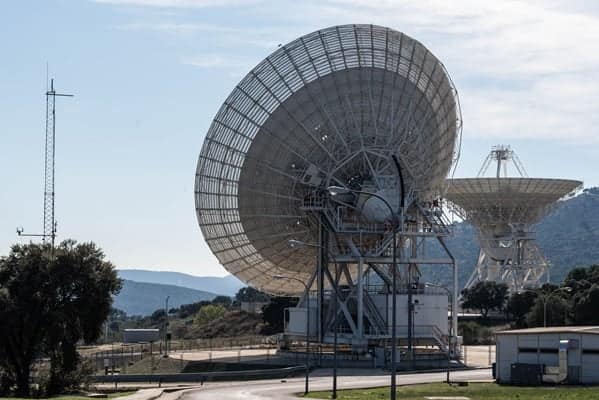
Our iron giant is a deep space radio telescope, with an antenna dish measuring forty-six metres across, the largest instrument of its kind in Canada. Starting in the 1960s, the Algonquin Radio Observatory performed a number of cutting-edge scientific projects, including joining SETI's early efforts, in the 1970s and 1980s, to find signatures of alien life-spectrum emissions from water molecules, artificial transmitter signals. No luck.
Science


[ Load more ]