#mystery-novels
#mystery-novels
[ follow ]
#true-crime #science-fiction #freida-mcfadden #psychological-thriller #mystery #character-development #identity

Television
fromBustle
1 month agoKerry Washington's New Thriller May Have A Shocking Twist
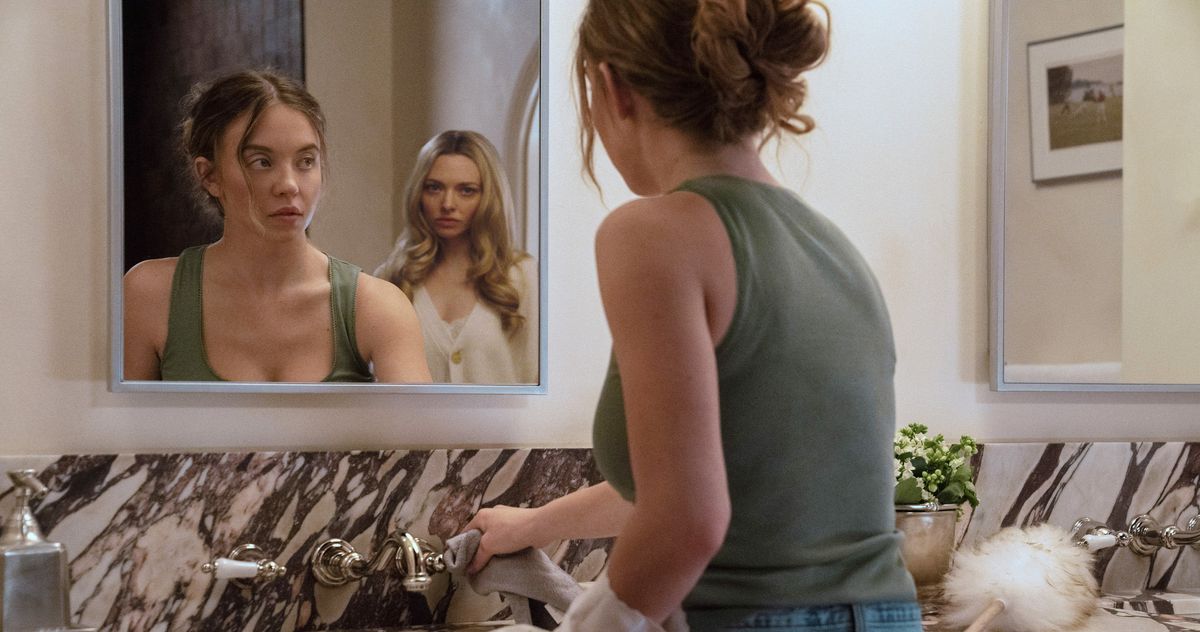
Apple TV's Imperfect Women follows three women navigating an affair and murder, exemplifying the 'good for her' genre where morally gray female characters make questionable choices in response to difficult circumstances.
Film
fromInsideHook
1 month agoThe Sensational 19th-Century Adaptation That's Not "Wuthering Heights"
The Count of Monte Cristo PBS adaptation is an exceptional book-to-screen adaptation featuring an Oscar-winning director and acclaimed actors bringing Alexandre Dumas's 1840s classic to thrilling life.
Television
fromSlate Magazine
1 month agoNicole Kidman's New Crime Show Is Surprisingly Captivating-and Goes Unexpected Places
Nicole Kidman stars as Kay Scarpetta in Amazon Prime's new series adaptation, blending family drama with forensic investigation as Kay confronts a murder matching a serial killer she caught 25 years ago.
fromPsychology Today
1 month agoThe Black Dahlia Murder and the Power of Storytelling
The myth is that the murdered woman was 'a sex worker, a gangster's moll, or a movie extra yearning to become Lana Turner.' In fact, Elizabeth Short was a young woman who wanted to see more of the world than her hometown offered. She had suffered abuse from her father and dreamed of making a new life for herself in Los Angeles.
Los Angeles
Books
fromwww.npr.org
1 month agoAuthor Luke Kennard talks about his novel, 'Black Bag'
Luke Kennard's novel 'Black Bag' fictionalizes a 1967 psychology experiment where a silent, bagged actor in a classroom gradually becomes liked by students through repeated exposure, exploring how familiarity transforms perception.

Film
fromIndieWire
1 month ago'Young Sherlock' Stars Hero Fiennes Tiffin and Joseph Fiennes Crack the Case on Big Spoilers and Real Chemistry
Hero Fiennes Tiffin stars in Prime Video's "Young Sherlock" opposite his uncle Joseph Fiennes, marking their first significant on-camera collaboration in a major project.
fromwww.theguardian.com
2 months agoWatson season two review a Sherlock Holmes spinoff full of naughty wit
Long before that, the biggest drama in the world was House, which was set in a hospital but featured a mercurial genius solving baffling mysteries once the House-Home-Holmes penny dropped, you knew you were watching Sherlock in disguise. Watson is the latest attempt by US network television to keep the Conan Doyle canon firing, and it's a straight cross between House and Elementary.
Television
fromThe Atlantic
1 month agoPushing the Limits of Historical Fiction
Enrigue's 'penchant for shooting the facts of history through the prism of the absurd' makes him singular-but it also puts him firmly in a long literary tradition. The book 'distills a byzantine swirl of historical events through the lives of a handful of very colorful characters,' intertwining several real and invented incidents with major moments in the Apache Wars, a series of skirmishes involving Native Americans, the U.S., and Mexico across the Southwest borderlands.
Books
Television
fromwww.theguardian.com
2 months agoEternally spellbinding': the TV shows that baffle you but you can't get enough of
Catterick, Monkey Dust, The OA, and Mrs Davies deliver surreal, darkly comic, and increasingly bizarre narratives blending crime, dreamlike animation, sci‑fi, and oddball humor.
fromJezebel
1 month agoTurns Out, When You Write a Novel About Killing a Politician, People Tell You How They'd Do It
When the people who are after me get here, they'll arrest me and put me on trial, or they'll disappear me to some black site. Or they won't bother with any of that and they'll just kill me. All of these seem like plausible outcomes, but in the novel's prologue, the narrator seems much more confident of her success: I am a fucking genius, a gorgeous fucking genius, and the only thing left to do is sit down and write.
Books
fromThe New Yorker
2 months ago"This Is How It Happens," by Molly Aitken
You are leaving work, your suit still damp from the morning's downpour, the skin on your palms peeling. You are clutching two supermarket bags, tins of cream soup and tuna knocking against one another. The rain is hard and your anorak is cheap. You are on your way to Stockbridge, to your parents' house, which only your father inhabits now that your mother is gone.
Books
[ Load more ]