On this site birthed in 1963 lays lain layed lies the location original whereabouts around here of the Berkeley Copywriter's Guild, A place where word geeks were often found with their smug understanding of grammar and their tiny worn-down blue pencils marking up all the fun words for boring ones.
If you don't read Nellie Bowles every Friday, you are leading a sad, barren, and empty existence. Everything she does is funny and wise. Her columns have the exact spirit of the 70's writers whom I adored and who were so damn funny-and also deeply in the know. She has been described as the lovechild of Tom Wolfe and Joan Didion and the funniest writer in America.
Tracy Kidder's gifts for storytelling and tireless reporting are an enduring reflection of the empathy, integrity, and endless curiosity he brought to everything he did.
In 1836, Apaches raided a remote ranch near Janos, a tiny town on the northern fringes of the state of Chihuahua, in the newly independent republic of Mexico. The Natives absconded with some cattle, as well as with a young widow named Camila. Setting off in pursuit was José María Zuloaga, a taciturn lieutenant colonel in the Mexican army supported by a band of irregulars. Among them: a self-possessed teenager who served as an aide-de-camp, a pair of Yaqui brothers whose permanent address was the town jail, and a sharp-shooting nun named Elvira, who was actually a singer of zarzuelas dressed up in a habit.
I think it probably started when I first made contact with Tom Clark. He was in England at graduate school and he asked me to be in a magazine he was starting. We somehow began talking about rock music and he subsequently sent me 45s by The Cream and Jimi Hendrix Experience, both groups being unknown to me.
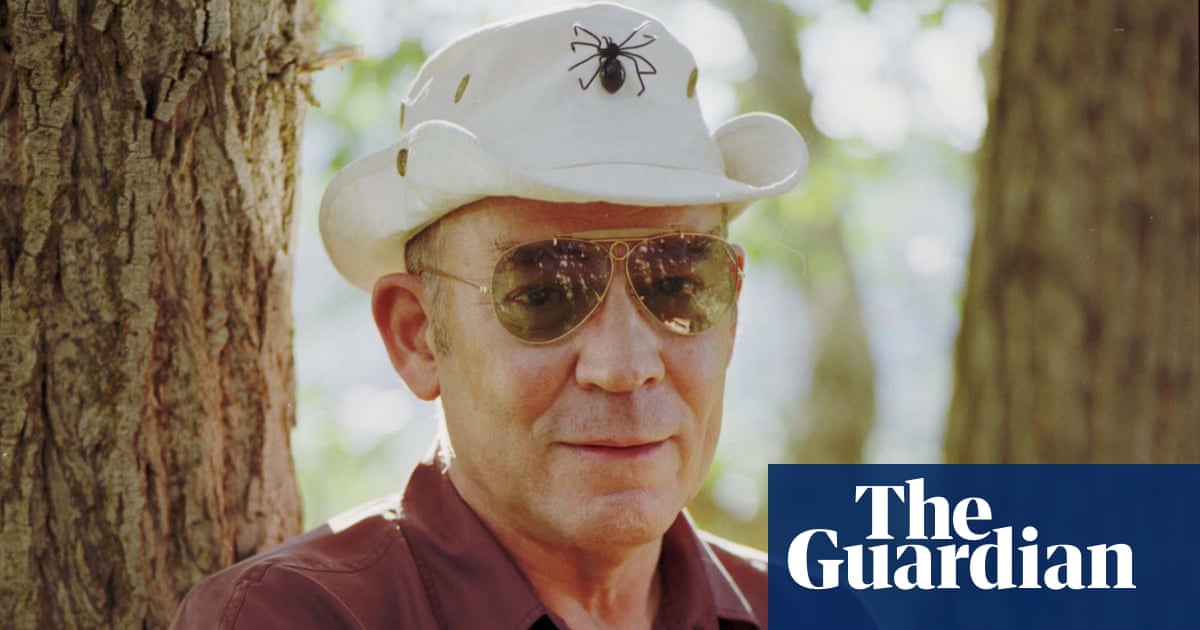
A review of the 2005 shooting death of the journalist Hunter S Thompson has confirmed authorities' original finding that his death was a suicide, Colorado investigators said on Friday. The review by the Colorado bureau of investigation (CBI) was announced in September after Thompson's wife, Anita Thompson, contacted authorities with new concerns and potential information regarding the investigation into Thompson's death, the agency said in a news release.
"Race Against Time: A Reporter Reopens the Unsolved Murder Cases of the Civil Rights Era" quickly became one of my favorite nonfiction books written by a journalist. I appreciated how he showed the grueling, day-to-day work local journalism requires, and how many layers of people fought him in revealing the despicable work of the Ku Klux Klan.
Several years ago, Michael Pollan had a disturbing encounter. The relentlessly curious journalist and author was at a conference on plant behaviour in Vancouver. There, he'd learned that when plants are damaged, they produce an anaesthetising chemical, ethylene. Was this a form of self-soothing, like the release of endorphins after an injury in humans? He asked Frantisek Baluska, a cell biologist, if it meant that plants might feel pain. Baluska paused, before answering: Yes, they should feel pain.
In 1968, a "good girl" is squeaky clean. She studies hard, follows the rules, gets into college and doesn't embarrass her parents. She doesn't lie or drink or do drugs. She doesn't participate in the Summer of Love or experiment with any of its alternative ways of living. She definitely doesn't have premarital sex, get pregnant and upend everyone's meticulously laid plans for her future.
When the people who are after me get here, they'll arrest me and put me on trial, or they'll disappear me to some black site. Or they won't bother with any of that and they'll just kill me. All of these seem like plausible outcomes, but in the novel's prologue, the narrator seems much more confident of her success: I am a fucking genius, a gorgeous fucking genius, and the only thing left to do is sit down and write.
A writer is a kind of magician. Their job is to create living, three-dimensional people out of the ordinary stuff of ink and paper. This is no easy task, because readers can't literally hear, touch, or observe a character. Everything that defines a human being in real life-the physical space they occupy, or how they smell, feel, and sound-is stripped away, replaced by description. But authors have one major, mystical advantage: They can show you what's happening inside of someone's brain.