Anthony Leggett created a remarkably intuitive theory of superfluids, which earned him the 2003 Nobel Prize in Physics, showcasing his significant contributions to condensed-matter physics.
Faltings was awarded the prize for work proving central results in the theory of algebraic equations linking whole numbers together. The prize highlights Faltings's work in 1983 on the theory of Diophantine equations, which are equations involving sums and powers of unknown numbers for which the solutions have to be rational - meaning they can be written as a fraction of two whole numbers, or integers.
During the pandemic, many researchers expressed reluctance to share their ideas for fear of professional repercussions, such as losing credibility or funding. This culture of silence is particularly detrimental in critical situations like a pandemic, where new ideas could save lives.
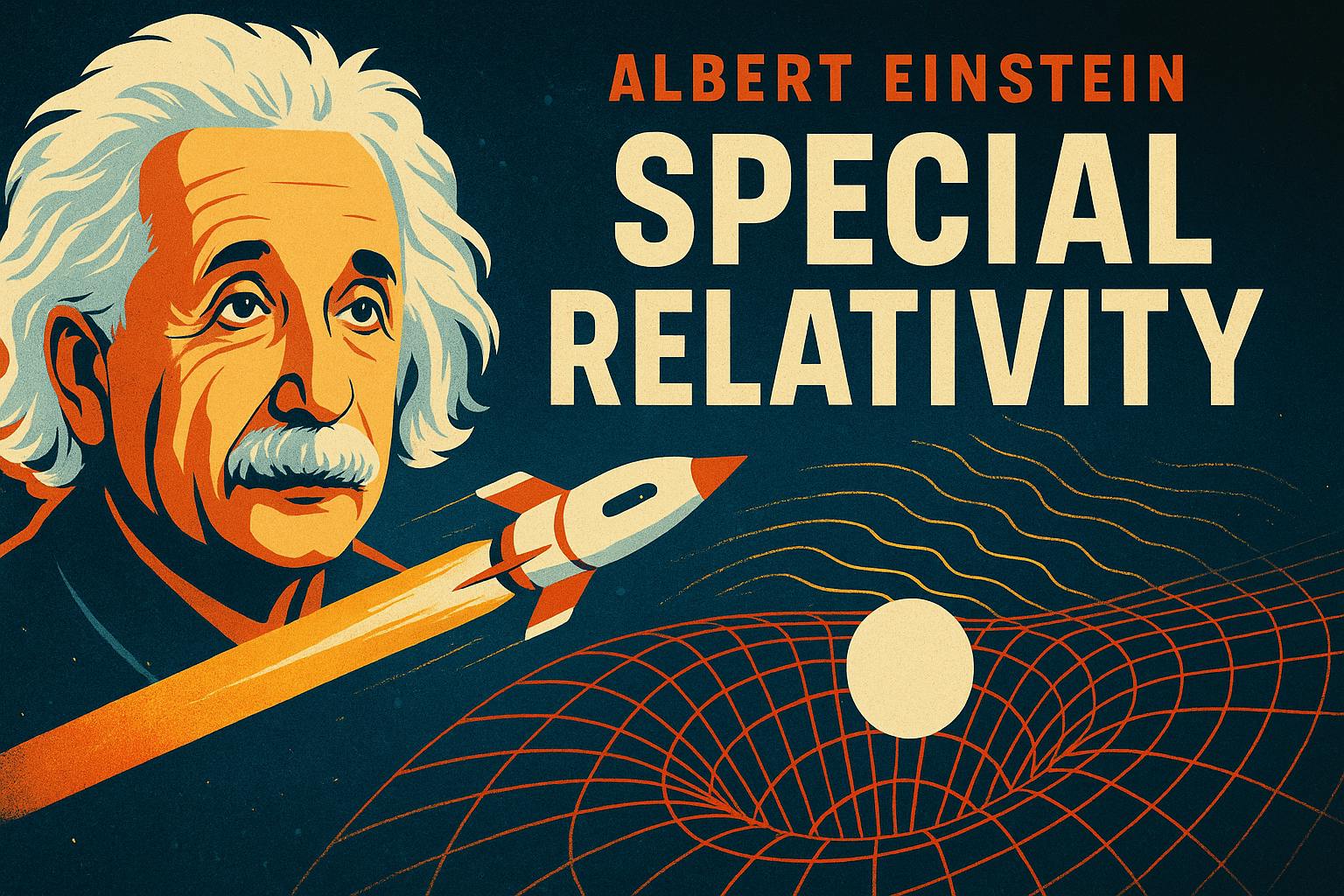
We now recognize that even ideas like "when" and "where" are subject to the laws of Einstein's relativity, and that in relativity, space and time are not absolute quantities, but rather are relative to each and every unique observer.
A core question we want to understand is where did matter come from. And then, if you know about antimatter, it's natural to ask, why is that not here? The process is not understood and we are hunting for clues as to why it happened, says Dr Christian Smorra, a physicist on the Baryon Antibaryon Symmetry Experiment (Base) at Cern.
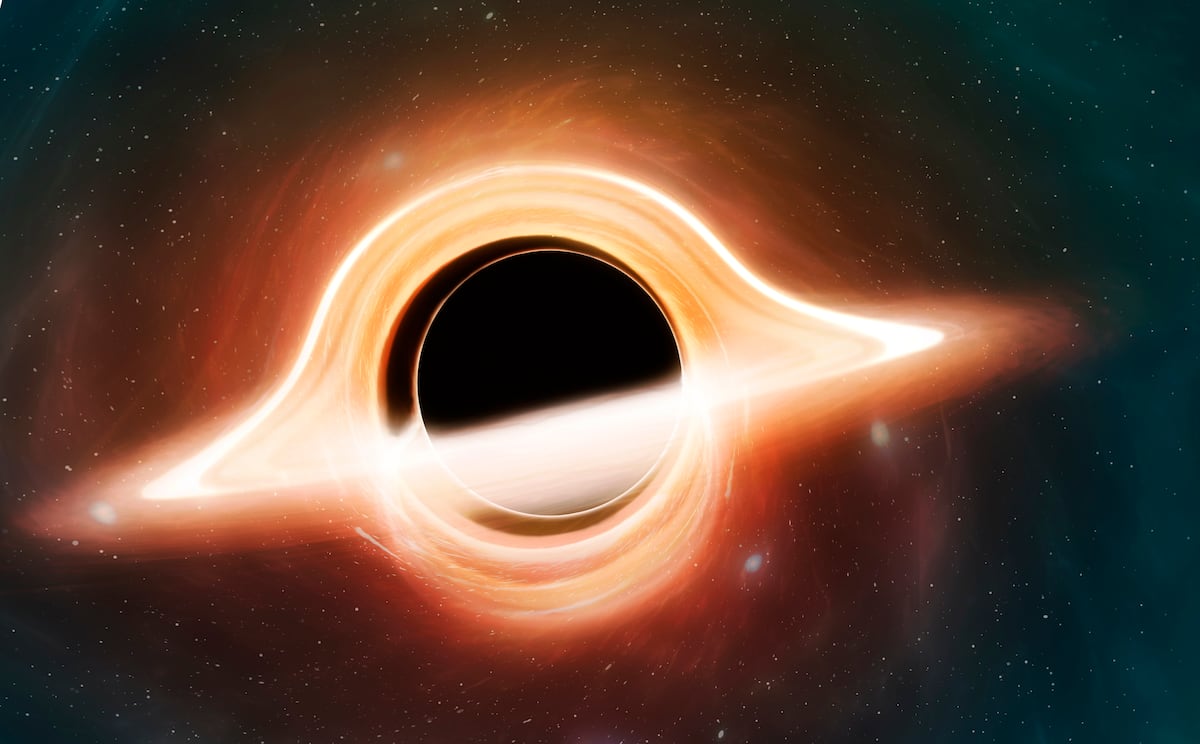
According to Einstein's General Relativity, for every black hole that exists within the Universe, there are only three properties that go into it that matter in any way: the black hole's total mass, the black hole's net electric charge, and the black hole's intrinsic angular momentum, and that's it. It doesn't matter what type of matter went into the black hole in order to form it; all that matters is its mass, charge, and angular momentum.
Perhaps the most commonly told myth in all of science is that of the lone genius. The blueprint for it goes something like this. Once upon a time in history, someone with a towering intellect but no formal training wades into a field that's new to them for the first time. Upon considering the field's issues, they immediately see things that no one else has ever seen before.
Star-formation will eventually end, and then the last shining stars will burn out. Galaxies will dissociate due to gravitational interactions, ejecting all masses and leaving only supermassive black holes behind. And then those black holes will decay via Hawking radiation, leaving only cold, stable, isolated bodies, from which no further energy can be extracted, all accelerating away from us within our dark energy-dominated Universe.
Any object or concept can be represented as a form, a topological surface, and consequently any process can be regarded as a transition from one form to another. If the transition is smooth and continuous, there are well-established mathematical methods for describing it. In nature, however, the evolution of forms usually involves abrupt changes and perplexing divergences, or transformations. Because these transformations represent sudden disruptions of otherwise continuous processes, Rene Thom of the Institut des Hautes Etudes Scientifiques in France termed them elementary catastrophes.