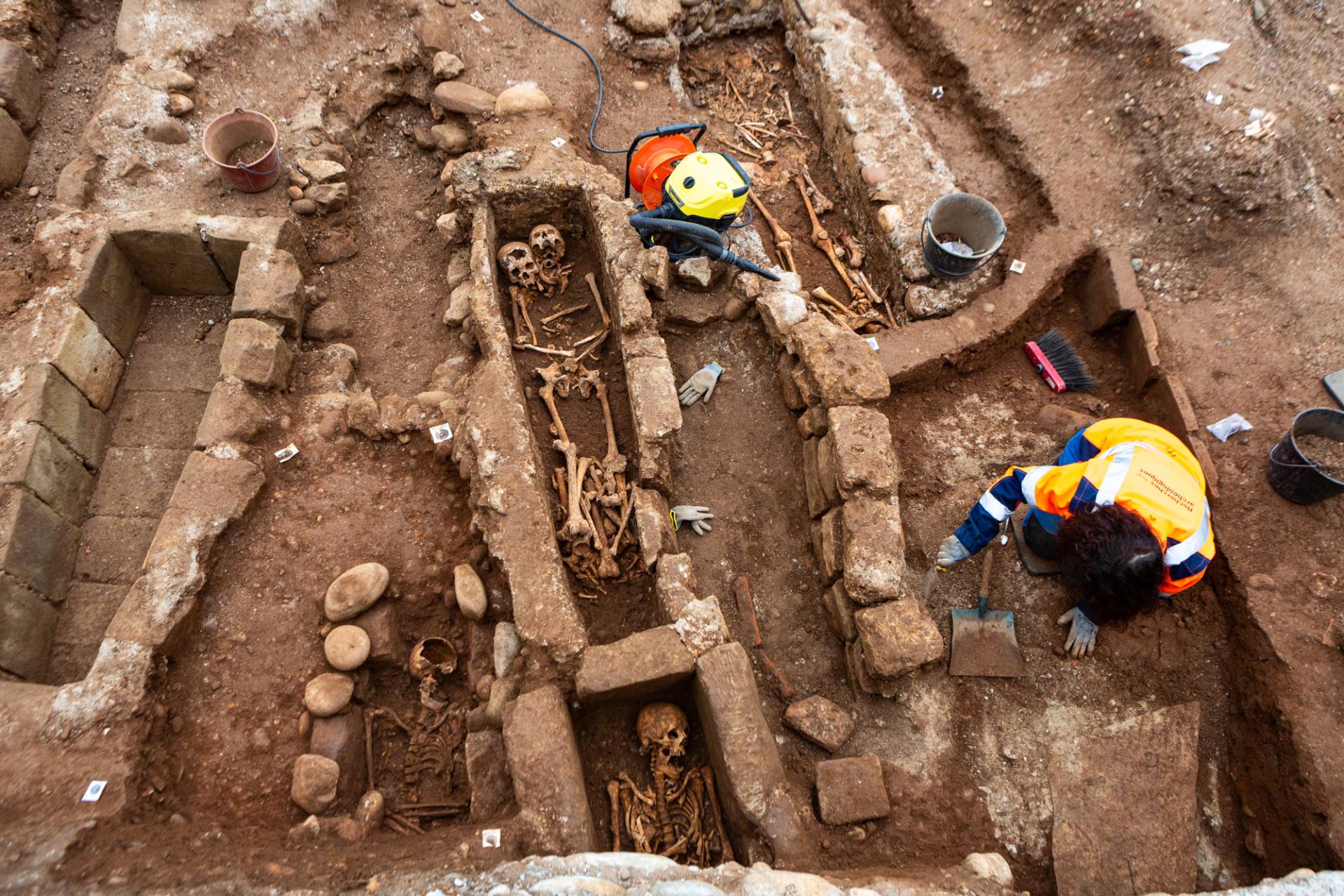
The remains of a monumental hall belonging to a 4th-century episcopal palace have been discovered at Ostia Antica, Rome's ancient port town. The base of the structure is eight by 20 meters (ca. 26 by 65 feet) and the walls were an estimated eight meters high. This is an extraordinarily large space, and it was richly decorated with mosaic floors and marble panels.
The story of the birth of Jesus appears only in two of the four Gospels of the New Testament: Matthew and Luke. They provide different details, though both say Jesus was born in Bethlehem. The exact day, month and even year of Jesus's birth are unknown, said Christine Shepardson, a professor at the University of Tennessee who studies early Christianity. The tradition of celebrating Jesus' birth on Dec. 25, she said, only emerged in the fourth century.
Archaeologists have made a stunning discovery at a biblical city where the Apostle Paul famously performed a miraculous healing of a man born lame. Teams working in the ancient city of Lystra have uncovered a 100-foot-long basilica adorned with gold-gilded mosaics and richly decorated walls, hallmarks of late antique craftsmanship. The basilica provides tangible evidence that Lystra was a thriving urban center during the earliest centuries of Christianity.