#dividend-etfs
#dividend-etfs
[ follow ]
#income-investing #retirement-income #schd #passive-income #portfolio-diversification #retirement-planning
#reits


Real estate
from24/7 Wall St.
2 days agoSmall REIT ETF paying monthly dividends faces refinancing squeeze as rates hold steady
KBWY targets high-yield small- and mid-cap equity REITs and pays monthly dividends, but durability depends on underlying dividend coverage amid refinancing, vacancy, and rate risks.
Retirement
from24/7 Wall St.
1 month agoForget SCHD: 3 Overlooked Dividend ETFs Yielding Over 5% That Deserve Your Attention
Diversifying dividend investments across alternative ETFs like SCHD, KBWY, HGER, and QDPL reduces concentration risk while capturing higher yields from undervalued sectors including REITs and commodities.



from24/7 Wall St.
1 week agoVanguard High Dividend Yield ETF Delivers 67% Five-Year Returns Against Schwab U.S. Dividend Equity ETF's Steadier 229% Decade Gain
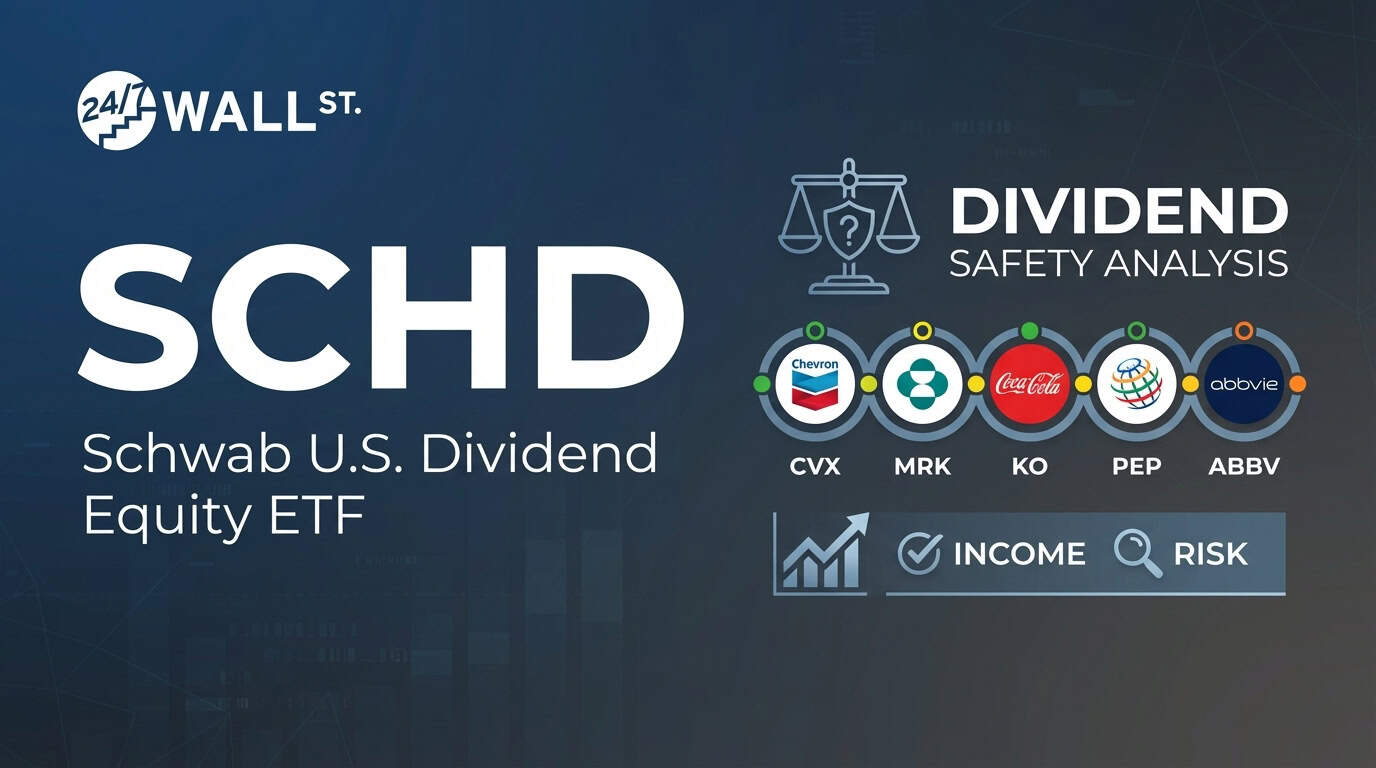
SCHD tracks the Dow Jones U.S. Dividend 100 Index, a quality-weighted screen that demands cash flow strength, return on equity, and a 10-year dividend record. The result is concentrated. Bristol-Myers Squibb sits at 4.26% of the fund, followed by Merck at 4.14% and ConocoPhillips at 4.10%. Healthcare names BMY, MRK, and ABBV anchor three of the top 10 slots.
Miscellaneous




#passive-income


Retirement
from24/7 Wall St.
1 month ago$500 a Month in Passive Income Is Closer Than You Think With These 4 Dividend ETFs
Investing $100,000 across four dividend ETFs can generate approximately $500 monthly in passive income through diversified, professionally managed portfolios across different geographies and sectors.
Business intelligence
from24/7 Wall St.
2 months agoThe 3 Best Dividend ETFs to Buy Every Time the Market Dips
Long-term investors should view current market volatility as an opportunity to purchase quality dividend ETFs for steady passive income while the economy expands and corporate earnings remain robust.
Retirement
from24/7 Wall St.
2 months agoThe Off-the-Radar Dividend ETFs Quietly Outperforming Everything in Your Portfolio
Underappreciated dividend-paying ETFs like SDIV and CHAT offer higher yields and returns than popular alternatives, with SDIV delivering nearly 30% total returns and 9% dividend yield.
E-Commerce
from24/7 Wall St.
2 months agoThe Mid-Cap Dividend ETF That's Been Quietly Beating Schwab's SCHD ETF Lately
WisdomTree U.S. MidCap Dividend Fund (DON) delivers competitive long-term returns through dividend-weighted mid-cap exposure with strong stability, though trailing SCHD in yield and recent performance.
from24/7 Wall St.
2 months agoGot $10,000? Put It in These Dividend ETFs Now
The formula is to make investments of $4,000, $3,000, and $3,000 in relatively low-risk dividend ETFs. Since we're choosing funds that are already diversified, we can diversify even further with allocations into three different ETFs. A sensible plan that could turn your $10,000 portfolio into an income-generating juggernaut.
Miscellaneous





from24/7 Wall St.
3 months ago6 Monthly Dividend ETFs That Won't Collapse in a Down Market
But with so many dividend ETFs out there, how do you pick the ones that can remain resilient even during down markets? The ETFs that have historically done this are known to screen for high-quality and well-established companies with strong financials and consistency in paying out and even raising dividends year over year. Many are heavily invested in defensive sectors which typically remain stable during down markets. And some also engage in alternative income generating strategies like selling options.
Business





from24/7 Wall St.
3 months ago5 Dividend ETFs I'd Buy Instead of Chasing 9%+ Yield Traps
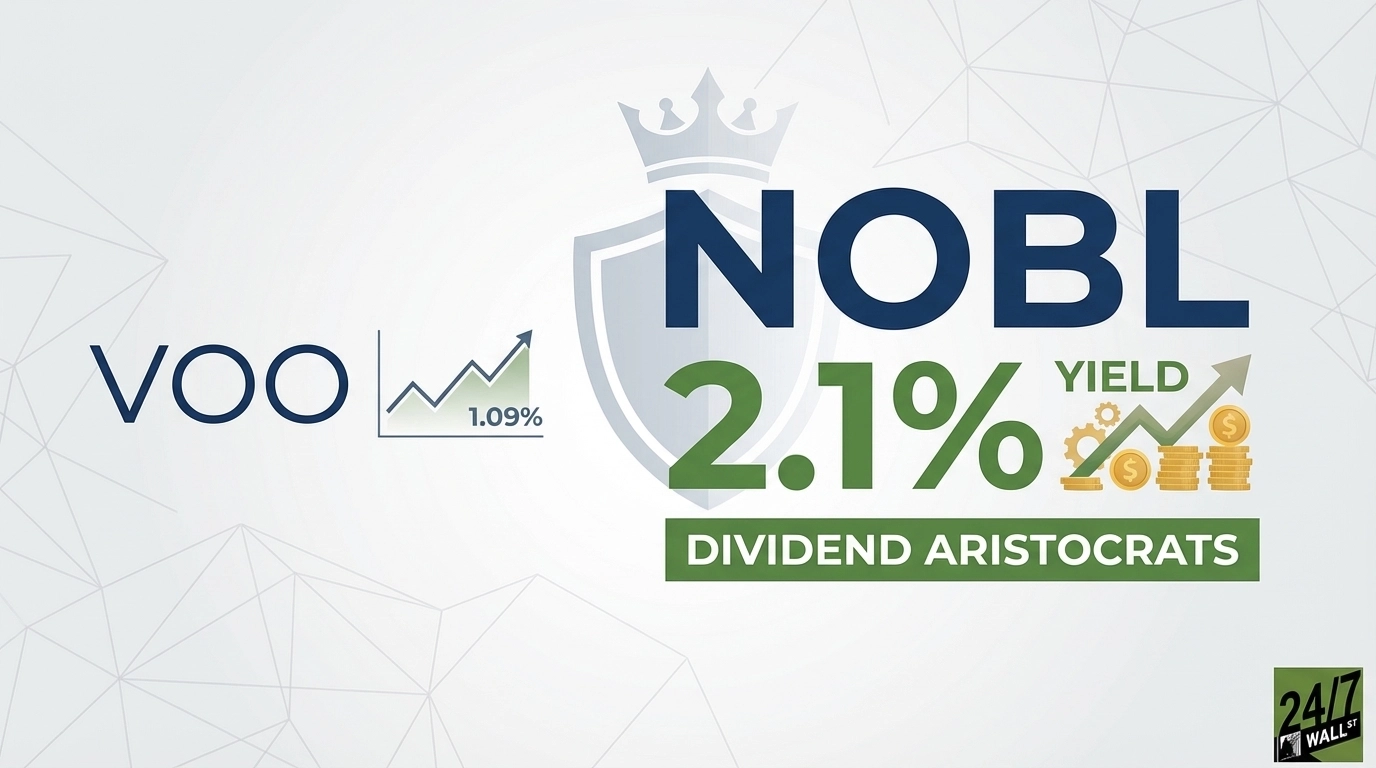
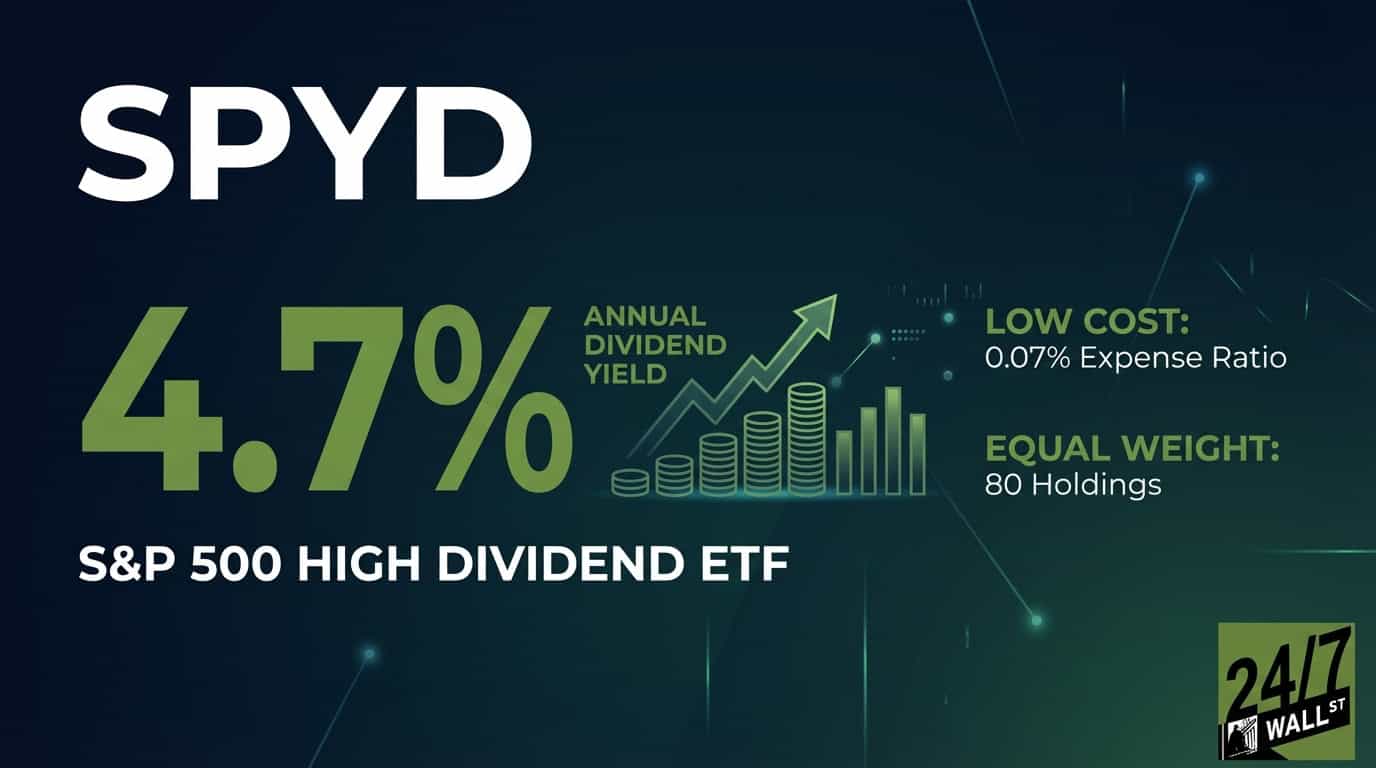
Its strategy is to invest in high-quality companies with strong fundamentals and consistency in paying out dividends. It also shines for its ultra-low expense ratio of 0.06%. Moreover, it has generated a five-year return of over 35% and offers a high yield of around 4%. SCHD is heavily invested in defensive sectors like consumer staples and healthcare. Defensive sectors are recognized for generally remaining resilient even during market downturns.
Business




from24/7 Wall St.
4 months agoSPDR's ETF Pays 4.5% And Is Perfectly Positioned Right Now
EDIV solves a specific portfolio problem: capturing dividend income from emerging markets without concentrated country or sector risk. The fund tracks the S&P Emerging Markets Dividend Opportunities Index, holding over 100 stocks across South Africa, Brazil, Taiwan, Malaysia, and the Middle East. No single holding exceeds 4% of assets. The return engine is straightforward. Companies generate cash and distribute it as dividends.
Business
from24/7 Wall St.
4 months agoUnder The Radar ETFs I like More Than Vanguard and Fidelity's Options
First on our list is the SPDR Russell 1000 Yield Focus ETF ( NYSEARCA: ONEY). The fund focuses on companies that have a high yield, low valuation, small size, and strong quality. ONEY aims to mimic the returns of the Russell 1000 Yield Focused Factor Index. It focuses on the dividend yield and takes a meandering approach to ensure a steady payout. It has a yield of 3.29% and pays quarterly dividends.
Business
from24/7 Wall St.
4 months agoThe 3 Dividend ETFs You Should Put In Your Stocking And Keep There for a Decade or Longer
There are plenty of dividend stocks out there for equity investors looking to maximize their overall total portfolio returns. Dividends can play a significant role in generating long-term returns, with around one-third of the cumulative returns of the stock market coming from dividends over the long-term. Now, this current market is dominated by high-growth stocks, many of which don't provide meaningful yields (if there are dividends paid out, many top tech companies have a yield well less than 1%).
Venture
from24/7 Wall St.
4 months ago3 Consistent Dividend Appreciation ETFs Investors Are Largely Ignoring, But They Shouldn't
Sure, there are some products that pay out increasing amounts over time (such as annuities and other structured products). But for investors holding more traditional portfolios consisting of a mix of stocks and bonds, the bond portion of one's portfolio is typically fixed or fluctuates alongside interest rate movements over time. In contrast, investing in dividend-paying stocks with a track record of raising their dividend distributions over time can provide passive income streams with inflation protection.
Business

from24/7 Wall St.
5 months agoWant $3,500 per Year in Monthly Passive Income? Invest Just $2,500 in These Generous Dividend Stocks
Listen up, dividend overachievers! With a mere $2,500 per stock or exchange traded fund (ETF), it's entirely possible to bring in $3,500 worth of passive income per year. To sweeten the deal, we can build out a master plan that will get you paid on a monthly basis and maybe even on a weekly basis. The trick is to look into the realm of real estate, where the stocks can pay surprisingly high yields.
Real estate
from24/7 Wall St.
5 months agoThe Hidden Dividend ETFs Paying Over 6% Without Extra Risk
Why These Funds Offer High Income Without High Anxiety The four ETFs below earn their yield from real cash flows, and not from financial wizardry or crazy math. On the plus side, they own a large number of companies that do well with generating steady income, such as REITs, energy infrastructure, banks, utilities, banks, and other dividend heavyweights. The big takeaway here is that diversification matters, and it's how you balance out risk with profit potential.
Business
[ Load more ]