#cultural-support
#cultural-support
[ follow ]
#fundraising #community-support #san-francisco #community-engagement #art #immigration #music #charity #community
fromOregon ArtsWatch * Arts & Culture News
1 day agoTom Prochaska: Through the Open Door * Oregon ArtsWatch
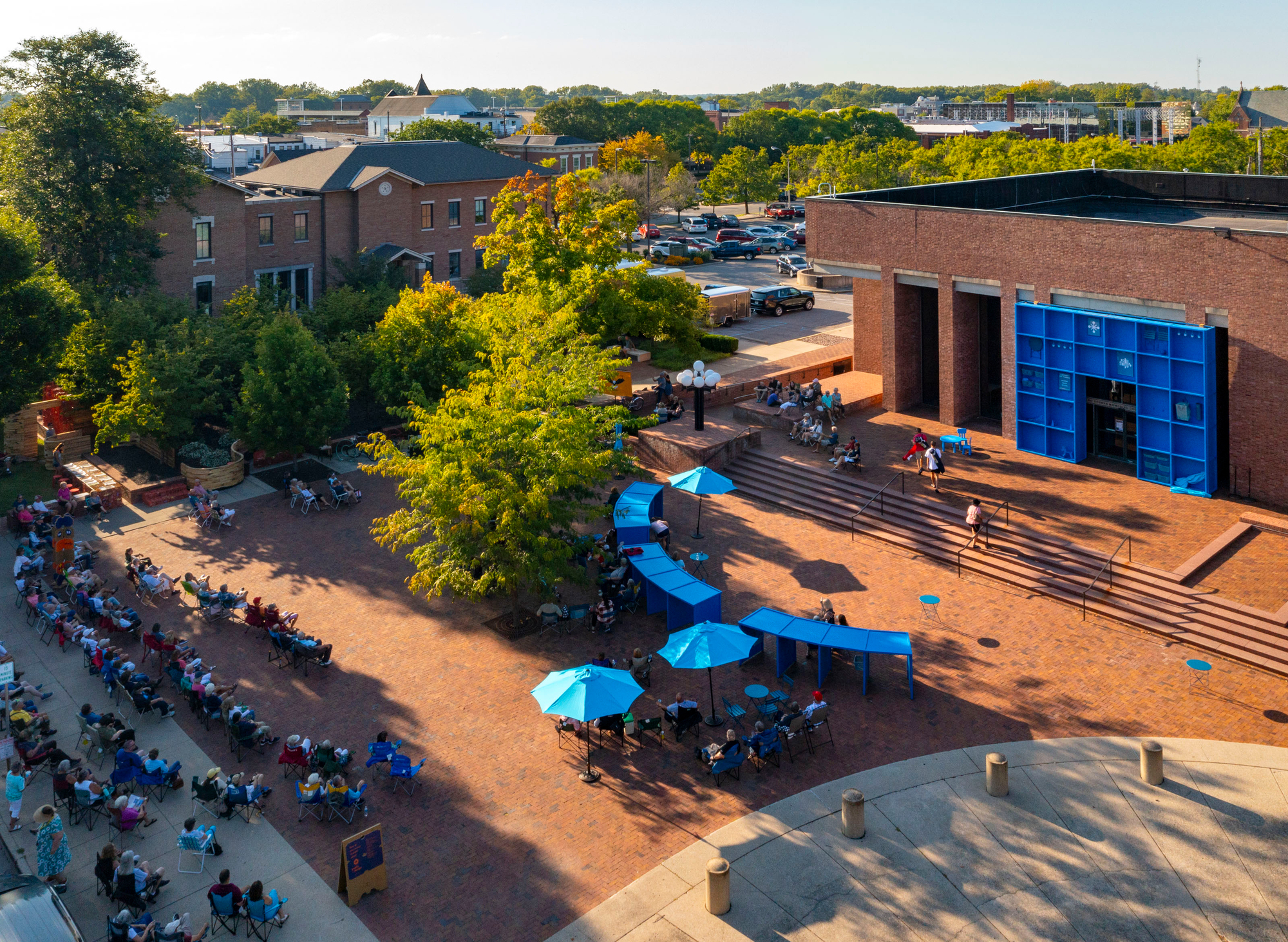
Tom Prochaska distinguished himself in many mediums: He was a masterful printmaker, an intuitive painter, a builder of papier-mâché figures, a creator of fused glass panels, and graphite-on-paper drawings.
Arts
Social justice
fromNonprofit Quarterly | Civic News. Empowering Nonprofits. Advancing Justice.
2 days agoThe Politics of Loving Kindness: Insights from a Birth Equity Initiative | Nonprofit Quarterly | Civic News. Empowering Nonprofits. Advancing Justice.
American politics increasingly tolerates brutal policies, widening inequality, while a vision of loving kindness could foster solidarity and community welfare.
#hungary
Europe politics
fromThe Art Newspaper - International art news and events
3 days ago'The extremely happy part of the crowd': Hungarian arts figures hope for change after 16 years of Orban rule
Viktor Orbán was ousted in Hungary's parliamentary election, marking a significant political shift with Péter Magyar's Tisza Party winning decisively.

Europe politics
fromThe Art Newspaper - International art news and events
3 days ago'The extremely happy part of the crowd': Hungarian arts figures hope for change after 16 years of Orban rule
Viktor Orbán was ousted in Hungary's parliamentary election, marking a significant political shift with Péter Magyar's Tisza Party winning decisively.
Psychology
fromSilicon Canals
4 days agoThere's a version of strength that only develops in people who had to figure out the rules of a place nobody explained to them. They don't talk about it because the people who had the rules handed to them wouldn't understand what was hard about it, and the people who also had to figure it out don't need the explanation. - Silicon Canals
Onsighting in climbing parallels navigating social systems, emphasizing perceptual capacity over resilience in understanding unwritten rules.
fromSan Jose Spotlight
5 days agoSan Jose residents rally to save railroad trestle - San Jose Spotlight
"San Jose was an agricultural wonderland. They called it the Valley of Heart's Delight, and most of it has been paved over and turned into high tech now. But this is a connection to our past."
California
Non-profit organizations
fromNonprofit Quarterly | Civic News. Empowering Nonprofits. Advancing Justice.
6 days agoThe Meaningful Reset: Designing Nonprofits to Survive Board-Staff Conflict | Nonprofit Quarterly | Civic News. Empowering Nonprofits. Advancing Justice.
Nonprofit organizations face unique challenges due to emotional investment, leading to conflicts that require careful analysis and intentional resolution.
fromPsychology Today
6 days agoHow Community-Based Healthcare Builds Engagement
Most people leave doctor visits with prescriptions, but still feel unsure—instructions make sense, but no one asks about their life. In contrast, when a provider knows your name, remembers your story, and explains care in a way that fits you, the experience feels different—and that difference matters.
Healthcare
Online Community Development
fromwww.theguardian.com
5 hours agoMaui residents are rebuilding Lahaina for locals, not tourists: In Hawaii, we take care of one another'
Hawaii faces severe flooding and housing crises, prompting community-led efforts to rebuild Lahaina with a focus on local needs over tourism.
Fundraising
fromNonprofit Quarterly | Civic News. Empowering Nonprofits. Advancing Justice.
3 days agoWhat If I Freeze with a Major Donor Ask? | Nonprofit Quarterly | Civic News. Empowering Nonprofits. Advancing Justice.
Silence after making a major gift ask is often the hardest part for fundraisers, leading to self-negotiation and smaller donations.
fromOregon ArtsWatch * Arts & Culture News
3 days agoIntroducing ArtsLink, a hub for posting and finding essential information * Oregon ArtsWatch
ArtsLink is envisioned as an essential community resource that aims to increase visibility, spur audience engagement, and strengthen the local arts and culture ecosystem.
Portland
Fundraising
fromNonprofit Quarterly | Civic News. Empowering Nonprofits. Advancing Justice.
5 days agoBridging Funders to the Front Lines: Pluralism and Greater Philanthropic Opportunity | Nonprofit Quarterly | Civic News. Empowering Nonprofits. Advancing Justice.
Movement-rooted philanthropic intermediaries are essential for addressing future challenges in the nonprofit sector and advancing equity.
fromThe Atlantic
5 days agoThinking Beyond 'The Man on the Plinth'
Late last month, The New York Times published an investigation that detailed harrowing allegations of sexual abuse by Chavez, including the grooming and assault of minors. Chavez's longtime colleague Dolores Huerta alleged that he had raped her.
Mission District
fromThe Art Newspaper - International art news and events
4 days agoMore than 200 cultural figures sign statement criticising international response to destruction of Iran's heritage
We, the undersigned, warn that the conduct of the United States and Israel has inflicted irreversible damage on humanity's cultural heritage and, in light of the 1954 Hague Convention for the Protection of Cultural Property in the Event of Armed Conflict, may give rise to violations of international law.
Arts

fromHarvard Business Review
3 weeks agoTreat Nonprofits as Strategic Partners, Not Just Philanthropic Recipients
Most for-profit companies still confine nonprofit relationships to corporate philanthropy. Donations flow through foundations, annual reports highlight community contributions, and nonprofit engagement is framed as evidence of corporate responsibility.
Non-profit organizations
Relationships
fromPortland Monthly
1 month agoFrom the Editor: Building Community Isn't Always Fun. Do It Anyway.
Proximity-based community organizing builds solidarity across differences through sustained engagement and shared material goals, fostering understanding that transcends initial disagreements.
fromOregon ArtsWatch * Arts & Culture News
1 month agoArts & Business Alliance of Eugene: Advocates for the arts * Oregon ArtsWatch
WolfBrown found that Eugene had an abundance of art; however, the town needed more support from the business sector. The results showed that "we punched above our weight for a community our size," said Kelly Johnson, executive director of the nonprofit Arts & Business Alliance of Eugene, which the city created in 2008 to link the arts and business communities.
Portland
fromThe Art Newspaper - International art news and events
3 weeks agoComment | Museums must be the leaders in a moral revolution
Bregman claims, 'Today the whole of Europe risks turning into one big Venice, a beautiful open-air museum. A great destination for Chinese and American tourists. A place to admire what was once the centre of the world.' This statement encapsulates the concern that Europe is losing its cultural significance.
Arts
Washington DC
fromWashingtonian - The website that Washington lives by.
1 month agoDance, Run, Party: 6 Ways to Help the DC Area Community
Washington-area volunteer events and fundraisers offer ways to support environmental causes, youth services, shelters, and medical research through paid and free activities.
fromThe Art Newspaper - International art news and events
1 month agoReimagining communities: inside the Hong Kong International Cultural Summit
Communities make museums and museums make communities. Part of the establishment of M+ was a public consultation where people were asked what kind of museums they wanted. The recommendation was not to build lots of little museums, but to create a big museum that was cross-disciplinary, unburdened by labels like "modern" or "contemporary". It was to be a museum plus more, and that was how we became M+.
Arts
Education
fromOregon ArtsWatch * Arts & Culture News
2 months agoPortland Art Museum's Bold New Vision for Youth and Community Education and Engagement * Oregon ArtsWatch
Portland Art Museum transformed spaces to prioritize K–12 education with transparent, tech-enabled learning studios and youth galleries integrated visibly into the museum.
Arts
fromThe Art Newspaper - International art news and events
1 month agoComment | Why museum leadership needs to decentralise
Traditional museum leadership models are failing under contemporary pressures, requiring a fundamental shift from centralized, individual authority to distributed, collaborative leadership structures.
fromHyperallergic
2 months agoArt for Dignity
As if demolishing the East Wing, gutting arts agencies, and slapping his name and face on several federal buildings weren't enough, the US president now wants to do away with a DC building known as the "Sistine Chapel of New Deal art." This week, we reported on a burgeoning campaign to save the Wilbur J. Cohen Federal Building, which houses murals by Ben Shahn, Philip Guston, Seymour Fogel, and other major American artists. We will continue to follow this story.
Arts
fromOregon ArtsWatch * Arts & Culture News
2 months agoArts and culture supporters urged to lobby for funding at 2026 Oregon Legislature * Oregon ArtsWatch
The day after Whitelaw testified, the state economist said that Oregon now has about $300 million more to spend than previously expected. The new revenue forecast does not mean the budget is in the black, however. There are new demands for the available dollars, including $600 million in upgrades to the Moda Center to retain the Portland Trail Blazers, a recently announced $50 million shortfall in Portland Public School funding,
Arts
fromThe Art Newspaper - International art news and events
2 months agoPersistent low attendance and funding cuts are forcing US museums to think local
Among the museum directors paying keen attention to the ruling, on 3 December, that all federal grants from the Institute of Museum and Library Services (IMLS) would be reinstated, the director of the Seattle Art Museum Scott Stulen heaved a sigh of relief. In 2025, the Pacific Northwest's leading art museum saw all its federal funding cut. That represented the loss of an annual income stream, he says, of between $300,000 and $400,000.
Arts
fromSan Jose Spotlight
2 months agoUrbanowski: The arts need more investment from the state - San Jose Spotlight
Artists make California vibrant, innovative and culturally rich, yet our state ranks 35th nationally in per capita arts funding. When the state budget allocates just 53 cents per person to the arts, it's clear how little we're investing in the creative workers who shape the state's identity and economy. California's artists are delivering extraordinary value with minimal investment. Imagine what a stronger commitment to the arts could do for our communities, our economy and our future.
Arts
[ Load more ]