#bird-behavior
#bird-behavior
[ follow ]
#citizen-science #light-pollution #urban-wildlife #gulls #territoriality #seasonal-wildlife #aerial-flocking
fromwww.theguardian.com
3 months agoI did it. I actually saw a Cetti's warbler | Lev Parikian
Cetti's warblers barely existed in Britain in my childhood, with just a handful of sightings. But since the first breeding record in 1972 they've made inroads. Nowadays, if I visit a watery reserve and don't hear one, I write a strongly worded letter of complaint to the relevant authorities.
London music
fromThe Mercury News
3 months agoIs Santa Cruz spotted towhee singing a song of unrequited love?
Contrary to your belief that your yard might not be the best spot for love, your visitor obviously disagrees. A male towhee finds a place up high and can spend up to 90 percent of its time sending out that trill, calling for a mate. If this is the same bird, he might not be calling for a mate, but for his mate. Towhees are primarily monogamous, but only during mating season. There's a courtship, then a mating, and then the pair raise their offspring.
Science
Miscellaneous
fromwww.theguardian.com
3 months agoCountry diary: Persistence and confusion this is how magpies build their nest | Nic Wilson
Magpies start nesting in winter, build bowl-shaped platforms with heavy sticks using persistence over finesse, while other birds build protective covered or domed nests.
fromwww.mercurynews.com
6 months agoWhy are birds perching on only 1 set of power lines in Newark?
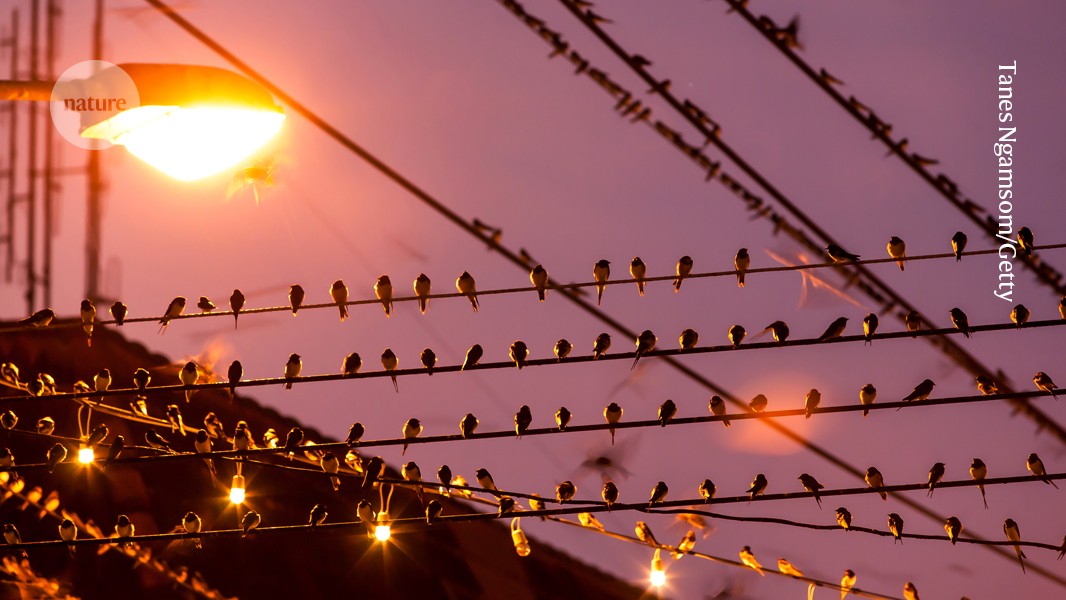
First off, birds really like sitting on elevated lines, whether those are power lines, telecommunication wires or cable lines. The high wires provide an excellent vantage point for surveying the area, giving them a bird's eye view of the territory. From there, they can look around for food and watch out for predators. The lines are also a convenient spot for taking a rest and as there are other birds on the line, a chance to converse.
Science
fromwww.scientificamerican.com
7 months agoThe Eclipse Turned Day to NightAnd the Birds Went Quiet
When a total solar eclipse plunged North America into darkness on the afternoon of April 8, 2024, the songbirds in Bloomington, Ind., suddenly fell silent. In the middle of the forest, the only sounds biologist Kimberly Rosvall could hear were the croaks of nocturnal frogs and the distant howl of a coyote. But when sunlight returned after four minutes of night, the songs did, too, as hundreds of birds greeted the morning in unison with a cheerful dawn chorus.
Science

[ Load more ]