#audio-control
#audio-control
[ follow ]
#music-production #home-theater #audio-advertising #ai-music #audio-technology #audio-interface #sonos #mpc-sample
fromZDNET
1 week agoHow I calibrated my subwoofer placement for peak impact in awkward room setups
Placing your subwoofer in the front quadrant of a room allows the walls to guide low-pitched sounds effectively, enhancing overall audio quality. Avoiding corners is crucial, as this can lead to muddy and overpowering bass that detracts from the listening experience.
Remodel





Design
fromYanko Design - Modern Industrial Design News
2 weeks agoA Ferrari-Inspired Speaker That Turns Motion Into Light and Sound - Yanko Design
ROSSO is a speaker that embodies a cinematic presence, inspired by Ferrari's design, emphasizing motion and energy through its unique illumination and form.


Roam Research
fromdesignboom | architecture & design magazine
2 weeks agoradio time machine AI audio system recreates past sounds for cognitive health in elderly care
AI-powered Radio Time Machine enhances well-being in elderly care by generating nostalgic audio content to stimulate memories and communication.


fromThe Verge
4 weeks agoThe secret story of the vocoder, the military tech that changed music forever
The vocoder was never supposed to be a revolution in music. Its development began a century ago, when an engineer at Bell Labs was looking for a simpler way to send phone calls across copper telephone lines.
Music production


fromDEV Community
1 month agoI Built a 100% Private, On-Device AI Audio Stem Splitter (No Servers!)
If you've ever used tools like PhonicMind or LALAL.AI, you know the drill: Upload your MP3. Wait in a queue. Pay for "credits" or high-quality downloads. Your file sits on someone else's server. For musicians, producers, or just karaoke fans, this is slow and privacy-invasive.
Music production
fromeLearning Industry
1 month agoHow To Remove Background Noise From Video: Best Practices For Professional Content
When professionals talk about how to remove background noise from video, they are really talking about improving the audio track of a video so the speaker's voice is clearer, more consistent, and easier to understand. Background noise refers to any unwanted sound that competes with the main voice, like air conditioning hum, office chatter, keyboard typing, traffic, or the low hiss created by recording equipment and compression. In video production, background noise removal is about reducing distractions so the listener can focus on the message.
Film


fromEngadget
1 month agoTembo might just be the world's cutest drum machine
The company says it designed Tembo to "enable everyone to create music from the very first touch." Co-founder David Davidov that most instruments take "so long to get to the fun part" and that Musical Beings wanted to "help people experience music as something they do, not just something they listen to."
Music production
fromThe Verge
1 month agoArturia's FX Collection 6 adds two new effects and a $99 intro version
Pitch Shifter-910 is based on the iconic Eventide H910 Harmonizer from 1974, an early digital pitchshifter and delay with a very unique character. Arturia does an admirable job preserving its glitchy quirks. Pitch Shifter-910 is not a transparent effect that lets you create natural-sounding harmonies with yourself. Instead, it relishes in its weirdness, delivering chipmunk vocals at the higher ranges. There is also a more modern mode that cleans up some artifacts while preserving what makes the 910 so special.
Music
Music
fromYanko Design - Modern Industrial Design News
1 month agoSynth Modular Controller Treats Music Making Like Building with Blocks - Yanko Design
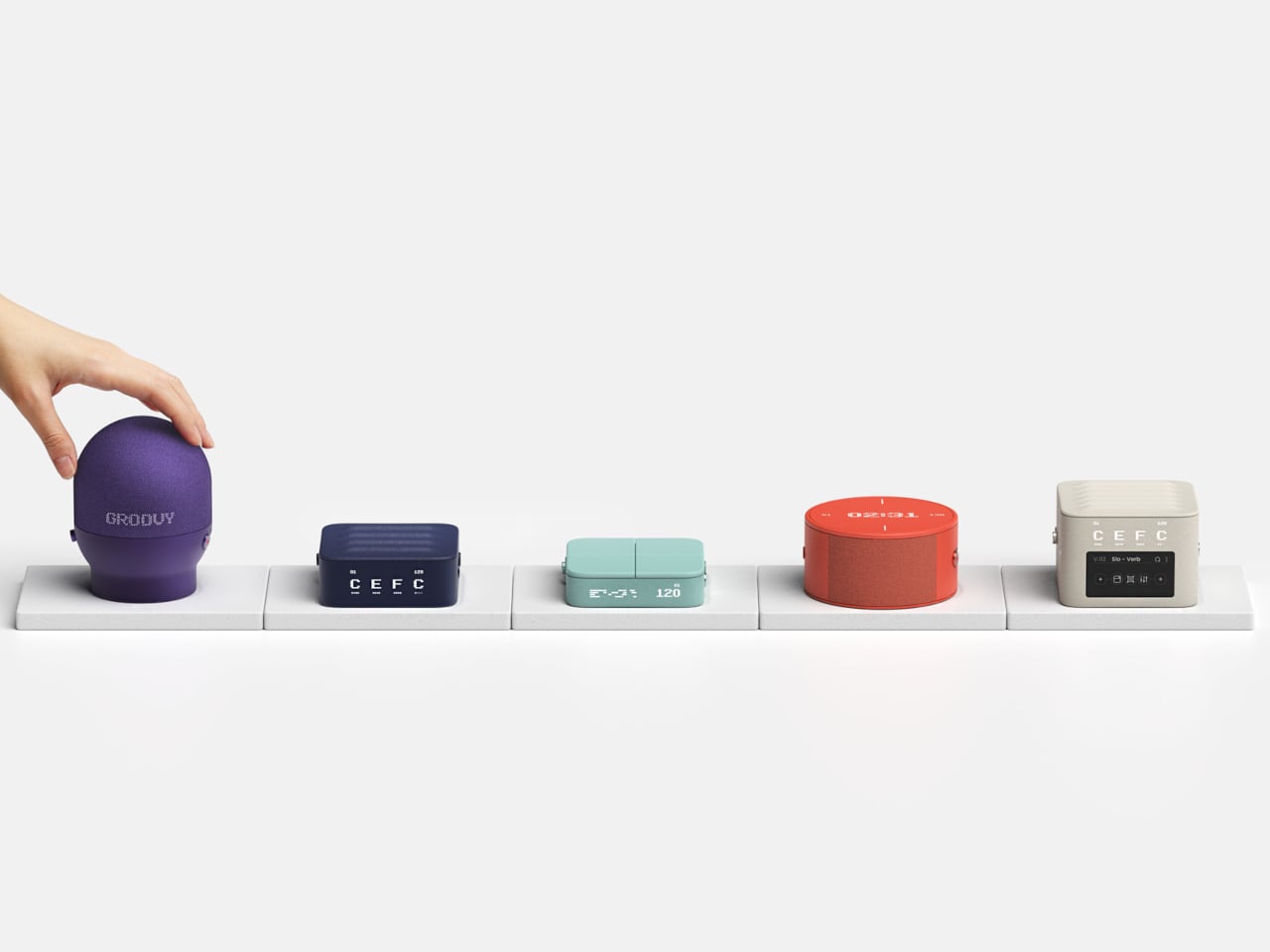
A modular synth system uses snap-together physical blocks for each function, making synthesis tangible, teachable, and scalable from beginner toy to serious performance instrument.
Gadgets
fromWIRED
1 month agoThese Fender Mix Headphones Come With Modular Parts for Easy Repairs
Fender's Audio Mix headphones feature fully replaceable and swappable parts, including the battery, with customizable colors and materials, offering a modular alternative to disposable wireless headphones.
fromEngadget
2 months agoKorg's new experimental synthesizer combines acoustic sounds with electronic control
The Phase8 uses a new form of "acoustic synthesis" that combines acoustic sound generation with electronic control. Takahashi says the synthesizer is "beyond analog vs. digital" and "beyond electronics" altogether. It features chromatically tuned steel resonators, which creates an acoustic sound similar to that of a kalimba. These signals can be manipulated via onboard effects and sequenced like a traditional synthesizer. Here's a video of the synth in action.
Music
fromEngadget
2 months agoAkai's MPC XL groovebox is the most powerful device the company has ever made
First of all, it offers four times the processing power of previous MPCs, which is enough to load up to 32 virtual instruments at the same time. This is assisted by a full 16GB of RAM, which is a whole lot in this era of AI tomfoolery. The XL can handle 16 audio tracks simultaneously. In my experience with previous units, this is more than enough for a full song.
Music
Music production
fromYanko Design - Modern Industrial Design News
1 month agoElgato's Wave Next Connects Your Mic, Software, and Stream Deck - Yanko Design
Elgato's Wave Next simplifies creator audio by moving complex processing onto custom hardware, eliminating software complications and delivering polished sound directly to applications.
Music production
fromMetro Silicon Valley | Silicon Valley's Leading Weekly
1 month agoSJSU, MAX/MSP & the Roots of Computer Music
MAX, an object-oriented programming environment created in the late 1980s, revolutionized music production and became foundational to SJSU's pioneering electro-acoustic music concentration.
fromYanko Design - Modern Industrial Design News
2 months agoTeenage Engineering-inspired Music Sampler Uses AI In The Nerdiest Way Possible - Yanko Design
Junho Park's graduation concept borrows all the right cues from TE's playbook, that modular control layout, the single bold color, the mix of knobs and buttons that practically beg to be touched, but redirects them toward a gap in the market. Where Teenage Engineering designs for people who already understand synthesis and sampling, the T.M-4 targets people who have ideas but no vocabulary to express them.
Gadgets
fromZDNET
2 months agoThese slick desktop speakers sound as good as they look (and the price is right)
When I sit at my desk to work, I play music in the background to avoid getting distracted. For an immersive listening experience that encourages productivity, I typically throw on a pair of headphones, with my current rotation consisting of the Bose QuietComfort Ultra, Sony Ult Wear, and Sennheiser HD 660S2. Also: Spotify vs. Apple Music: I've tried both streaming services, and prefer this one
Gadgets
Gadgets
fromYanko Design - Modern Industrial Design News
1 month agoRoland's $299 Pocket-Sized Audio Interface Was Designed Specifically For TikTok and Instagram Music Creators - Yanko Design
Portable mixer delivers studio-grade 24-bit/192kHz recording, onboard EQ, compression, reverb, battery power, and compact design tailored for livestreaming creators.
[ Load more ]