#asymmetric-warfare
#asymmetric-warfare
[ follow ]
#middle-east-conflict #strait-of-hormuz #iran #us-iran-conflict #military-strategy #us-military #naval-warfare
#iran
World news
fromLondon Business News | Londonlovesbusiness.com
2 months agoIran issues defiant challenge as Pentagon to deploy 3,000 troops - London Business News | Londonlovesbusiness.com
Iran challenges U.S. military presence, asserting readiness for asymmetric warfare after Pentagon announces troop deployment to the Middle East.
#naval-warfare
Russo-Ukrainian War
fromwww.businessinsider.com
2 months agoUkraine says its 'red' team forces beat NATO's 'blue' team forces in every combat scenario during recent naval drone drills
Ukrainian naval drones defeated NATO forces in a recent naval combat drill off Portugal, showcasing their strategic advantage in modern warfare.
Russo-Ukrainian War
fromwww.businessinsider.com
2 months agoUkraine says its 'red' team forces beat NATO's 'blue' team forces in every combat scenario during recent naval drone drills
Ukrainian naval drones defeated NATO forces in a recent naval combat drill off Portugal, showcasing their strategic advantage in modern warfare.
#us-iran-conflict


World politics
fromFortune
2 months agoThe U.S. attacked Iran to show its power but the war is already lost. Epic Fury looks like an Epic Fail | Fortune
The U.S. cannot achieve regime change in Iran through airstrikes alone without ground troops, making military victory unlikely to translate into political success and leaving America weakened.
World news
fromwww.theguardian.com
2 months agoTrump's threats to Nato reveal glaring absence of any strategy on Iran
The US lacks a coherent strategy for managing Iran escalation, evidenced by Trump's reactive demand for international naval escorts through the Strait of Hormuz after military strikes failed to address asymmetric threats to merchant shipping.
fromThe Nation
2 months agoThe Iran War Is America's Own Suez Crisis
After Egyptian leader Gamal Abdel Nasser nationalized the Suez Canal in July 1956, a joint British-French armada of six aircraft carriers destroyed Egypt's air force, while Israeli troops smashed Egyptian tanks in the sands of the Sinai Peninsula. Within less than a week of war, Nasser had lost his strategic forces and Egypt seemed helpless before the overwhelming might of that massive imperial juggernaut.
History
Information security
fromMail Online
2 months agoIran-linked attack on US 'first drop of blood' as new threat grows
Iran-linked hackers attacked Stryker, signaling potential broader cyberattacks on Western organizations and US infrastructure including data centers, banking systems, and energy facilities.
World news
fromAxios
2 months agoWhy the Strait of Hormuz is so difficult to defend
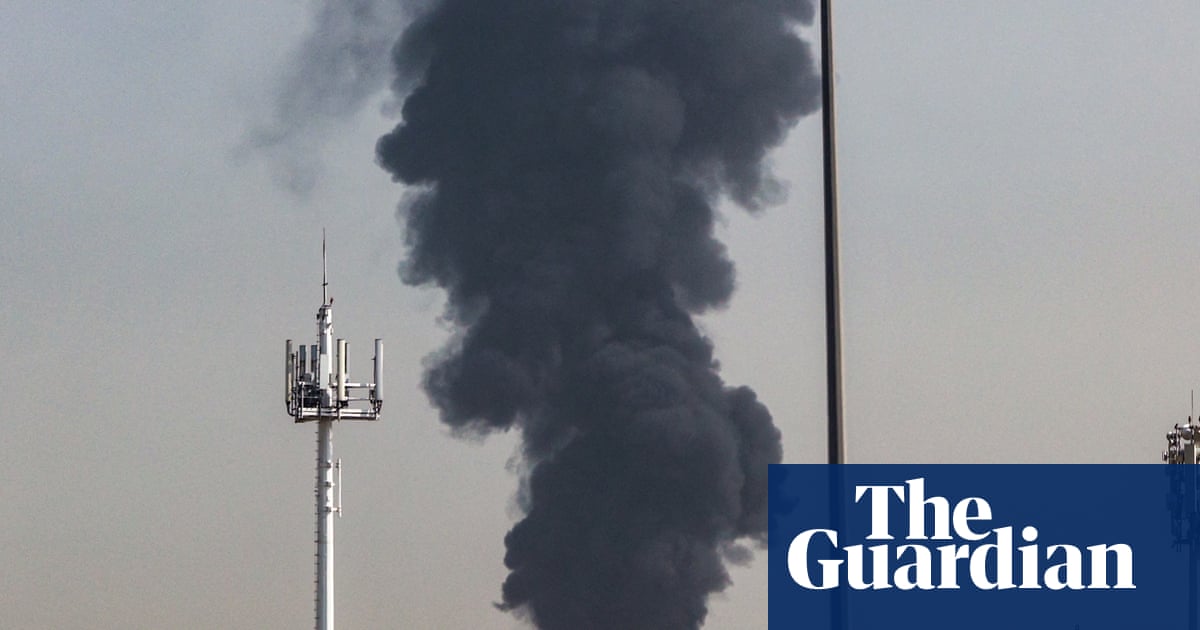
Iran's geographic position along the Strait of Hormuz enables asymmetric naval threats through shore-based missiles and fast attack craft, bypassing the need for a conventional fleet to disrupt global maritime traffic and oil prices.
fromwww.theguardian.com
4 months agoZelenskyy sacks Ukrainian spy chief who led daring raids against Russia
The spy chief who led Ukraine's most audacious behind-the-lines operations in its war with Russia has been forced to resign by Volodymyr Zelenskyy. Vasyl Malyuk, who was awarded the title of Hero of Ukraine last year, reportedly fought to stay in post as head of the Security Service of Ukraine (SBU) but relented on Monday at a meeting with the president. Announcing his resignation on the SBU's official Telegram channel, Malyuk said he would remain in the agency to lead world-class asymmetric special operations against Russia.
Miscellaneous
from24/7 Wall St.
5 months agoIsrael vs. Iran: Which Military Power Has the Upper Hand?
Tensions between Israel and Iran have heavily influenced Middle Eastern politics for decades. Both nations have invested greatly in military strength, advanced technology, and regional influence. As their rivalry continues to play out through conflicts, cyber operations, and strategic acts, questions often arise about which country holds the upper hand. Israel is known for its cutting-edge defense systems, well trained forces, and close ties with Western powers,
World news
fromThe Cipher Brief
5 months agoWhy an Unmanned Mission May be Most Effective in Venezuela
OPINION - Wars are increasingly fought by unconventional means. A recent example is Ukrainian insertion of unmanned aerial systems (UAS) to attack Russian airfields, launched from civilian outfitted trucks. The Israeli pager attacks are another example of leveraging unconventional means to achieve an outsized effect. Both examples demonstrate that unconventional methods can not only disrupt enemy forces and destroy key objectives, but also achieve tremendous psychological effects and by saturating the airspace, limit an adversaries ability to mount offensive operations.
World news
fromLondon Business News | Londonlovesbusiness.com
5 months agoSpecial Operations Forces launch a brilliant strike at a drone storage facility in Crimea - London Business News | Londonlovesbusiness.com
On the night of November 28, the deep strike units of the Special Operations Forces successfully struck the Shahed attack UAV storage and launch area near Cape Chaudy, which is on the temporarily occupied territory of the Autonomous Republic of Crimea.
Miscellaneous
fromThe Atlantic
8 months agoUkraine's Plan to Starve the Russian War Machine
In one section of a sprawling warehouse in central Ukraine, workers have stacked what appear to be small airplane wings in neat rows. In another section, a group of men is huddled around what looks like the body of an aircraft, adjusting an electronic panel. In makeshift locations elsewhere in Ukraine, workers are producing these electronic panels from scratch: This company wants to use as few imported parts as possible, avoiding anything American, anything Chinese.
Miscellaneous
fromBusiness Insider
8 months agoThe US military is falling behind in the race to field combat drones
The drone, said Mingus, "is our IED of today" - a war-transforming technology that smaller powers could use to put big powers at a disadvantage. Ukraine has demonstrated this brilliantly over the last few years through its innovative use of drones to stymie the invading Russians.
US politics
[ Load more ]