#ai-data-centers
#ai-data-centers
[ follow ]
fromAxios
4 days agoThe energy squeeze behind the Iran war and AI boom
Higher oil prices fueled by the Iran war are the main driver behind inflation, with the Consumer Price Index rising 3.8% in April, new data out this week shows. Higher energy prices accounted for the bulk of the increase between March and April, Axios' Courtenay Brown reported. Compared with the same period a year ago, energy costs are up 18%.
Artificial intelligence


fromEngadget
4 days agoElon Musk just can't stop (potentially) violating the Clean Air Act - Engadget
xAI has added a further 19 natural gas turbines to its Southhaven, Mississippi-based AI data center site. This is despite an ongoing lawsuit alleging the company was already operating 27 unpermitted methane gas generators to power the nearby Colossus 2 campus in South Memphis, which it uses to train its Grok AI assistant.
Toronto startup
Toronto startup
fromTNW | Battery
5 days agoFormer Tesla CFO Deepak Ahuja joins Redwood Materials as battery recycler pivots to AI energy infrastructure
Deepak Ahuja joined Redwood Materials as CFO, signaling IPO readiness as the company shifts from battery recycling to powering AI data centers with second-life EV batteries.

fromYanko Design - Modern Industrial Design News
6 days agoSony's PS6 Could Triple the PS5's Power. It Could Also Cost $800 and Land in 2029 - Yanko Design
Seven years is a strange unit of time. Long enough to finish a PhD, short enough to remember an event vividly, and apparently, exactly long enough for Sony to build, test, manufacture, and ship a new generation of PlayStation hardware. PS3 to PS4, PS4 to PS5: seven years, twice, with the precision of a Swiss movement. The console industry built its entire release calendar ecosystem around that cadence. Publishers scheduled their biggest titles around it. Retailers planned inventory cycles for it. Analysts forecast revenue curves based on it.
Silicon Valley
#energy-infrastructure
Environment
fromEntrepreneur
6 days agoKevin O'Leary Wants to Build a $100 Billion AI Data Center in Utah. Locals Say It Could Drain the Great Salt Lake.
A proposed 9-gigawatt AI data center and natural gas plant in rural Utah won unanimous county approval despite protests over energy, water, and environmental impacts.
Business
from24/7 Wall St.
6 days agoFuelCell Energy Surges 18%, Plug Power Climbs 13%, Bloom Energy Rallies 12% as Fuel Cell Stocks Ignite
Fuel cell stocks surged as AI-driven data center power demand, long grid delays, and supportive tax incentives boosted investor rotation into clean baseload generation.
fromwww.businessinsider.com
1 week agoKevin O'Leary defends his Utah data center project: 'Think about the number of jobs'
“When a group comes to me and says, 'Look, I have concerns about water, I have concerns about air, I have concerns about wildlife,' I totally get it,” O'Leary said. O'Leary said he graduated from the University of Waterloo with a degree in environmental studies. “It's understanding the concerns of people, but at the same time, think about the number of jobs,” O'Leary said in a post on X on Friday.
Silicon Valley
from24/7 Wall St.
1 week agoCanaccord Just Nearly Doubled Hut 8 Price Target to $130 on AI Data Center Pivot
Canaccord asserted that Hut 8's strategic progress continues to accelerate. In just a couple of quarters, the company has signed two marquee AI co-location deals with "some of the best terms we have seen across the sector." That language matters because it signals Hut 8 is winning enterprise-grade AI tenants rather than speculative compute customers.
Venture
Artificial intelligence
fromFast Company
1 week agoAI data center boom squeezes consumer tech's chip supply-even though they use different chips
Data center AI demand is redirecting chip production capacity away from consumer electronics, creating supply shortages despite different chip requirements between sectors.

fromnews.bitcoin.com
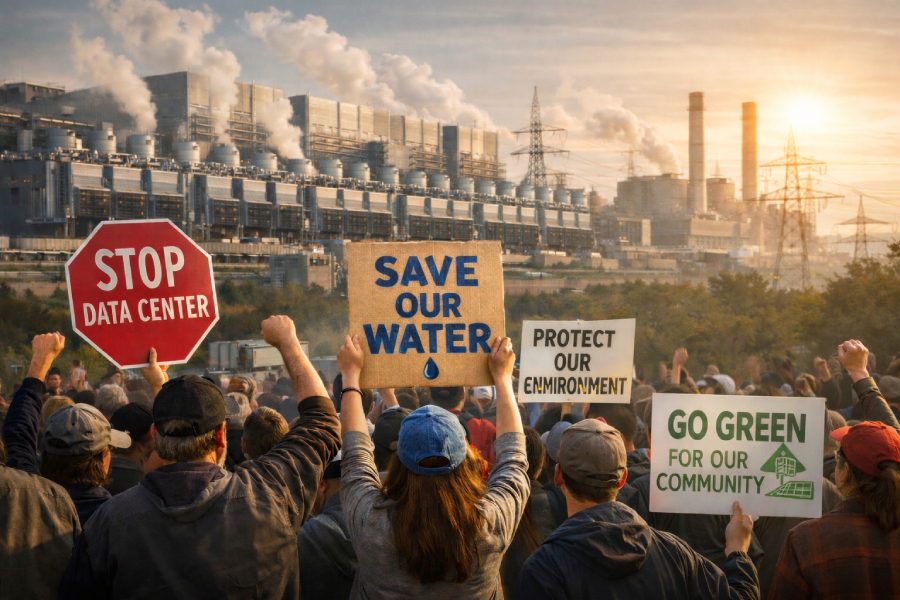
3 weeks agoOlenox Announces Merge With CS Digital to Develop Low Cost, Off-Grid Bitcoin Mining Opportunities
I believe 2026 may mark the beginning of a new phase: the large-scale development of off-grid data centers built closer to the point of energy generation, where, under certain conditions, it may be possible to generate and utilize power at costs approaching $0.02 per kWh.
Venture
fromTechCrunch
1 month agoExclusive: This energy startup's bet on 100-year-old grid tech is paying off | TechCrunch
"We were considering multiple forms of capital when we started. It just felt like the opportunity is so large that venture capital gives us the opportunity to take those risks upfront and have the possibility to generate an outsized return."
Venture
fromTechzine Global
1 month agoSony halts memory card shipments due to NAND shortage
A severe shortage of NAND flash, driven by the enormous demand for it to expand AI data centers, makes procurement impossible. Sony is currently unable to fulfill orders for CFexpress Type A, CFexpress Type B, and SDXC/SDHC memory cards.
Tech industry
Toronto startup
fromFortune
1 month agoSome cried. Others were speechless. How front-line workers walked away with checks averaging $240,000 when KKR sold their company | Fortune
CoolIT Systems experienced a significant transformation and sale, resulting in substantial cash payouts for employees who became shareholders under KKR's ownership.
#meta
Artificial intelligence
fromFortune
1 month agoI went to rural Louisiana to see Meta's massive $27 billion AI data center. Here's what I found. | Fortune
Meta's Hyperion AI data center in Louisiana symbolizes the vast infrastructure demands of the AI boom, impacting local communities and raising political concerns.
from24/7 Wall St.
2 months agoThe Nuclear ETFs Powering AI Data Centers and Posting Triple-Digit Returns
The U.S. Energy Information Administration projected in March 2026 that American power demand will climb to a new record in 2026 and keep rising through 2027, driven largely by AI data centers. Nuclear is one of the few energy sources positioned to absorb that load reliably, and its share of the generation mix is forecast to tick up.
Venture
Environment
fromTruthout
2 months agoGrowing Presence of AI Data Centers Prompts Debate on Native Lands
AI data center expansion creates environmental and cultural challenges for Native American tribes, sparking debates over tribal digital sovereignty and regulatory needs for data infrastructure control.
#robot-dogs
Artificial intelligence
fromFortune
2 months agoRobot dogs priced at $300,000 a piece are now guarding some of the country's biggest data centers | Fortune
Robot dogs are being deployed by AI companies to patrol massive data centers, providing security surveillance and threat detection for billion-dollar AI infrastructure investments.
fromNonprofit Quarterly | Civic News. Empowering Nonprofits. Advancing Justice.
2 months agoHow the NAACP Is Stopping Dirty Data | Nonprofit Quarterly | Civic News. Empowering Nonprofits. Advancing Justice.
Developers promise "community investments," downtown revitalization, and a new "AI Center." What they don't say is that this development comes tethered to a massive resource-intensive data center that will cost billions, create pollution, and concentrate profits for the corporations and CEOs at the top-not the surrounding communities. This is not innovation, it's exploitation.
Environment
Apple
from24/7 Wall St.
2 months agoMemory Inflation Is Real-and Apple Is the Only One Turning It Into an Opportunity
AI data center demand drives memory and storage inflation, forcing consumers to pay higher prices for electronics while companies like Apple capitalize on budget-conscious market opportunities.
Austin
fromTechCrunch
2 months agoOwner of ICE detention facility sees big opportunity in AI man camps | TechCrunch
AI data center developers are using temporary worker villages called man camps, with companies like Target Hospitality securing $132 million in contracts to build and operate these facilities.

fromThe Verge
2 months agoSeven tech giants signed Trump's pledge to keep electricity costs from spiking around data centers
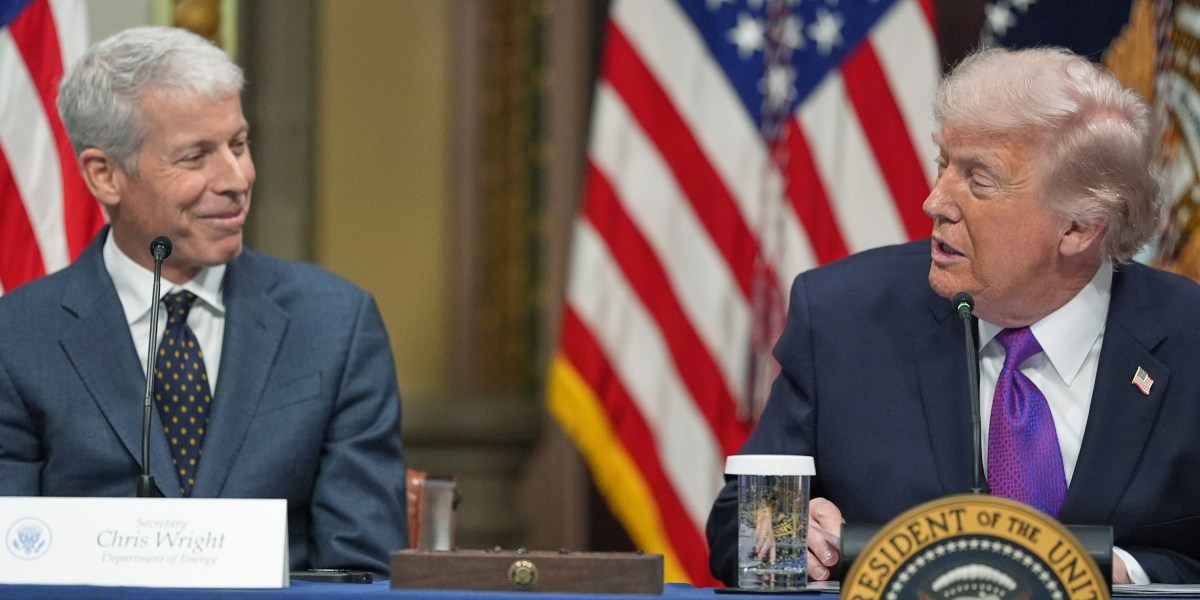
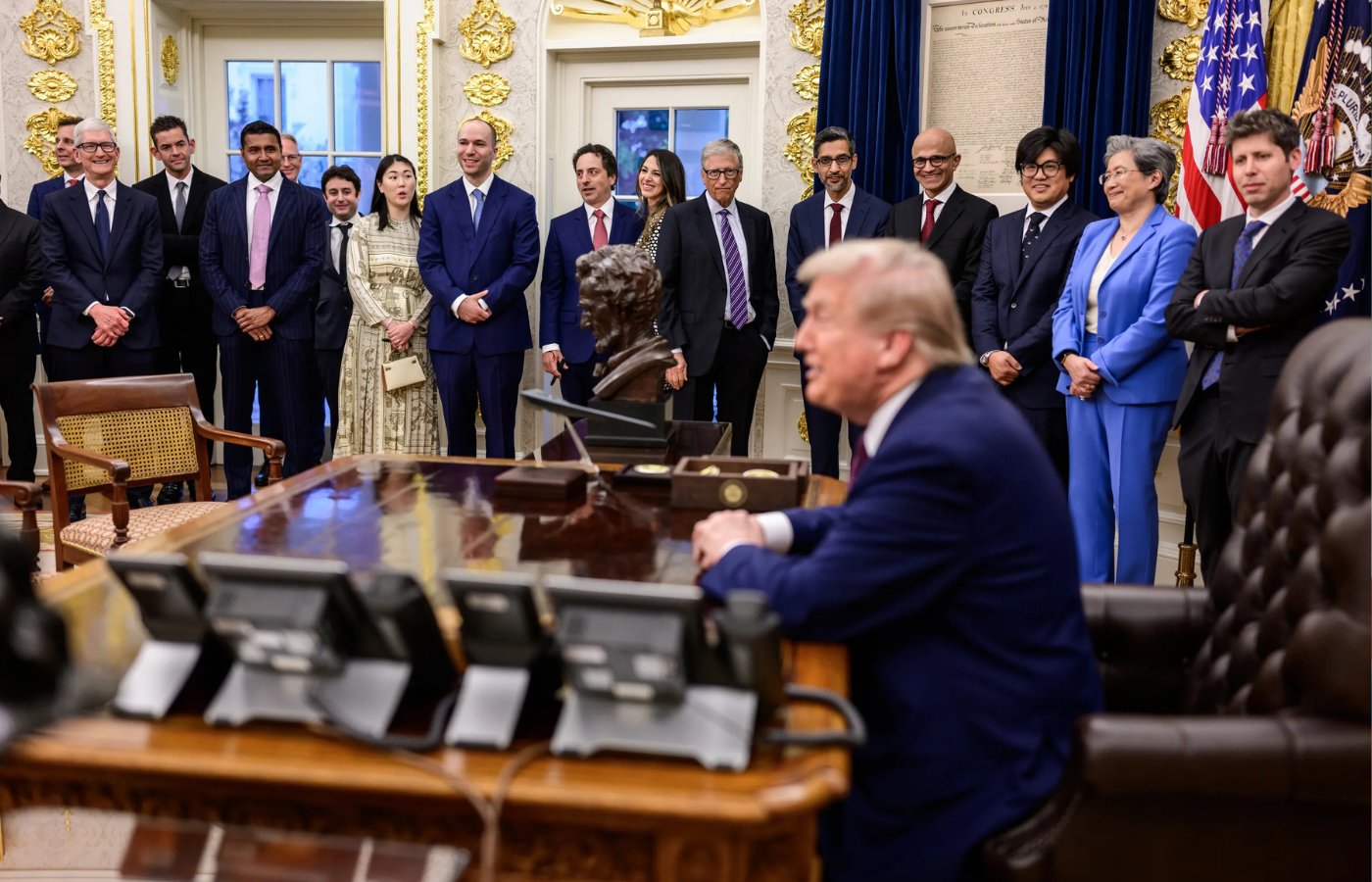
Leaders from Google, Meta, Microsoft, Oracle, OpenAI, Amazon, and xAI met with President Donald Trump today to sign a "rate payer protection pledge." It's one way they're responding to growing bipartisan concerns about electricity rates rising as tech companies and the Trump administration rush to build out a new generation of AI data centers.
Artificial intelligence

Tech industry
fromThe Verge
2 months agoNvidia's spending $4 billion on photonics to stay ahead of the curve in AI
Nvidia invests $2 billion each in Lumentum and Coherent to develop photonics technology for AI data centers, improving energy efficiency and data transfer speeds through optical components.
Tech industry
fromFortune
2 months agoYour utility bills keep going up. Here's everyone you can blame-AI data centers included | Fortune
Electric and natural gas bills surged as major inflation drivers in 2025, with utilities requesting record $31 billion in rate hikes amid aging infrastructure, climate impacts, and AI data center demand.

US politics
fromLos Angeles Times
2 months agoTrump's plan for rising energy costs: Pump oil, make data centers pay
President Trump pledged to protect Americans from higher electricity costs caused by AI data centers through a new ratepayer protection pledge requiring tech companies to generate their own power.


fromTechCrunch
2 months agoAn AI data center boom is fueling Redwood's energy storage business | TechCrunch
A year ago, Redwood Materials didn't have an energy storage business. Now, it is the fastest-growing unit within the battery recycling and materials startup - a reflection of an AI data center building boom. The evidence of that growth, the company says, can be found at its R&D lab in San Francisco, which has expanded four-fold into a 55,000-square-foot facility and now employs nearly 100 people.
Startup companies
fromThe Verge
2 months agoThe RAM crunch could kill products and even entire companies, memory exec admits
and some companies will even die if they can't get the components they need, he agreed, in a televised interview with Ningguan Chen of Taiwanese broadcaster Next TV. While the interview's entirely in Chinese, friends of The Verge stepped forward to confirm parts of a machine-translated summary that's been making headlines. They also note, importantly, that it's the interviewer asking whether companies might shut down or product lines might discontinue. Khein-Seng largely just agreed and clarified that it'll happen if these companies cannot secure enough RAM.
Tech industry
fromThe Verge
2 months agoSwitch 2 pricing and next PlayStation release could be impacted by memory shortage
Sony and Nintendo are reportedly feeling squeezed by RAM shortages as demand from AI data centers takes up an increasing share of memory chip production. In response to rising costs and dwindling chip supplies, Sony is considering pushing back the release of its next PlayStation console "to 2028 or even 2029," according to industry sources cited by Bloomberg, while Nintendo may increase the $450 price of its Switch 2 console this year.
Video games
from24/7 Wall St.
3 months agoAI Deals Drives Corning (GLW) Shares Up 50% In 2026: Can the Rally Continue?
Corning Incorporated ( NYSE:GLW) has delivered one of 2026's most impressive rallies, climbing 50.2% year-to-date and 46% over the past month. Corning's 2026 is so good, it's now the 6th top performing stock in the entire S&P 500. The 175-year-old materials science company is riding three converging waves: stellar earnings execution, a massive partnership with Meta, and surging demand for AI data center infrastructure.
Business
fromFortune
3 months agoThe U.S. construction industry's need for labor is soaring and will need half a million new workers next year while AI giants ramp up spending | Fortune
The Associated Builders and Contractors trade group estimated in a report last month the industry will need to bring in 456,000 new workers in 2027, up 30.7% from the 349,000 needed this year. "Failing to do so will worsen labor shortages, especially in certain occupations and regions, placing further upward pressure on labor costs," ABC Chief Economist Anirban Basu warned in a statement.
Artificial intelligence
[ Load more ]