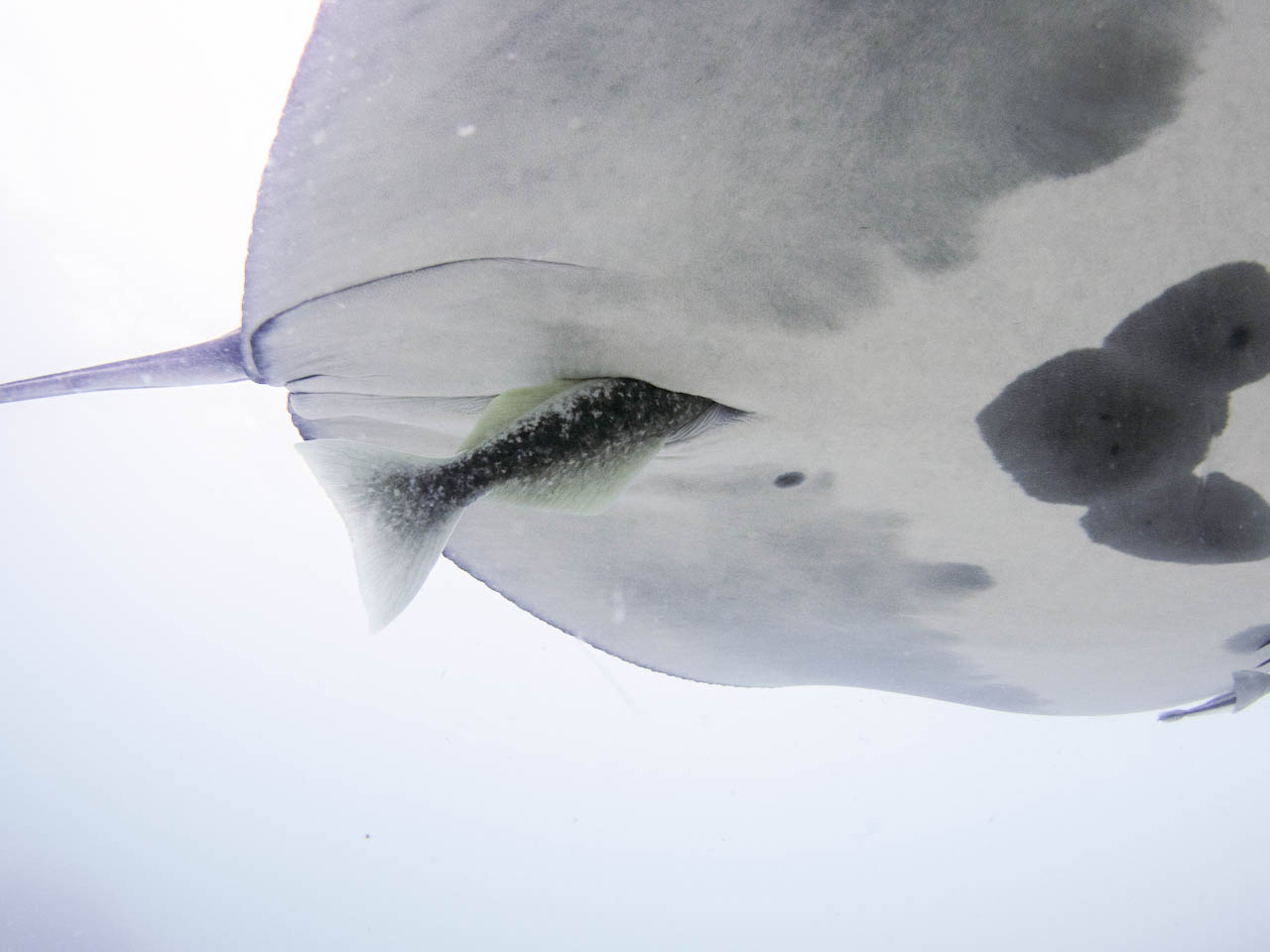
"Remoras evolved to be clingy. The suction cup on their foreheads allows them to attach to larger animals like fridge magnets. Remoras hitch free rides on creatures of their choosing: sharks, rays, whales, dugongs, turtles, even parrotfish. But it has been traditionally assumed that the remora's approach to such symbiosis was mutually beneficial to both parties: The fish eat parasites off their hosts and slough off their dead skin, reducing the host's risk of disease, while all the remora requests is shelter under the enormous shield of their body and free transport to faraway ocean realms."
"And the fish feeds itself, scrounging on scraps from their host's meals and slurping up its feces. Sure, a hitchhiking remora or two makes a manta ray a little less aerodynamic. But the remora is so vanishingly small, and the manta ray so grandiosely big. Is this really such a big ask?"
"Now, however, the tides are turning against the notion of the remora as a helpful, or even merely benign, fish, according to Emily Yeager, a PhD student at the University of Miami. "The narrative is shifting," Yeager said, and then proceeded to share an incriminating list of the remora's recent offenses. One 2025 paper found that sea turtles carrying one to three remoras grazed less. And in all their observations, the researchers only found a single example of a remora giving back and cleaning a turtle's shell."
"The strong suction of the fish's forehead can harm a host, and some remoras have been glimpsed entering their host's bodies. One 2023 paper collected observations of remoras wriggling inside the mouths, gill slits, and even the cloacae of whale sharks (cloacae being the preferred plural of cloaca, some animals' all-purpose holes for peeing, pooping, and birthing). Yeager is the author of a new paper that presents the strongest case yet for the remora as a pest. Yeager and colleagues have gathered evidence of remoras swimming inside the cloacae of manta rays, sometimes squeezing half"
Remoras have a forehead suction cup that lets them attach to larger animals and travel long distances. They were traditionally viewed as mutualistic partners because they remove parasites and dead skin while receiving shelter and transport. Remoras also feed on scraps and feces from their hosts. New observations and studies challenge this view. Sea turtles carrying remoras grazed less, and researchers found almost no cases of remoras cleaning turtle shells. Strong suction can injure hosts, and remoras have been observed entering hosts’ bodies, including whale shark mouth and gill slits and cloacae. Evidence also indicates remoras swimming inside manta ray cloacae and squeezing into openings.
Read at Defector
Unable to calculate read time
Collection
[
|
...
]