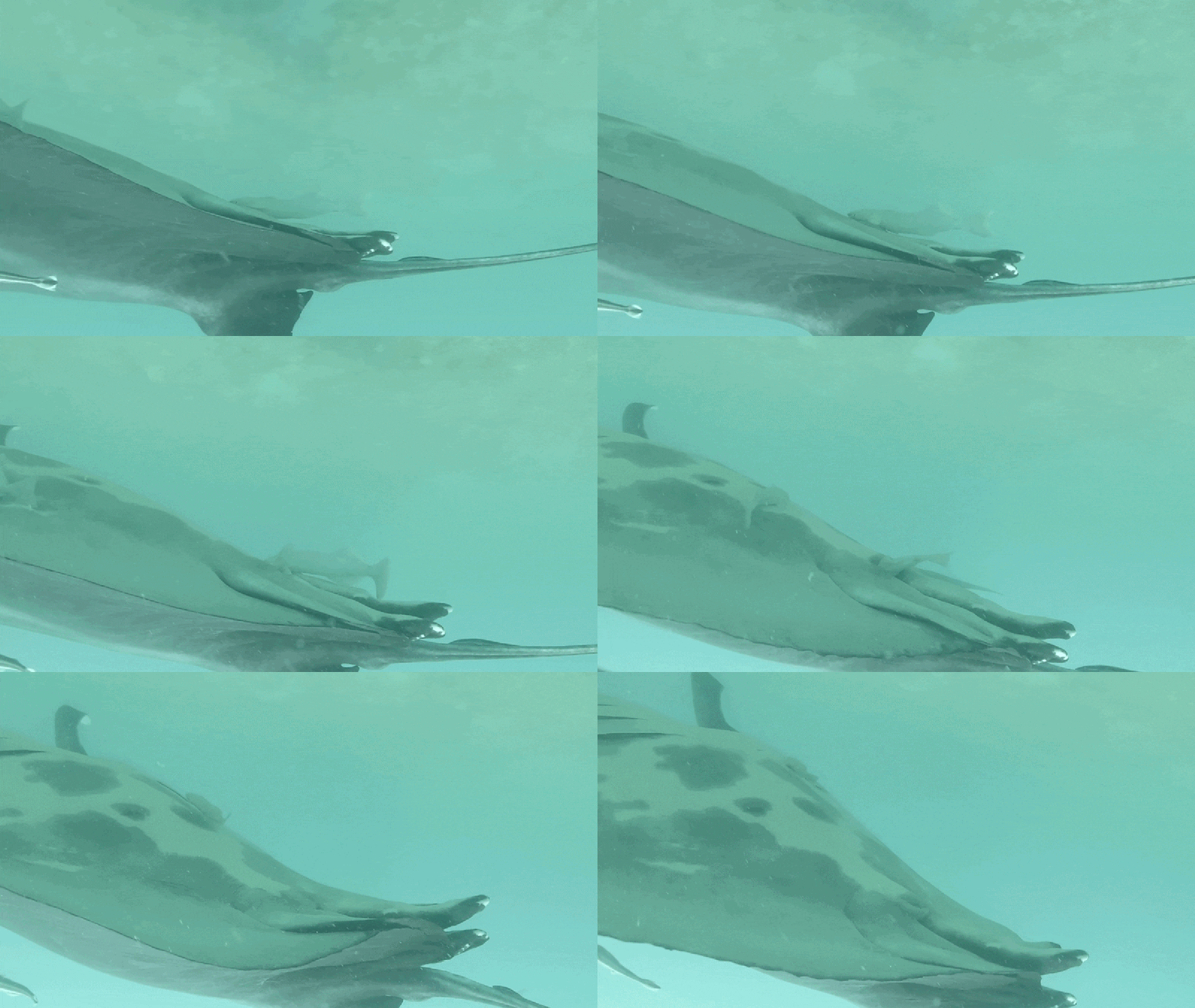
"Researchers documented seven cases of remoras, a fish known for suctioning itself onto rays, as well as sharks, dolphins, boats and even divers, plunging into manta rays' cloacal orificean opening used for pooping, peeing and mating. The researchers call the practice cloacal diving. It's unwelcome behavior, at least on a manta rays' end. It does not look like the manta ray likes it, said Catherine Macdonald, senior study author and a marine biologist at the University of Miami, to the New York Times."
"But for the remoras, shimmying into a manta ray's behind could offer several benefits, the authors speculate: it could function as a convenient hiding place from predators, a source of foodremoras typically eat a diet made up of their hosts' feces, scraps and parasitesor simply a hitchhiking spot with reduced drag, they write in the study."
"Remoras have been known to hide in other marine species' semi-internal structures, the study authors write. The fish have been found in the gills and cloacal openings of whale sharks and the mouths of lemon sharks. However, limited observations of these cryptic behav"
Researchers documented seven cases of remoras entering manta rays’ cloacal openings in Florida, along with other animals and divers. The cloacal opening is used for pooping, peeing, and mating. The behavior is described as unwelcome for manta rays, with observations suggesting the rays do not appear to like it. For remoras, entering the cloaca could provide a hiding place from predators, a feeding opportunity because remoras often eat feces, scraps, and parasites from their hosts, or a hitchhiking spot that reduces drag. Remoras have previously been found in other semi-internal structures of marine animals, including whale sharks and lemon sharks, but observations remain limited.
Read at www.scientificamerican.com
Unable to calculate read time
Collection
[
|
...
]