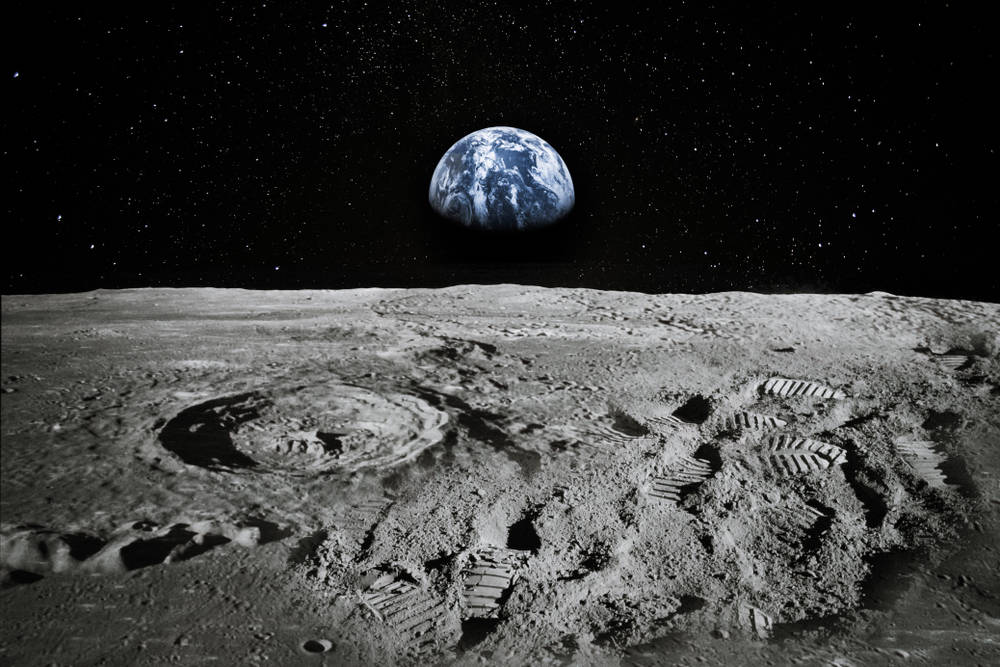
Researchers at Los Alamos National Laboratory investigated using fiber-optic cables with distributed acoustic sensing (DAS) technology to detect seismic activity on the moon. Unlike Earth-based applications requiring burial to minimize wind noise, laboratory tests showed that burial depth does not significantly affect signal clarity in simulated lunar regolith. The studies identified that stiffer, thicker cables with continuous ground contact optimize signal strength. Rovers could deploy these lightweight, robust, and inexpensive cables across kilometers of lunar surface to monitor seismic activity over larger areas than fixed seismometers. This approach could provide valuable data about the moon's core composition and hazards.
"Fiber-optic cables are lightweight, robust, and inexpensive, so we wondered: Could they be used on the surface of the moon to detect seismic activity there? Unlike on Earth, where fiber-optics for sensing must be buried because even a gentle breeze can agitate the cables and create background noise, the lab tests demonstrated that burial depth did not significantly affect the clarity of the signal in the simulated regolith."
"The second paper examined which physical attributes might make fiber-optic cables deployed on the moon's surface work reliably. The researchers report that stiffer, thicker cables and continuous ground contact improved signal strength. Seismic data could help scientists to form a clearer picture of our largest natural satellite, such as the composition of its core."
#lunar-seismology #fiber-optic-sensing-technology #distributed-acoustic-sensing #moon-exploration #moonquake-detection
Read at Theregister
Unable to calculate read time
Collection
[
|
...
]