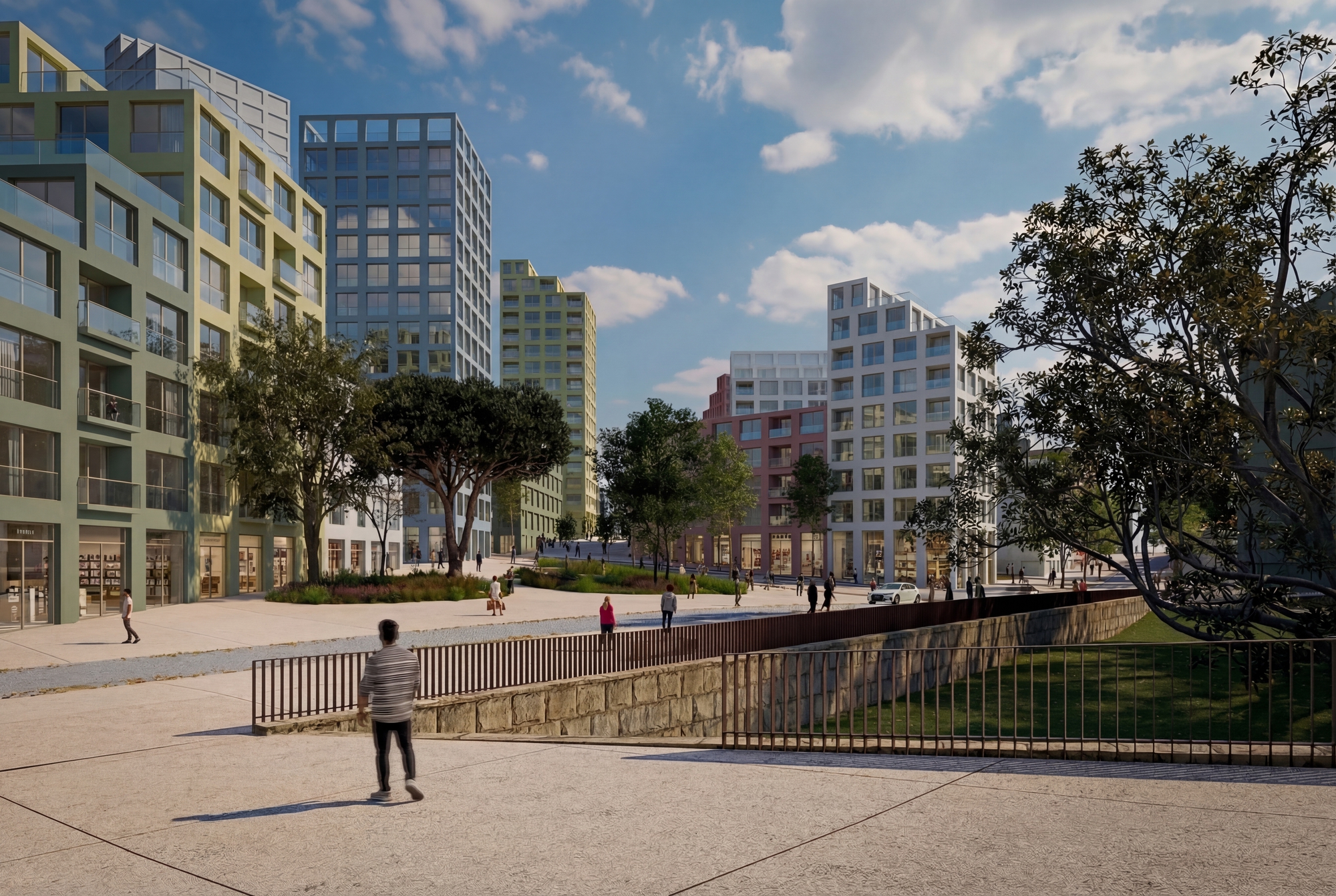
"MVRDV and OODA have revealed a new masterplan for the regeneration of a vacant 28-hectare site between Marvila and Beato on Lisbon's riverfront. Recently approved by the Lisbon City Council, the project was developed in collaboration with LOLA Landscape Architects and Thornton Tomasetti to transform the area into a landscape-led urban district. Titled The Marvila Masterplan, the proposal establishes a framework for introducing 1,400 homes alongside public facilities, commercial spaces, and services within a fragmented and largely abandoned territory."
"The Marvila Masterplan site is located on Lisbon's eastern riverfront, positioned between the city center and the Parque das Nações district. According to the architects, the site was originally agricultural land owned by wealthy Lisbon families before undergoing industrialization in the late eighteenth century. Today, railway lines crossing the area separate the underused site from its surroundings and from the Tagus River, contributing to its fragmentation."
"The regeneration strategy is organized around four distinct areas connected through a continuous network of public spaces, landscape, and mobility infrastructure. To ensure that the site remains active during construction, each phase of the masterplan includes the implementation of public spaces and green infrastructure. The four clusters are organized in relation to the surrounding neighborhoods of Açúcar, POLU, Beato, and Madre Deus."
"The plan includes approximately 1,400 homes in a range of typologies, including affordable and social housing. Residential areas are combined with public facilities such as a day center and a care home, as well as commercial and service spaces. Building sizes and placements respond to the site's topography, views, and surrounding urban fabric, creati"
A masterplan for a vacant 28-hectare site between Marvila and Beato on Lisbon’s riverfront has been approved by Lisbon City Council. The plan, led by the principal landowner and coordinated with the city and Infraestruturas de Portugal, aims to transform a fragmented, largely abandoned territory into a landscape-led urban district. The strategy is organized around four connected areas linked by a continuous network of public spaces, landscape, and mobility infrastructure. Construction is phased so the site stays active through public spaces and green infrastructure. The proposal includes about 1,400 homes across typologies, including affordable and social housing, alongside public facilities, commercial spaces, and services. Building placement responds to topography, views, and surrounding urban fabric.
Read at ArchDaily
Unable to calculate read time
Collection
[
|
...
]