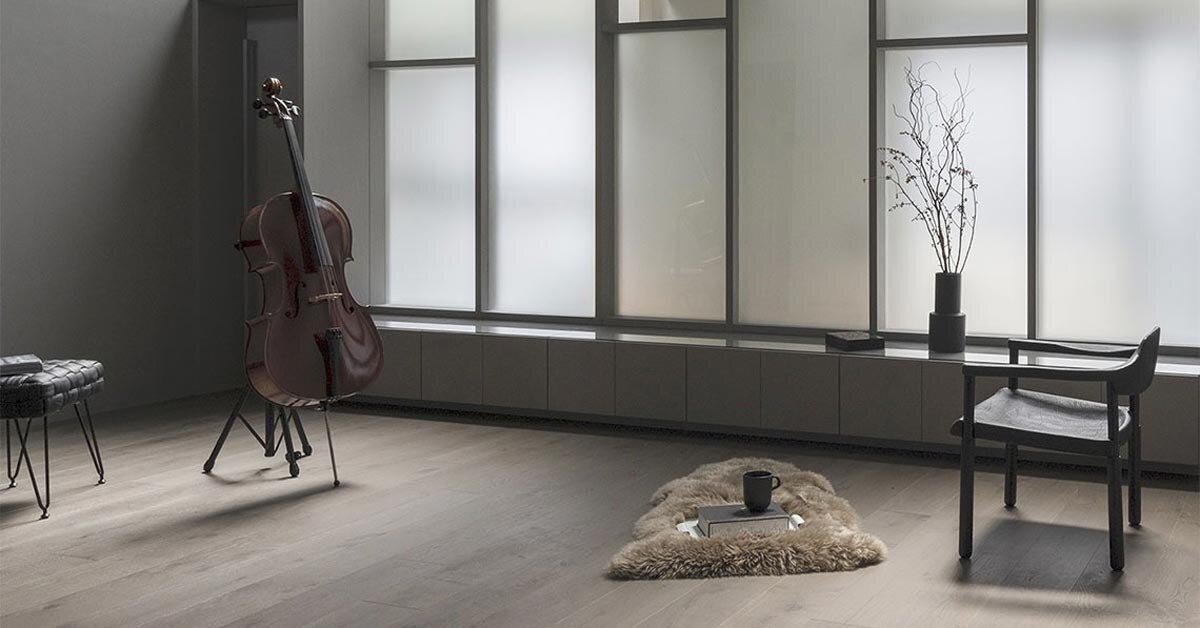
"Room 1101 by FORM / Kouichi Kimura Architects is the renovation of an urban apartment conceived as a secondary, designed to support flexible use while offering a distinct spatial experience. Located on the 11th and top floor of the building in, the apartment is defined by a five-meter-high atrium and a series of large, irregularly arranged windows that introduce abundant natural light into the interior."
"The design strategy centers on the treatment of openings and the modulation of daylight. To manage the complex light conditions created by the varied window geometries, a system of walls and frosted glass screens was introduced. Positioned approximately 40 centimeters away from the existing walls, these screens soften incoming light and partially obscure the perception of the windows, transforming them into a diffuse, luminous surface."
"Mirrored surfaces applied to suspended partition walls further extend the spatial depth, reflecting the sequence of screens and openings to create visual continuity and expansion. The apartment layout incorporates a secondary circulation route connecting the entrance to the wet areas, using subtle changes in floor level and material transitions to define zones without fully enclosing them."
"At the entrance hall, a recessed wall is positioned in front of a glass block surface. Embedded frosted glass further diffuses daylight, allowing the underlying grid of the glass blocks to appear as a soft pattern. In front of this surface, a garment from the client's fashion brand collection is displayed, treated as a sculptural element and highlighted by the filtered light."
The renovation converts a top-floor urban apartment featuring a five-meter-high atrium and large, irregular windows into a flexible secondary dwelling. The design focuses on openings and daylight modulation through walls and frosted glass screens placed about 40 centimeters from existing walls to soften and diffuse incoming light. Integrated indirect lighting behind the screens produces layered evening atmospheres. Mirrored suspended partitions amplify spatial depth by reflecting screens and openings. A secondary circulation route links the entrance and wet areas using subtle level and material shifts to define zones. The entrance hall uses glass blocks and frosted glass to produce a soft patterned light for a displayed garment.
Read at designboom | architecture & design magazine
Unable to calculate read time
Collection
[
|
...
]