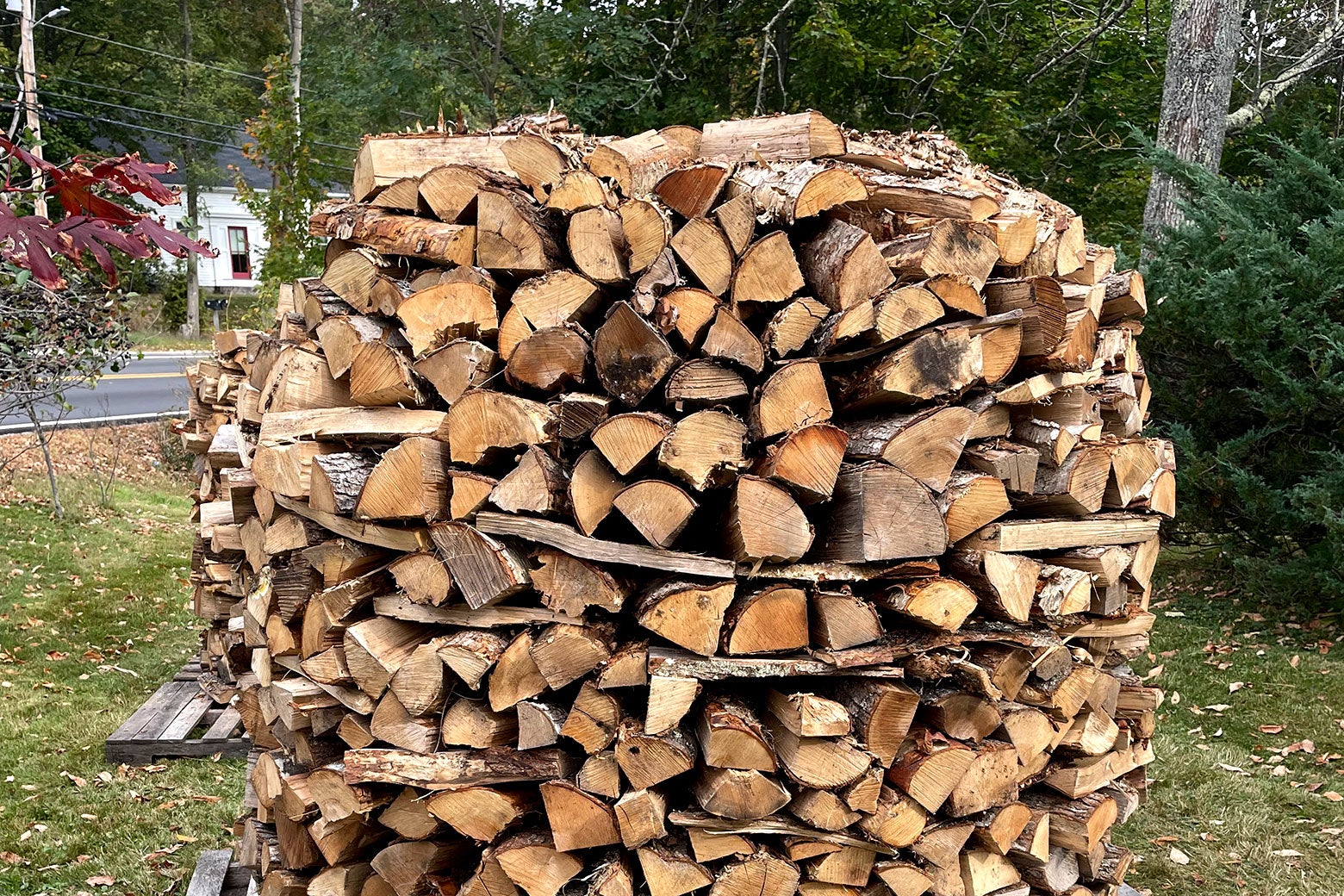
A cast-iron woodstove radiates heat into a room rather than sending it up a chimney, making it more efficient than a fireplace. Owning a woodstove requires planning: order at least a cord of unseasoned split firewood in spring so it can season over the warmer months. Stacking wood helps it dry and can become an addictive, picturesque task, with a traditional freestanding Scandinavian-style holzhausen as an ideal. Seasoned wood can be purchased later but suppliers often run out. Firewood warms you three times: when cut, when stacked, and when burned. Splitting can be strenuous and is often outsourced.
"Fireplaces may be more charming and atmospheric, but the humble cast-iron woodstove (invented, more or less, by Benjamin Franklin) is much more efficient. Instead of sending its heat up a chimney, the wood burner absorbs and radiates it into the room. It exists to keep you warm, and it's great at that job, something I've learned to treasure living in Maine."
"Nevertheless, a wood-burning stove is a lot more work than just turning up the thermostat. Sometime in the spring-if you're smart-you have to order at least a cord of unseasoned split firewood, which in these parts arrives on the back of a dump truck and gets deposited in a huge mound in your front yard. Then you've got to stack the wood, which will help it dry out enough to become seasoned."
"There's an old saying about firewood warming you three times: when you cut it, when you stack it, and when you burn it, but although my house came with a dull old maul, or splitting axe, I would rather let someone else get warmed by mine on that first stage. Stacking, though-nothing prepared me for the addictive nature of this chore, or for my growing obsession with building the picturesque freestanding Scandinavian-style woodpile, the iconic holzhausen."
Read at Slate Magazine
Unable to calculate read time
Collection
[
|
...
]