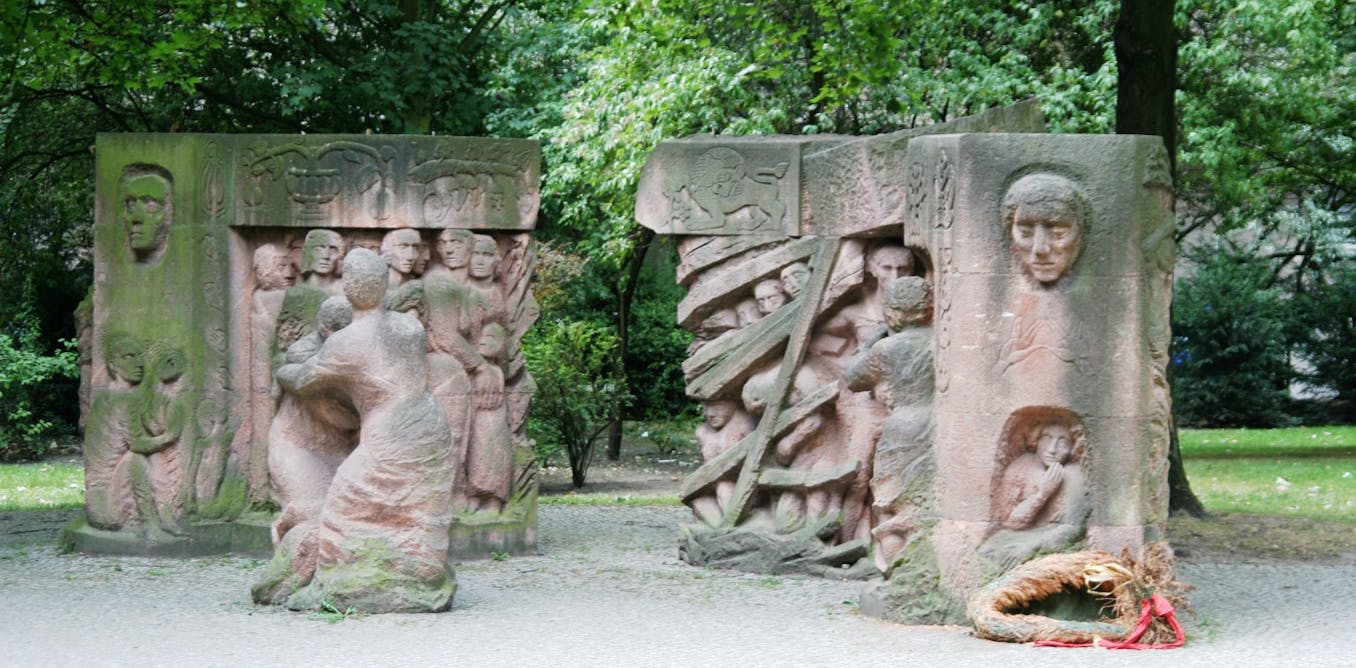
"On the cold evening of Feb. 27, 1943, Charlotte Israel gathered with a small crowd of women on the Rosenstrasse, a narrow street in central Berlin. They were not Jewish, but their husbands were, and the men had just been arrested in a sweeping roundup of more than 9,000 Berlin Jews. Nearly 2,000 of those arrested had non-Jewish wives and were crammed together in a building on the Rosenstrasse."
"Early the next morning, as she approached Rosenstrasse in search of her husband, Annie Radlauer heard a chorus of voices growing louder as she drew nearer: 'Give us our husbands back!' The vigil, which sometimes grew into collective protests, continued off and on until March 6."
"Under the Nuremberg Laws of 1935, Nazi Germany banned marriage and sexual relations between Jews and people it considered 'Aryans,' and it ratcheted up pressures for already married couples to divorce. In most of these marriages, the non-Jewish partners were Christian women who faced enormous social stigma and political threats."
On February 27, 1943, Charlotte Israel and other non-Jewish women gathered on Rosenstrasse in Berlin after their Jewish husbands were arrested in a Nazi roundup of over 9,000 Jews. Nearly 2,000 arrested men were held in a building on the street. The women organized a vigil that escalated into collective protests, continuing until March 6, with demonstrators demanding the return of their husbands. Under Nazi racial laws, mixed marriages faced severe persecution. Non-Jewish wives endured social stigma and Gestapo raids, while Jewish women married to gentiles received some protection. Despite restrictions and threats, these interfaith families experienced varying degrees of persecution throughout the Holocaust.
#holocaust-resistance #rosenstrasse-protest #mixed-marriages-nazi-germany #jewish-persecution #womens-activism
Read at The Conversation
Unable to calculate read time
Collection
[
|
...
]