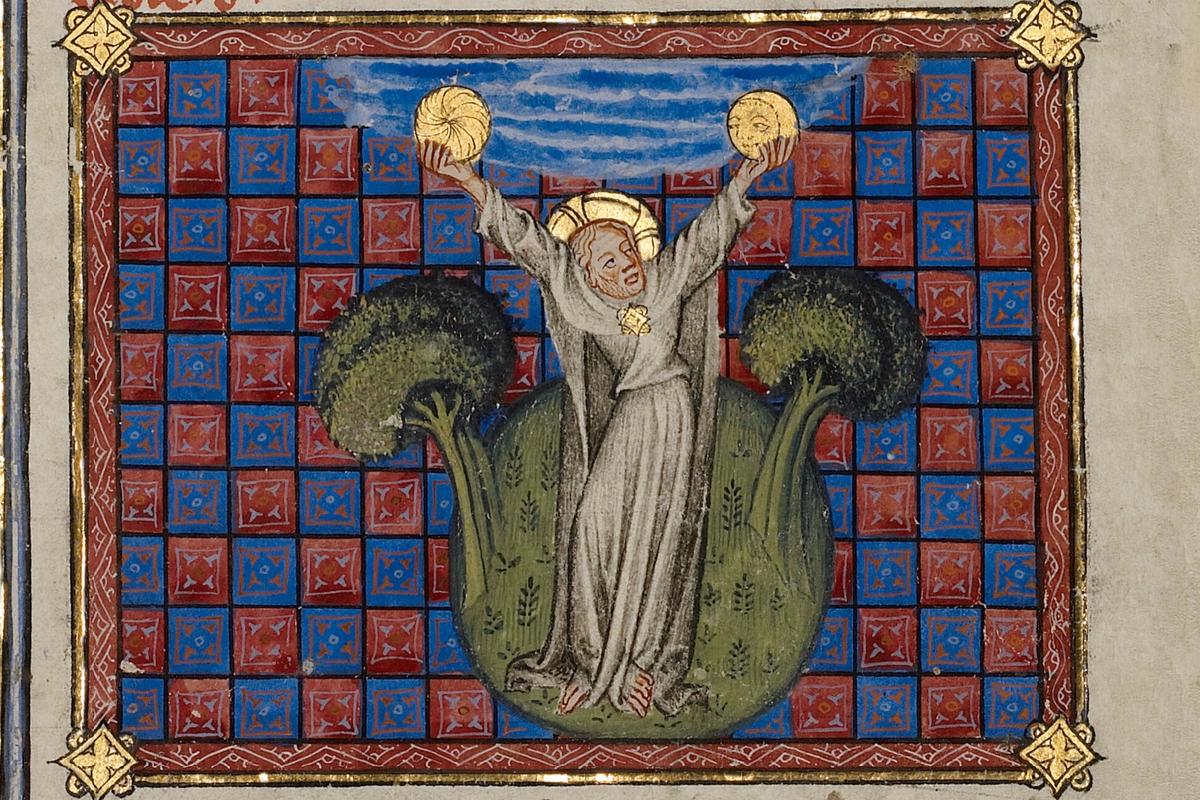
The Moon captivated medieval observers with its enchanting glow and mysterious darkness. Medieval creators and audiences often saw the Moon as beautiful, enigmatic, and symbolically rich. The Moon featured heavily in diverse religious symbol systems and was deployed in versatile and sometimes radical ways. Across cultures the Moon could signify inconstancy and fragility while simultaneously conveying immense power. Definitions of 'medieval' vary across cultures, complicating periodization. A symbol functions as a visual image representing an idea or deeper universal truth. The Moon could signify complex teachings or momentous historical events. The Moon was often treated semiologically, as a sign to be read, though it was sometimes believed to cause earthly events.
"Given the Moon's strange and ethereal nature, it is not surprising that it features heavily in religious symbolism across a range of traditions. What is surprising is the way it was used, in very versatile and at times radical ways. Despite its association with inconstancy and fragility across a range of cultures, we also find it used to convey immense power. Here I want to focus on the Moon's symbolic potency in two very different medieval religious traditions, medieval Christianity and medieval Islam."
"In the medieval world just as today, the Moon could stand for much more than itself: it could be used to signify complex ideas or teachings, or to indicate momentous historical events. There is a long history of treating the Moon, and the other celestial bodies, in a 'semiological' way - as signs rather than causes of events on Earth, though the Moon was often believed to be a cause of events too."
Read at Aeon
Unable to calculate read time
Collection
[
|
...
]