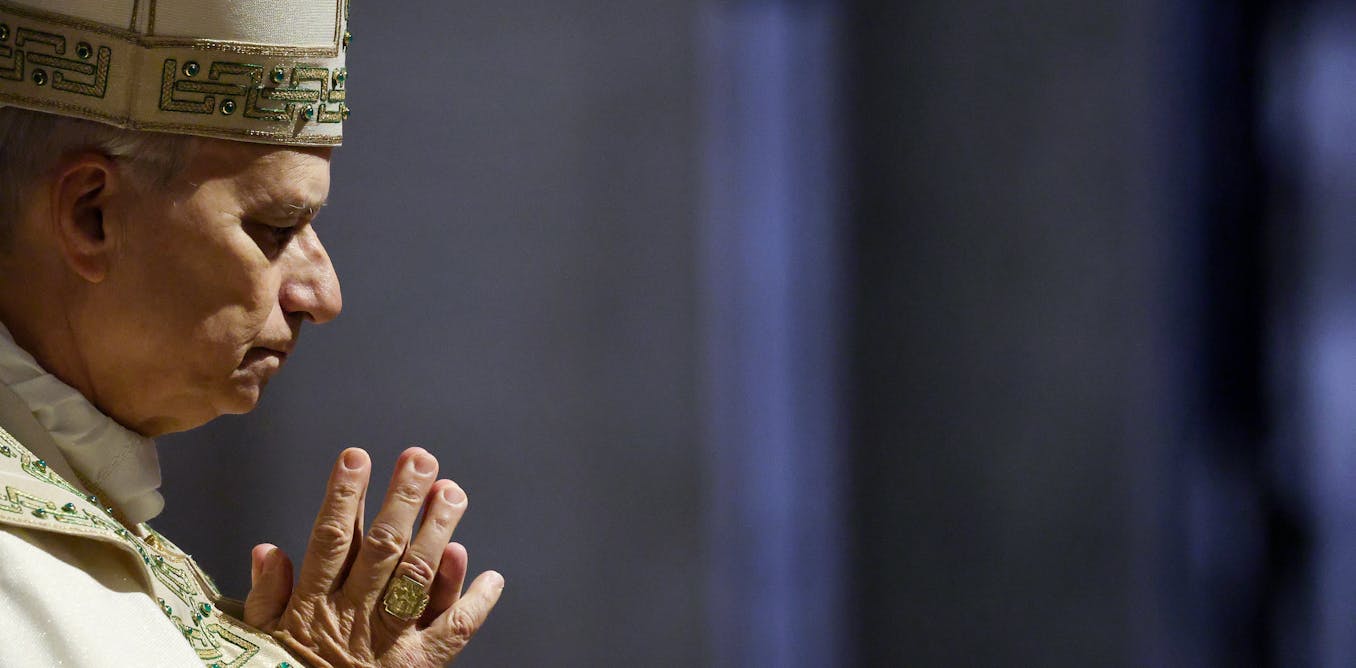
"Pope Leo XIV closed the door at St. Peter's Basilica on Jan. 6, 2026, just days into the new year. The act formally brought the Vatican's Holy Year 2025 - designated as "Pilgrims of Hope" - to an end. In 2022, after the COVID-19 pandemic ended, Pope Francis announced his intention to proclaim a Jubilee year, urging the faithful to look to the future "with an open spirit, a trusting heart and far-sighted vision." That is why, as Francis explained, he chose the motto of the Jubilee: "Pilgrims of Hope.""
"Ironically, 2025 was a turbulent year the world over. After so much military aggression in Ukraine, rampant starvation in Gaza and increasing violence of all kinds within the United States, people in many parts of the world were left much more despairing than hopeful for 2026. Religions typically try to offer hope in the face of despair. As a scholar of Catholicism, I know that even amid violent persecutions, devastating wars and staggering death tolls from epidemics, Christians have repeatedly turned to their holy texts for hope."
The Vatican formally closed Holy Year 2025 "Pilgrims of Hope" when Pope Leo XIV shut St. Peter's door on Jan. 6, 2026. Pope Francis had proclaimed the Jubilee after the COVID-19 pandemic, urging the faithful to look to the future "with an open spirit, a trusting heart and far-sighted vision" and adopting the motto "Pilgrims of Hope." Global events in 2025 — military aggression in Ukraine, starvation in Gaza and rising violence in the United States — left many people more despairing than hopeful for 2026. Religions seek to offer hope amid despair, and Christians have historically turned to holy texts for consolation during persecutions, wars and epidemics. Ancient Greco-Roman concepts like Elpis and Hesiod's Pandora myth portray hope as enduring in humanity.
Read at The Conversation
Unable to calculate read time
Collection
[
|
...
]