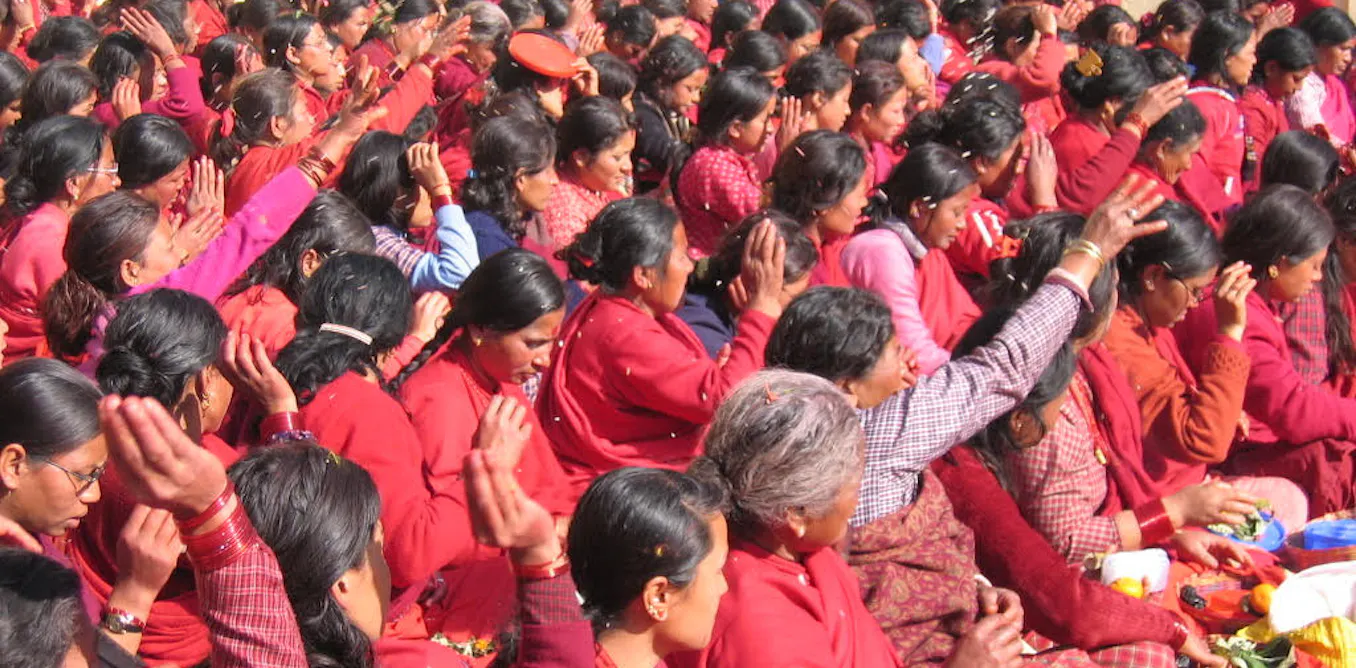
"Every day during the cold lunar month of January-February, 100 to 200 Hindu women, dressed all in red, carry out a ritual that requires them to bathe in the local river, eat only one meal per day, remain singularly focused and worship the Hindu god Shiva at midday."
"At the end of the month, devotees prepare a series of offerings to Swasthani for the concluding ritual, which include ritually specific cooked foods, fruit and flowers."
"Some see it reinforcing patriarchal expectations, while many women find strength through the enduring hardships and perseverance depicted in the text."
The 'Swasthani Vrata Katha' narrates a ritual vow performed by Hindu women in Nepal to gain the favor of the goddess Swasthani. This practice, dating back to the 16th century, involves daily rituals during January-February, where women bathe in a river, eat one meal, and worship Shiva. Families gather to recite chapters of the text, even if not all participate in the vow. At the month's end, offerings are made to Swasthani, which are shared with husbands or sons. The text is viewed differently, with some seeing it as patriarchal while others find empowerment in its teachings.
Read at The Conversation
Unable to calculate read time
Collection
[
|
...
]