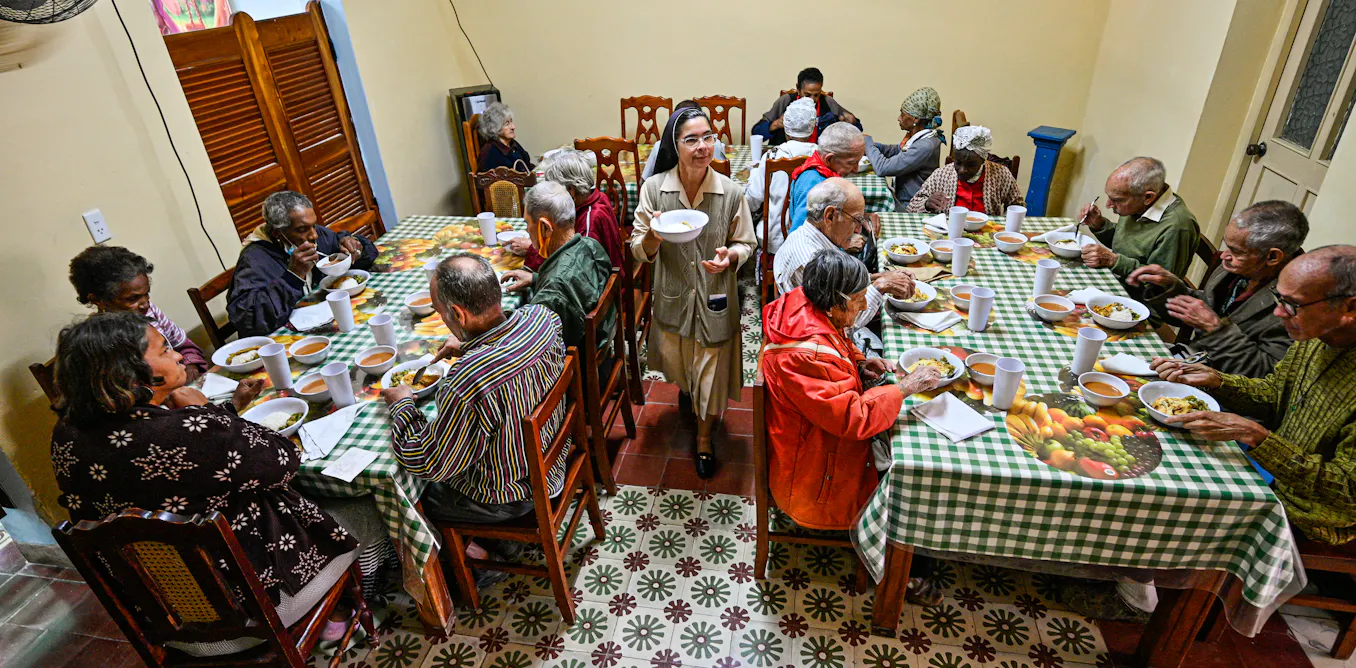
The United States plans to provide $100 million in humanitarian assistance to Cuba. The aid would not be managed or distributed by the Cuban government or its military. Instead, humanitarian and faith-based partners, including Caritas and other nonprofits, would deliver the assistance. A week later, the U.S. reiterated restrictions in a short video message to Cuban people, attributing Cuba’s economic problems and energy shortages to the Cuban government. Cuba’s president said the country would accept the offer without ingratitude while criticizing the approach and urging the U.S. to ease or lift the long-standing embargo. The timing also overlapped with U.S. legal action involving Raúl Castro.
"Neither the Cuban government nor its military would be allowed to manage its distribution. Instead, only humanitarian and faith-based partners, such as Caritas - the Catholic Church's humanitarian aid network - and other nonprofits would deliver the aid. That is, the U.S. is willing to provide assistance that will help the Cuban people, but it does not trust the Cuban government to distribute it."
"Rubio reinforced the caveats that came with the Trump administration's announcement during a 5-minute video address directed at the Cuban people. In his remarks, which coincided with Cuban Independence Day, he blamed Cuba's economic problems and chronic energy shortages on its own government. Cuban President Miguel Díaz-Canel has said Cuba would accept the U.S. offer of aid "without ingratitude," while also criticizing the new approach and urging the U.S. to lift or ease the decades-old embargo."
"The timing of the offer was particularly challenging because it coincided with the U.S. indictment of Raúl Castro, a former Cuban president who helped lead the revolution that brought his brother, Fidel Castro, to power in 1959. The Trump administration's aid restriction may sound unusual. But as a scholar of Cuban studies and a former humanitarian aid worker, I have seen firsthand how faith-based organizations have long played a critical role in reaching Cuban families when formal systems there fall short."
"You may wonder whether religious groups and other kinds of nonprofits are prepared to distribute $100 million in humanitarian aid inside Cuba. But there's evidence that this arrangement would probably work. The Catholic Church has one of the strongest national networks in Cuba outside the government, and this would not be the first time it ha"
Read at The Conversation
Unable to calculate read time
Collection
[
|
...
]