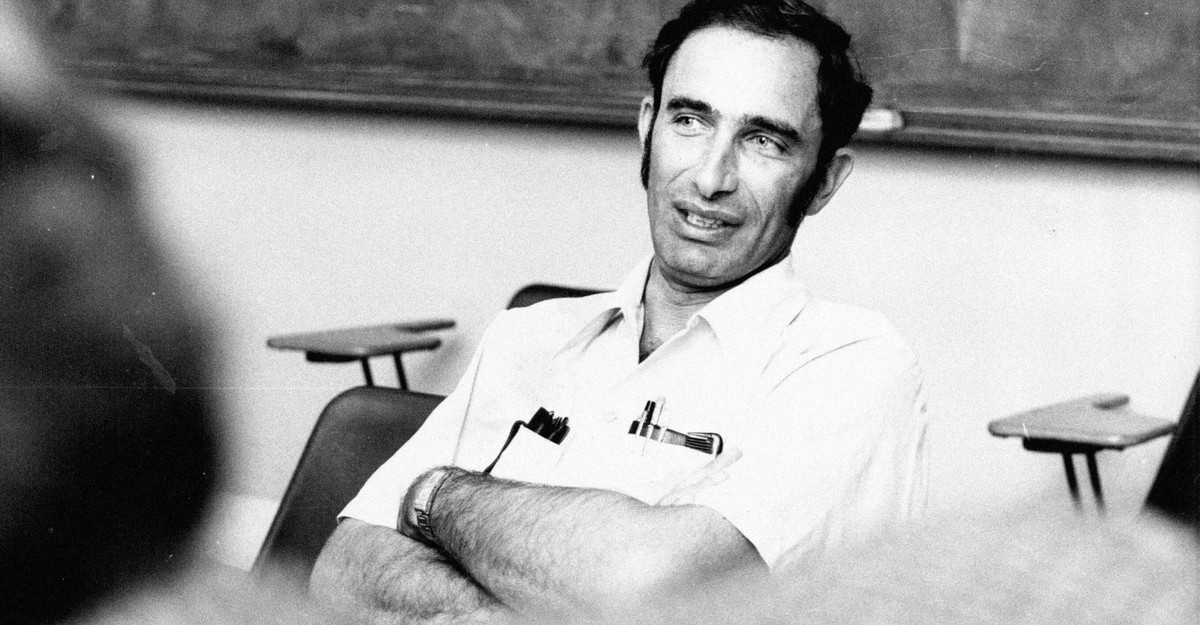
"In The Population Bomb and subsequent writings, Ehrlich popularized a fundamental concept of environmental science: Natural systems have natural limits that could reveal themselves in catastrophic ways as their "carrying capacities" are approached. Crucially, Ehrlich also believed that the United States and the planet itself were in grave danger of reaching those limits soon if steps were not taken to curb population growth."
"Today both the left and the right still act at times as if Ehrlich's dystopia lurks just around the corner. Progressives remain divided over whether economic growth can truly go hand in hand with environmental protection, a major political liability when many voters say that they are struggling to achieve the standard of living they want. Many conservatives, meanwhile, view the world as a zero-sum game in which Americans must fight foreign powers and immigrants to keep our slice of a pie that isn't growing."
Paul Ehrlich, a Stanford biologist, died at 93 after gaining fame through The Population Bomb, his 1968 bestseller predicting imminent overpopulation crisis. His dire predictions failed to materialize; global population is now leveling off and birth rates in America may be declining. Despite the book's inaccurate forecasts, Ehrlich established an enduring political framework centered on resource scarcity and natural limits. This scarcity-based worldview persists across the political spectrum: progressives question whether economic growth and environmental protection coexist, while conservatives view global resources as zero-sum competition requiring protection against foreign powers and immigrants. Ehrlich's conceptual legacy fundamentally shaped American political discourse about environmental limits and resource allocation.
#population-bomb #environmental-politics #resource-scarcity #political-ideology #paul-ehrlich-legacy
Read at The Atlantic
Unable to calculate read time
Collection
[
|
...
]