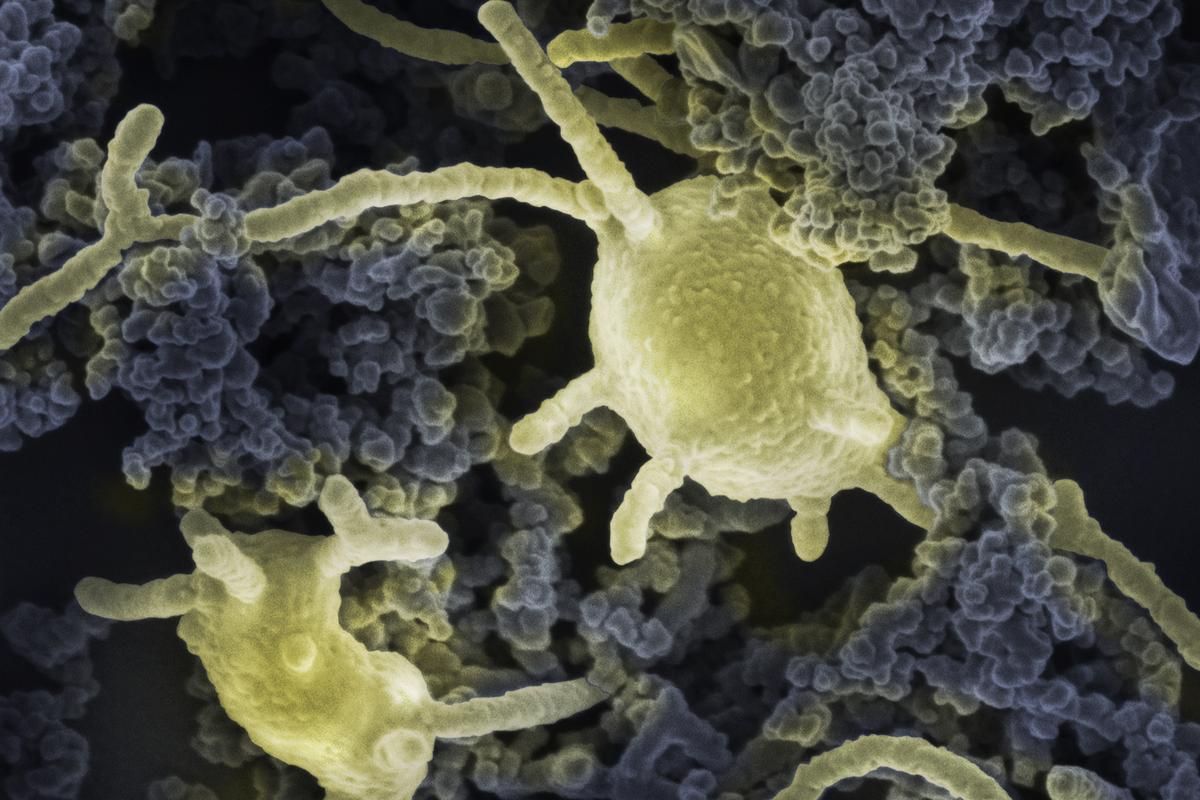
"If you had to nominate the slowest, longest-living organisms on Earth, what would you picture? Among the vertebrates, some people might think of tortoises, whales or perhaps more obscure creatures like the Greenland shark, which can live for centuries. Others might imagine coral colonies, or perhaps an ancient tree: there are oaks in England that could be more than 1,000 years old, whereas in California, a few Bristlecone pines have been around for millennia, dating to around the formation of ancient Egypt."
"However, E coli and other fast-replicating microbes don't live in subsurface environments, where the conditions are ripe for a far more languid pace. In recent years, my fellow biologists and I have assembled evidence suggesting that the microbial world deep beneath the ground may be far slower than we think - perhaps remaining metabolically active for millions of years. I call these organisms aeonophiles - and by living as long as they do, they are rewriting the rules of biology itself."
Many familiar long-lived organisms include tortoises, whales, Greenland sharks, coral colonies, and ancient trees such as English oaks and Californian Bristlecone pines. Bacteria are usually associated with rapid growth and short lifespans, exemplified by E. coli, which can double in minutes and die quickly under antibiotics. In subsurface environments, conditions favor extremely slow microbial life. Deep subterranean microbes may remain metabolically active for millions of years. These organisms, termed aeonophiles, survive by maintaining minimal metabolic activity and effectively waiting to return to surface conditions, sometimes enduring centuries, millennia or entire geological eras.
Read at Aeon
Unable to calculate read time
Collection
[
|
...
]