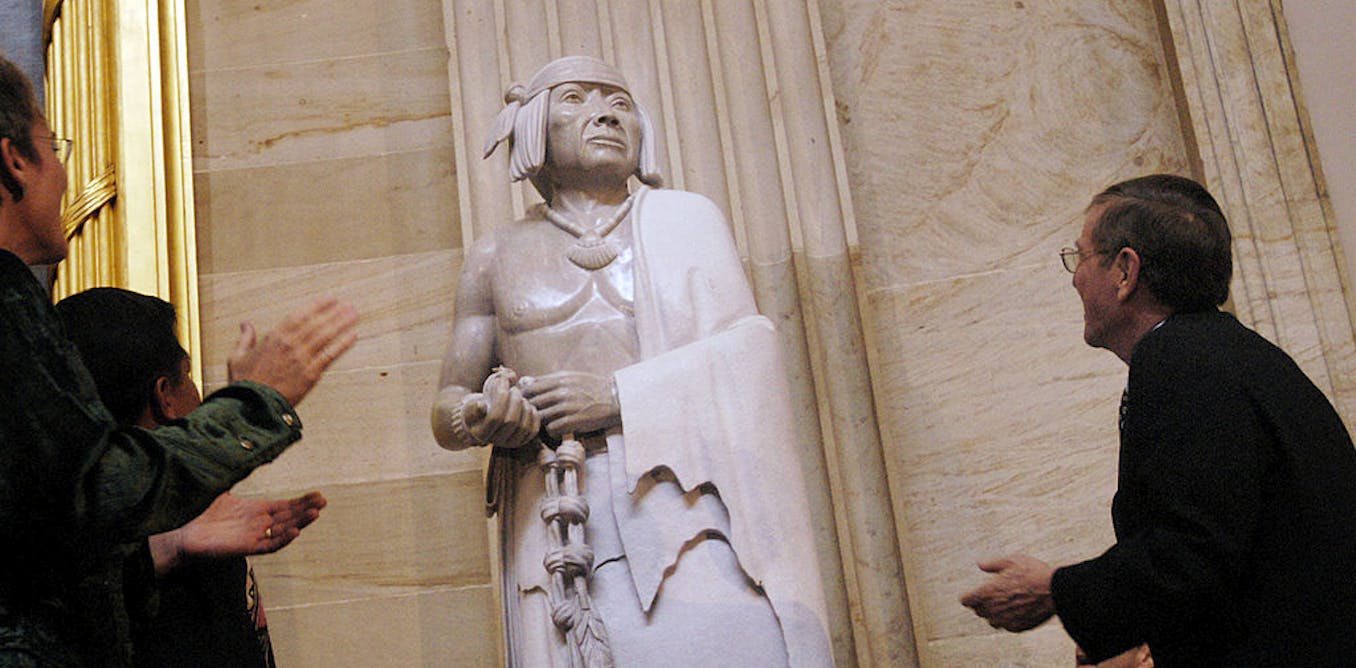
"The U.S. Capitol's Statuary Hall Collection contains 100 sculptures: two luminaries from each state. They include many familiar figures, such as Helen Keller, Johnny Cash, Ronald Reagan and Amelia Earhart. There are a few from the Colonial era, including founders such as Samuel Adams and George Washington. Some will also be represented in the Garden of American Heroes that the Trump administration plans to build. The monument will eventually have 250 statues, and the administration has proposed a list of names."
"As a historian of early America, I see Po'pay's absence in the to-be-built shrine as unfortunate - but not surprising. After all, he led the Pueblo Revolt of 1680: the most successful Indigenous rebellion against colonization in the history of what became the United States. He and his followers sought political independence and religious freedom, issues central to Americans' sense of themselves."
"Religious movements and figures played a central role in early American history. For example, as I have frequently written, Thanksgiving is linked to Protestant religious dissenters we call Pilgrims and Puritans. American myth tells us that those hearty souls braved an ocean crossing and a contest with the "wilderness," in the words of the Plymouth colony's governor, William Bradford. They did so, according to our legends, to pursue their faith - though the historical record reveals that economics also drove their decision to migrate."
The U.S. Capitol's Statuary Hall Collection holds 100 sculptures, two from each state, featuring figures from varied eras and professions. A proposed Garden of American Heroes would add 250 statues, but the proposed list excludes Po'pay, a 17th-century Tewa leader from present-day New Mexico whose Capitol inscription reads "Holy Man - Farmer - Defender." Po'pay led the Pueblo Revolt of 1680, the most successful Indigenous uprising against colonization in the territory that became the United States. His rebellion sought political independence and religious freedom, themes integral to early American identity and history.
Read at The Conversation
Unable to calculate read time
Collection
[
|
...
]