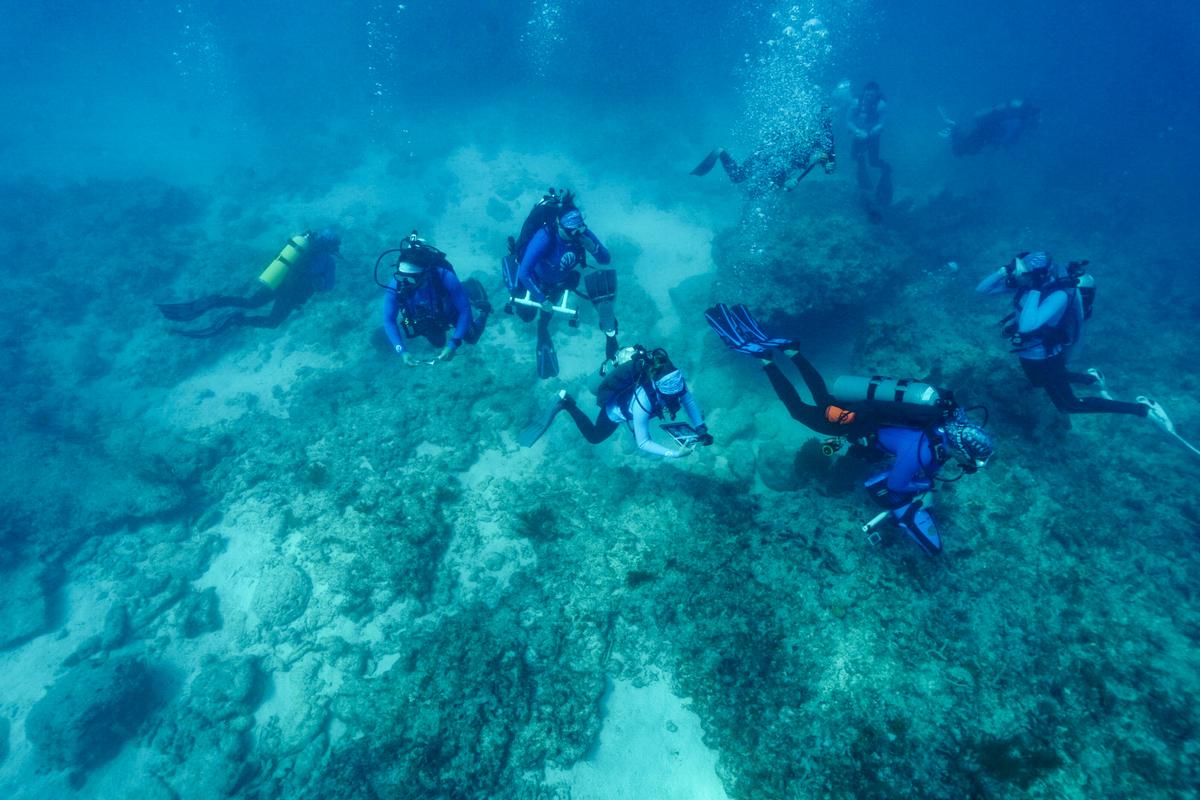
Summer 2023 off Florida's coast produced a widespread marine heatwave from Cape Canaveral to Key West, amplified by weak winds that prevented mixing of warmer and cooler water layers. Water temperatures reached unprecedented highs, including 38.4°C in Manatee Bay—the highest ocean temperature on record—and heat persisted in bays and lagoons, causing widespread coral mortality. Scientists from the Coral Reef Futures Lab identified threatened corals and organized rapid extraction efforts, mobilizing volunteers, boats, and aquarium tanks to house collected fragments. Rescue operations required quick funding and legal permits because Florida reefs lie within tightly regulated zones designed to prevent overfishing, protect endangered species, and deter illegal aquarium harvesting, creating logistical, financial, and regulatory challenges for conservation work.
"Marine heatwaves are getting longer and more intense, but the heat can sometimes be dispersed by wind, which allows layers of warmer and cooler water to mix. However, in 2023, the winds were weak off the coast of Florida. It was a recipe for disaster. 'We knew it was going to be bad,' the marine scientist Liv Williamson told me. 'But we didn't know just how much.'"
"It would become Florida's hottest summer on record. The water in Manatee Bay, near Key Largo, reached 38.4 degrees Celsius, which remains the highest ocean temperature ever recorded. The sheer intensity of the event caught marine scientists off guard. 'It was so early, so hot,' Williamson said, 'and it just stayed.' As the heatwave settled into bays and lagoons, corals began to die."
"At the time, Williamson was working as a biologist and ecologist at the University of Miami's Coral Reef Futures Lab, studying the reefs in Florida and testing innovative strategies to increase the survival and fitness of threatened Caribbean corals. She knew the response needed to be swift. And so, like other scientists in the region, Williamson made plans to remove threatened coral species directly from the reef. She and her colleagues mobilised volunteers and boats, and secured aquarium tanks to house collected fragments."
Read at Aeon
Unable to calculate read time
Collection
[
|
...
]