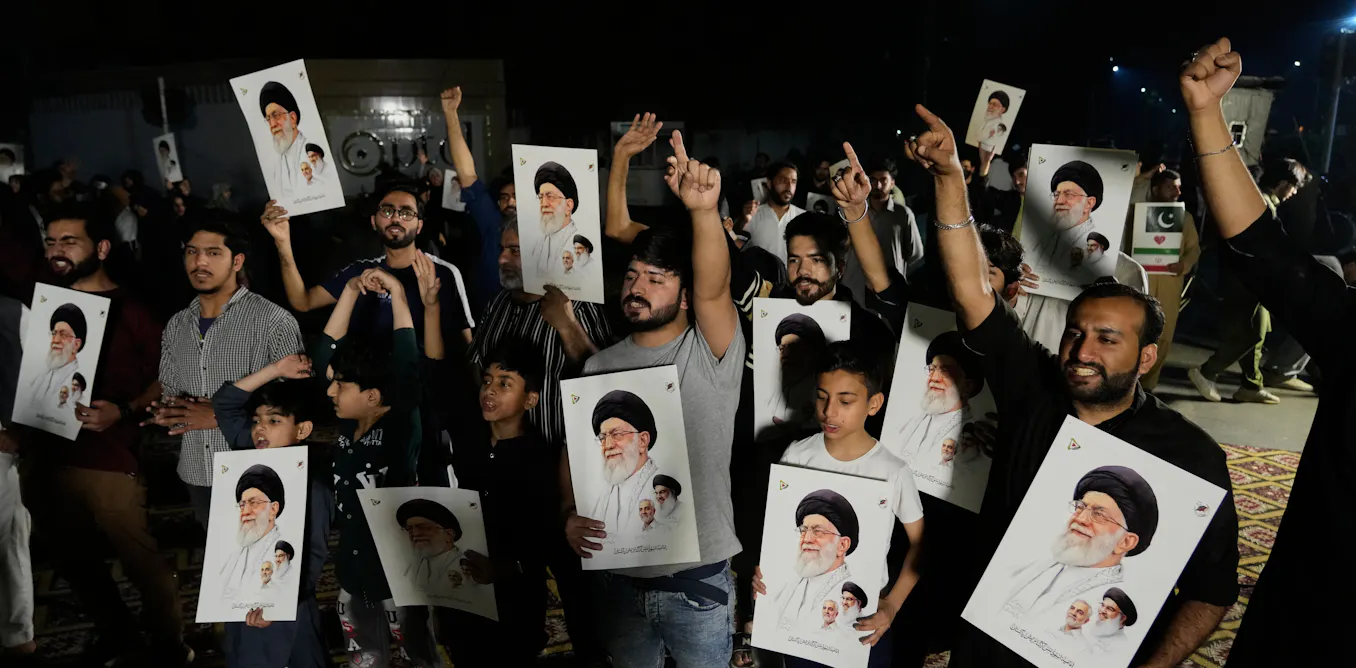
"Shiite minorities in other countries tend to view Iranian leaders as protectors and have sometimes risked personal safety to protest the war. The violence expands around Tehran, and Shiites are not only grieving the death of their leaders but also fear the loss of holy cities and shrines that anchor their collective memory."
"After Khamenei's death, the city of Qom was targeted because the Assembly of Experts gathered there to elect his successor. Israel attacked Qom's Shokouhiyeh Industrial Zone, known for its drone production companies, amidst a news blackout in Iran and Gulf states."
"Regardless of the level of material damage, Shiites are deploring the physical and spiritual assaults against their sacred landscape. In Shiite Islam, grief is not only personal but collective, reflecting a deep connection to their religious heritage."
Shiite communities across South Asia refrained from celebrating Eid due to mourning the death of Iran's supreme leader, Ayatollah Ali Khamenei. The assassination has raised concerns among Shiite Muslims globally. Shiite minorities view Iranian leaders as protectors and have protested despite risks. The violence in Tehran threatens holy cities and shrines, crucial to Shiite identity. Cities like Qom, Isfahan, and Mashhad have faced military attacks, damaging significant sites. The community's grief is collective, symbolized by the black flag raised at Imam Reza Shrine in Mashhad.
Read at The Conversation
Unable to calculate read time
Collection
[
|
...
]