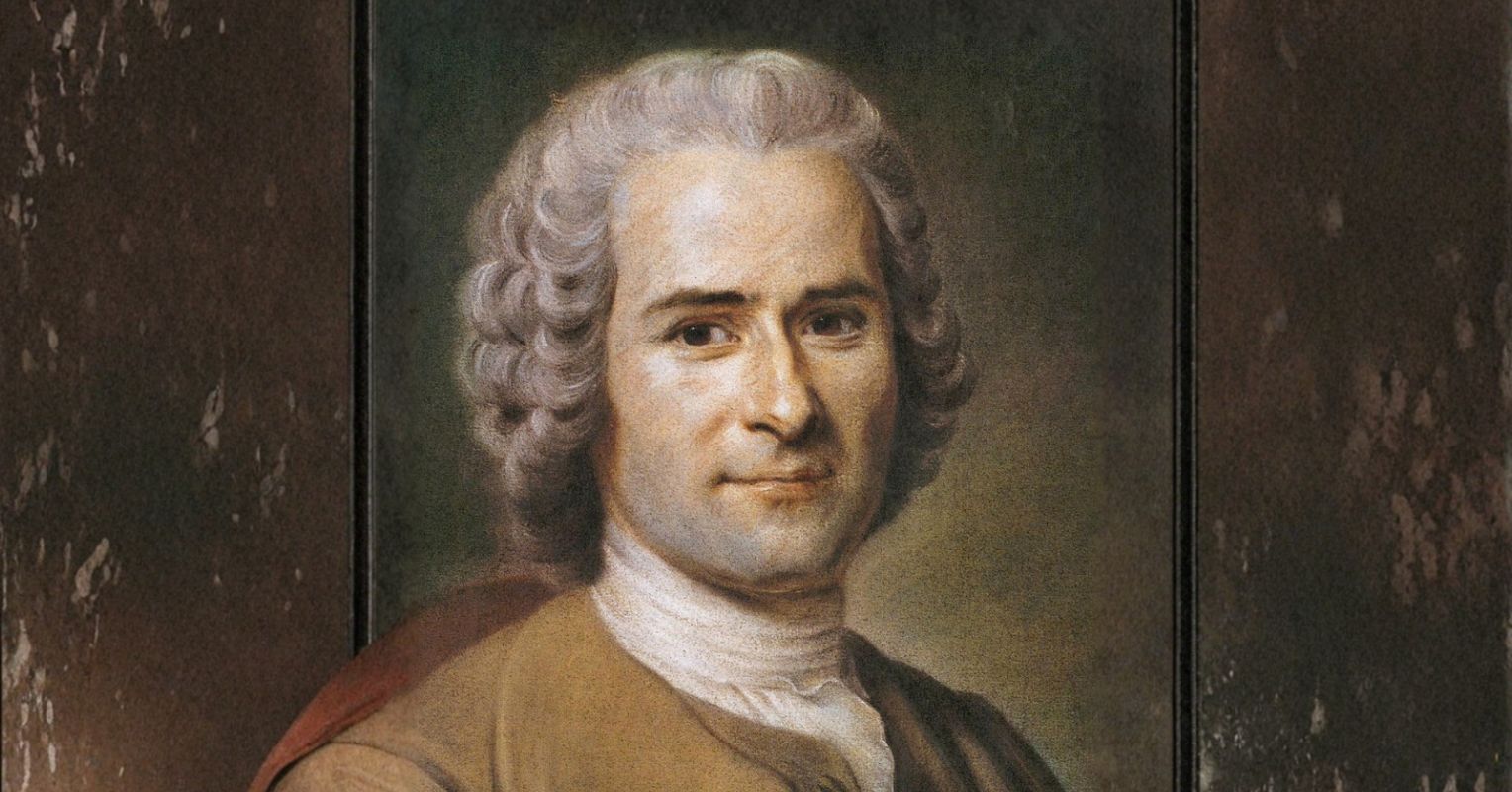
"In neighbouring Savoie, he found shelter with a priest, who put him onto the attractive Françoise-Louise de Warens, who had separated from her husband, converted to Catholicism, and become a proselytiser in the pay of Victor Amadeus II of Savoy. Completely smitten, Rousseau completed his conversion to Catholicism in the Piedmont-Sardinia capital of Turin, where he supported himself by working as a footman and secretary for an ailing countess."
"In those years, Rousseau struggled to establish himself in a career and spent a year travelling. He travelled mostly on foot, meeting people from all walks of life. When he returned to Warens, he pursued his passion for music and read deeply. But Warens could no longer support him, so, at the age of 27, he took up a position as a tutor in Lyon, which gave him the opportunity to reflect on pedagogy."
Jean-Jacques Rousseau was born in 1712 in the Republic of Geneva and ran away at 16. In Savoie he sheltered with a priest who introduced him to Françoise-Louise de Warens, a separated convert and proselytiser. Rousseau converted to Catholicism in Turin and supported himself as a footman and secretary to an ailing countess. He returned to Warens around age 20; their relationship became sexual and emotionally intense. He spent years travelling, pursuing music, and reading, then became a tutor in Lyon at 27, where he began reflecting on pedagogy. He later moved to Paris, presented a musical notation system, and worked briefly in Venice before returning to Paris and meeting Thérèse Levasseur.
Read at Psychology Today
Unable to calculate read time
Collection
[
|
...
]