"Conspiracy theories describe alternative versions of events that contrast with the official, accepted versions of events. Conspiracies, however, involve small groups of people who act in secret for their own gain and against the common good."
"Colonial America was rife with perceived conspiratorial agendas. Many of these stemmed from the uneasy coexistence of political parties with religion - which was newly protected by the First Amendment - and with the Catholic Church in particular."
"Philadelphia was the country's political center during the American Revolution, which began in 1775. After the war ended in American victory in 1781, Philadelphia served as the capital of the U.S. beginning in 1790."
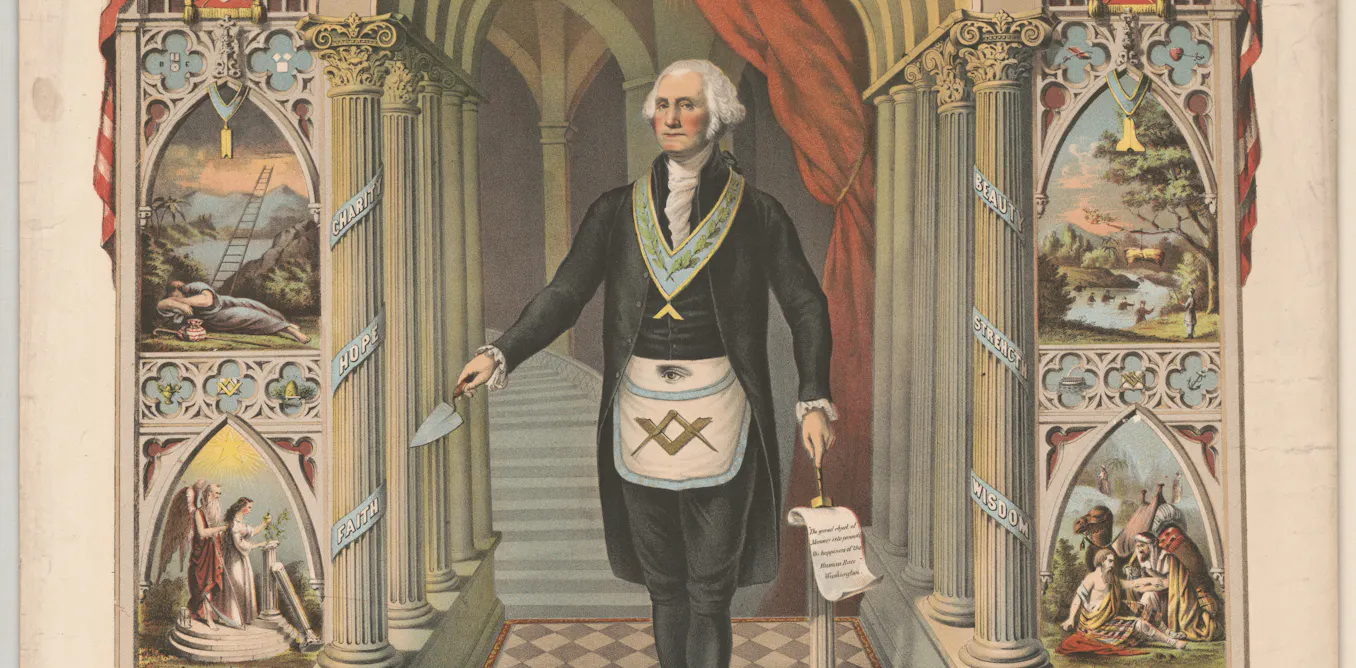
Conspiracy theories in the U.S. have changed with technological advancements, yet their essence remains constant. They present alternative narratives to official accounts, often involving secretive groups acting for personal gain. Historical examples include the Watergate scandal and the Tuskegee experiments. Colonial America was marked by conspiratorial perceptions, influenced by the interplay of politics and religion. Philadelphia, as the political center during the American Revolution and the early capital, was a hub for influential figures, including Freemasons, who played a role in shaping the nation’s leadership.
Read at The Conversation
Unable to calculate read time
Collection
[
|
...
]