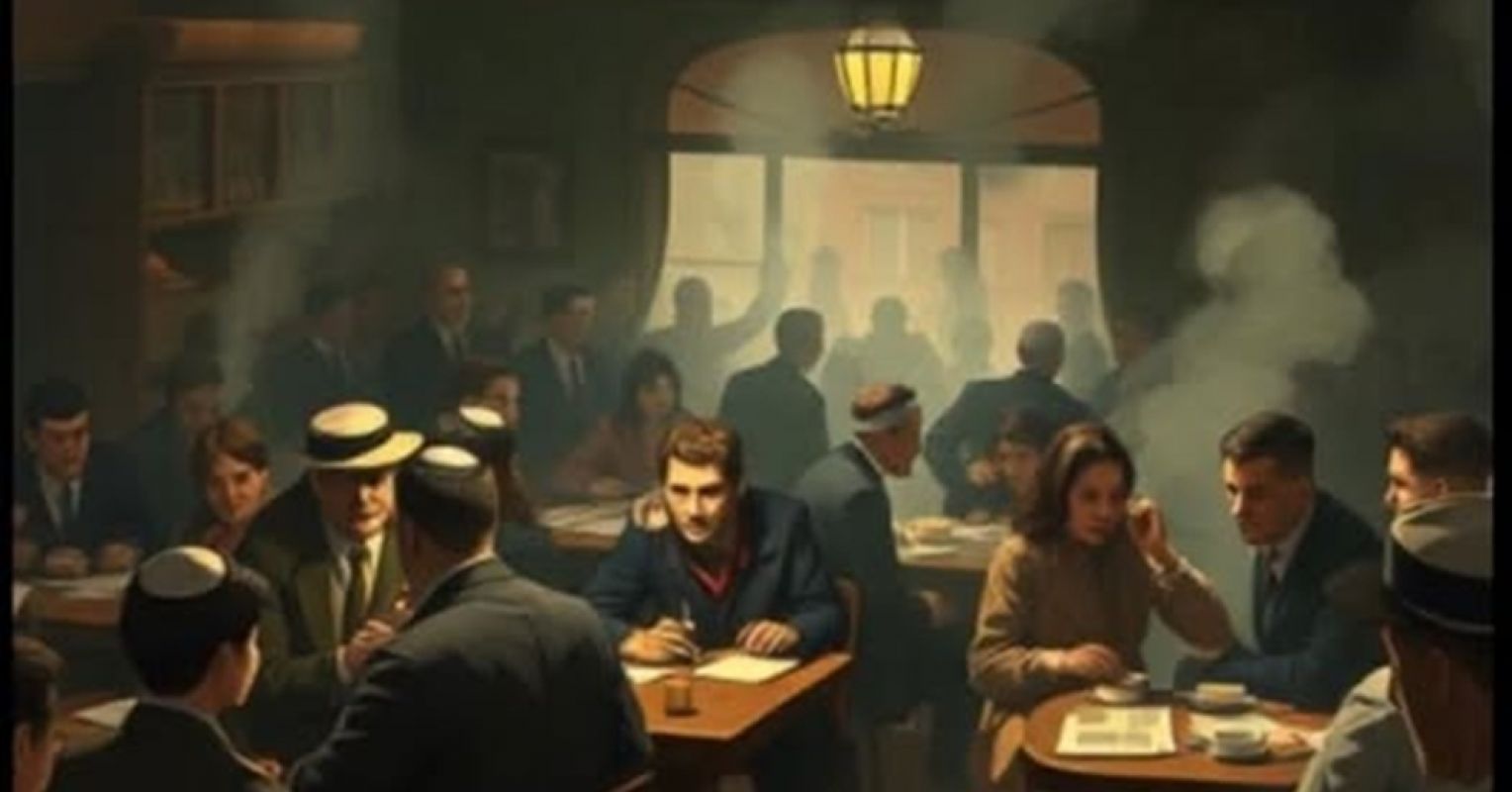
"In Berlin, Vienna, Budapest, and Prague, these coffeehouses were unique sanctuaries where boundaries -national, religious, or ethnic-were dissolved in the warmth of spirited conversation. Here, amid curling cigarette smoke and the gentle clatter of porcelain, poets, scientists, journalists, and philosophers gathered. The world outside trembled with crisis. Yet between marble-topped tables and tall windows, a different order prevailed: one animated by curiosity, mutual respect, and the inexhaustible hope of understanding."
"The pulse inside such a café was unmistakably dramatic-a living bridge over personal and historical chasms. Stefan Zweig might be found confiding his anxieties to Arthur Schnitzler; Sigmund Freud and his circle dissecting the nature of the mind. There were newcomers, too-young revolutionaries, struggling artists, refugees escaping the edges of a continent coming undone. Inside, the boundaries of nation, faith, and class blurred; for one enchanted evening, patrons became fellow seekers at a modern symposium, inheritors of Plato's table."
Literary cafés in prewar Berlin, Vienna, Budapest, and Prague acted as cosmopolitan sanctuaries where national, religious, and ethnic boundaries dissolved during lively conversation. Poets, scientists, journalists, philosophers, young revolutionaries, struggling artists, and refugees met across marble-topped tables to exchange ideas, critique, and support. The cafés fostered a conversational order animated by curiosity, mutual respect, and an aspiration to understanding, often invoking the Greeks as symbols of reason and beauty. German and Jewish intellectual traditions converged around classical ideals. Antisemitism and rising nationalism persisted in society at large, while the cafés provided relative safety for dialogue, creativity, and painful recognition.
Read at Psychology Today
Unable to calculate read time
Collection
[
|
...
]