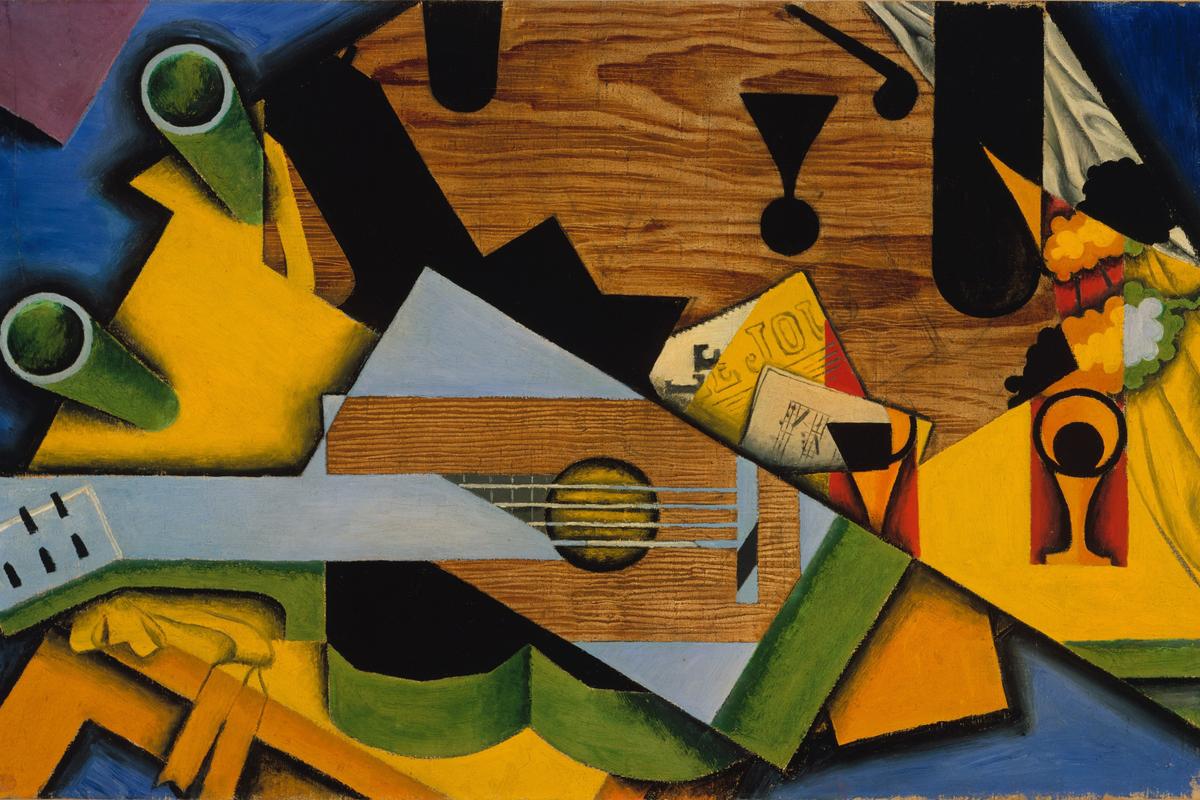
"In the hands of a great performer, the classical guitar can mesmerise audiences with its beauty, emotional power and subtlety. The 20th century was dominated by the Spanish guitar legend Andrés Segovia, who took the instrument from the salon to the large concert halls of the world, aided in part by developments in guitar-making that produced louder instruments. A later generation included superb players such as John Williams and Julian Bream (sometimes described as the Apollo and Dionysus of interpretation)."
"Ultimately, it's basically a wooden box with strings attached and a fretted neck, a bridge, a saddle, and tuning pegs. Classical guitar has no inbuilt amplification, and the sounds are produced very directly. While many other instruments are based on that fundamental design, the guitar is simple in that you're just plucking the strings, as opposed to the relative complexity of bowing a violin, viola or a cello with horsehair that's been rubbed down with rosin."
The classical guitar achieved concert-hall prominence in the 20th century under Andrés Segovia, helped by louder instrument designs. Subsequent generations produced masters such as John Williams and Julian Bream alongside many other virtuosi who enchanted audiences worldwide. In the 21st century younger players like Xuefei Yang, Ana Vidović and Gabriel Bianco reach new audiences via YouTube and social media. The instrument is physically simple—a wooden body with strings, fretted neck, bridge, saddle and tuning pegs—but produces sound directly without built-in amplification. Sound is produced by plucking with carefully shaped fingernails on the right hand. Many notes can be played in multiple fretboard positions. The top string is tuned to an E.
Read at Aeon
Unable to calculate read time
Collection
[
|
...
]