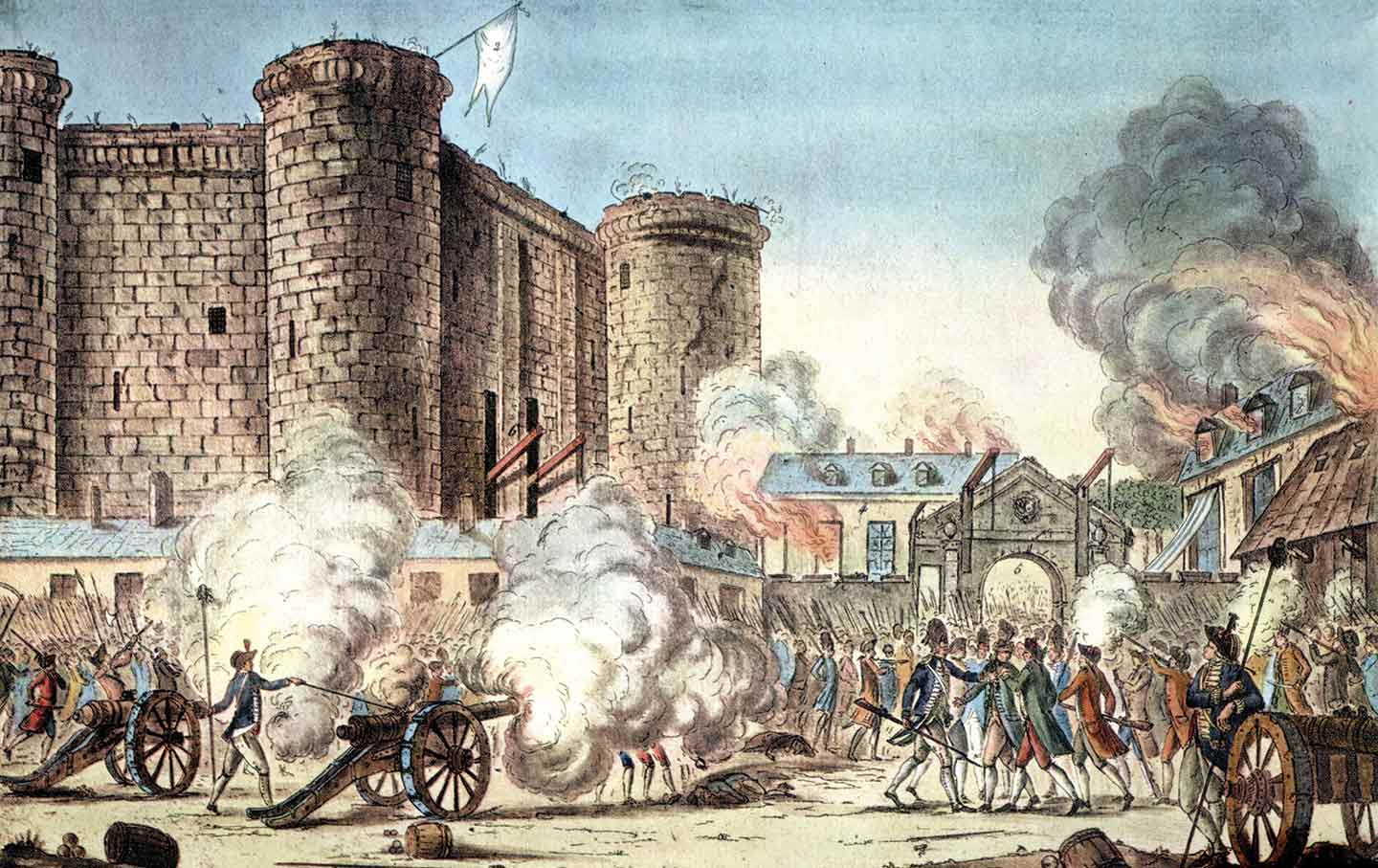
"What was once called a revolution, he argues, did not signify a break with the past; it meant something more like a return to political origins. This older meaning, commonplace in Greek and Roman thought, would survive into the 18th century and would only recede when the Enlightenment's idea of revolution as progress swept away the classical idea of cyclical time."
"It argued that the idea of natural right nourished an attitude of extreme political hostility: The Jacobins saw their political opponents not simply as rivals but as "enemies of the people" or hostis humani generis. By grounding their politics in nature, the French revolutionaries spawned an intolerant and ultimately lethal species of thinking-Edelstein called it "natural republicanism"-that would reshape politics well into the modern era."
The concept of revolution originally signified a return to political origins rather than a rupture or innovation. That classical meaning, rooted in Greek and Roman cyclical notions of time, persisted into the 18th century. The Enlightenment reframed revolution as progress, replacing the cyclical model with a teleology of change and novelty. A major interpretation of the French Revolution links the doctrine of natural right to an ideology of 'natural republicanism' that portrayed opponents as existential enemies and legitimized extreme violence. That ideology influenced Leninism, Stalinism, Nazism, and furnished political justification for the War on Terror. A broader historical analysis extends these themes across time.
Read at The Nation
Unable to calculate read time
Collection
[
|
...
]