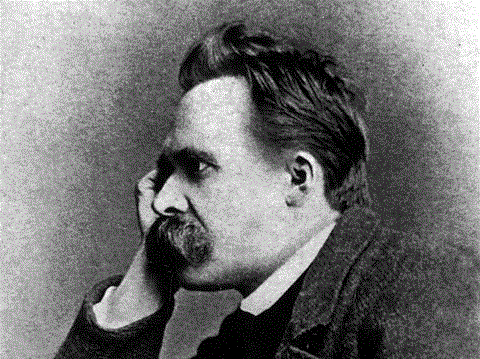
"Foucault remarked in an unpublished interview that Nietzsche's 'wonderful ideas' were 'used by the Nazi Party.' But that use... came about through a scheme hatched by Nietzsche's sister, after his mental collapse and death, to edit, change, and otherwise manipulate the thinker's work in a way The Telegraph deemed 'criminal.'"
"Nietzsche found the mundane work of politics and nationalist conquest, with its tribalism and moral pretensions, thoroughly distasteful. Instead, he considered the creative work of artists, writers, and musicians, as well as scientists, of paramount importance."
Friedrich Nietzsche is often misread, with his ideas misappropriated by the Nazi Party through manipulations by his sister after his death. Nietzsche had little sympathy for fascism or Christianity, which contributed to his break with composer Richard Wagner. He valued the creative contributions of artists, writers, musicians, and scientists over the mundane politics and nationalist conquests he found distasteful. A holistic reading of his work reveals a focus on creativity rather than ideology, countering the piecemeal interpretations that dominate his legacy.
Read at Open Culture
Unable to calculate read time
Collection
[
|
...
]