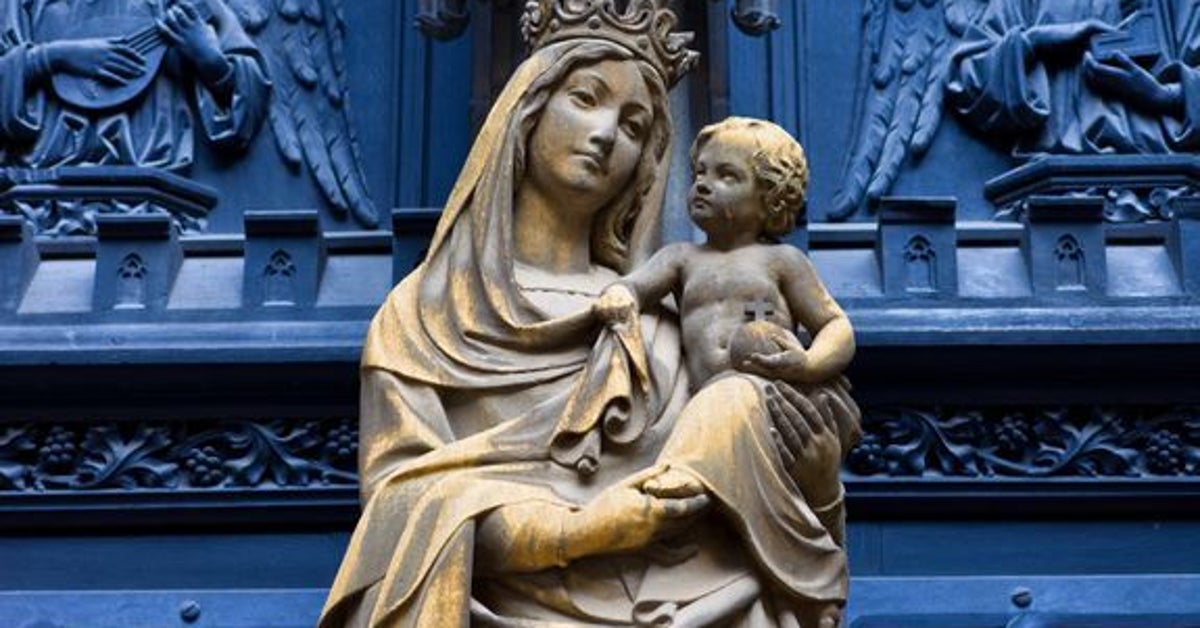
"It's a common misconception (no pun intended) that "Immaculate Conception" refers to the Roman Catholic teaching that the Virgin Mary conceived Jesus without having sex. But that belief is known as the Virgin Birth of Jesus. "The Virgin Birth refers to Jesus being born of a woman who was a virgin," the Rev. James Martin, a Jesuit priest and author, told HuffPost. "His birth is miraculous because Mary conceived a child without having sexual relations with a man.""
"The idea is that Mary was conceived without the stain of original sin, or born free from original sin. In 1854, Pope Pius IX proclaimed the dogma of the Immaculate Conception and stated: "The most Blessed Virgin Mary was, from the first moment of her conception, by a singular grace and privilege of almighty God and by virtue of the merits of Jesus Christ, Savior of the human race, preserved immune from all stain of original sin.'"
Many people incorrectly use Immaculate Conception to describe Jesus' conception by the Virgin Mary. The Virgin Birth properly describes Jesus being born of a woman who was a virgin and conceived without sexual relations. Immaculate Conception instead denotes that Mary herself was conceived in St. Anne's womb without the stain of original sin, preserved by God's grace and through the merits of Jesus Christ. Pope Pius IX declared the Immaculate Conception a dogma in 1854, stating Mary was preserved immune from all stain of original sin from the first moment of her conception.
Read at HuffPost
Unable to calculate read time
Collection
[
|
...
]