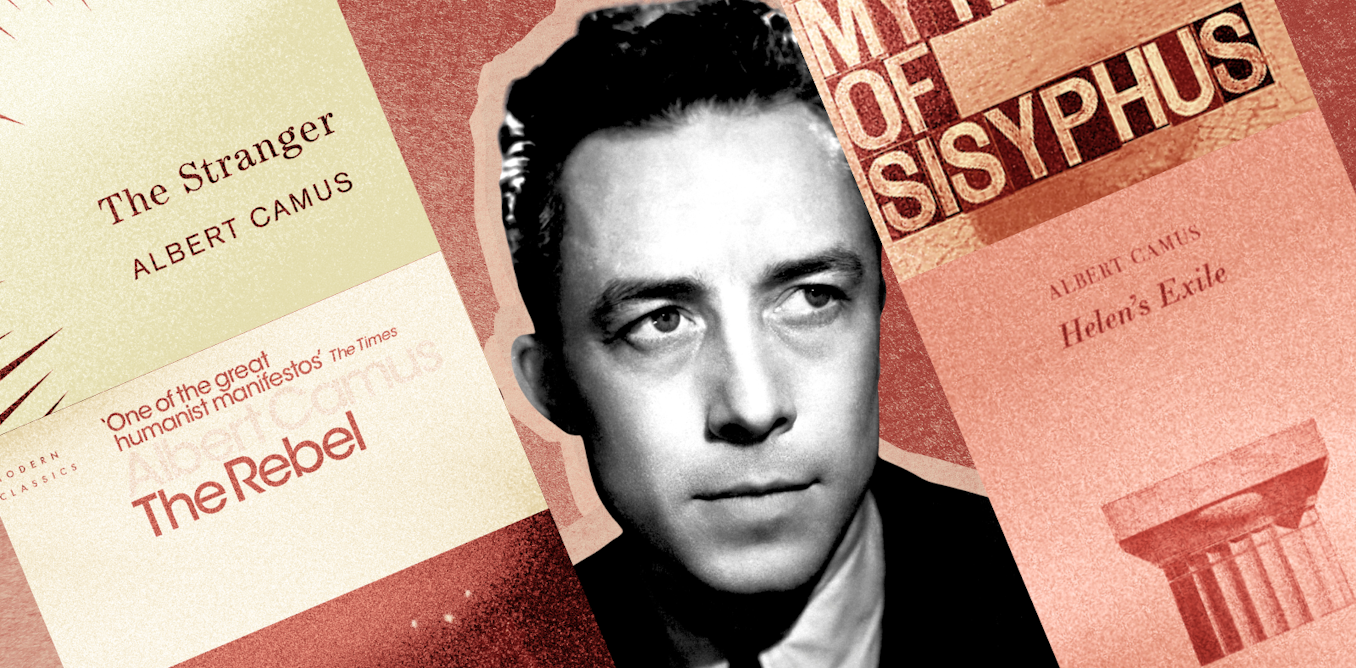
"In 1942, Camus shot to fame with his novel The Stranger, a dramatisation of the homicidal implications of modern nihilism (the loss of a sense of meaning). That year, he wrote a disconcerting essay on the ancient Myth of Sisyphus exploring the question of whether, in a world without God, suicide could be rationally justified."
"In 1952, Camus published his longest philosophical work, The Rebel, a powerful indictment of the totalitarian regimes of the 20th century for their crimes against humanity. In 1957, he won the Nobel Prize for Literature."
"Camus' writings urgently addressed problems his own generation faced, which seem to be recurring in our times of increased alienation, anxiety and loss of hope among many. Meanwhile, the rise of authoritarian movements around the world sounds echoes of the dictatorships The Plague and The Rebel were written to warn future generations against."
Albert Camus, born in colonial Algeria, became a major 20th-century philosopher and writer despite humble beginnings. His 1942 novel The Stranger explored nihilism's implications, while his essay on Sisyphus questioned suicide's rationality in a godless world. The Plague depicted societal lockdown and human resilience, and The Rebel critiqued totalitarian regimes' crimes against humanity. Winning the Nobel Prize in 1957, Camus addressed his generation's existential crises—alienation, anxiety, and loss of meaning—issues resurfacing today. His warnings against authoritarianism echo contemporary political concerns, though he rejected identification with his absurdist characters, suggesting philosophical complexity beyond nihilism.
#existentialism #nihilism-and-absurdism #totalitarianism-and-authoritarianism #moral-philosophy #20th-century-literature
Read at The Conversation
Unable to calculate read time
Collection
[
|
...
]